Law report No. GLW-6008 · filed November 17, 2026
Courts & TribunalsReported case
Supreme Court to Review Trump's Asylum Suspension at Border
The Supreme Court agreed Friday to hear Mullin v. RAICES, reviewing whether the president may unilaterally suspend asylum protections Congress wrote into the INA.
By Priya Raman4 min read762 words
Holding
- On Friday, November 2026, the Supreme Court agreed to hear Mullin v. Refugee and Immigrant Center for Education and Legal Services (No. 26-239).
- The case stems from a January 2025 presidential proclamation suspending asylum and withholding-of-removal protections at the U.S.-Mexico border.
- In April 2026 the D.C. Circuit held that the INA did not grant the executive the expansive removal authority it asserted.
- The core question is whether Congress, in allowing suspension of entry by proclamation, also authorized bypass of statutory removal protections.
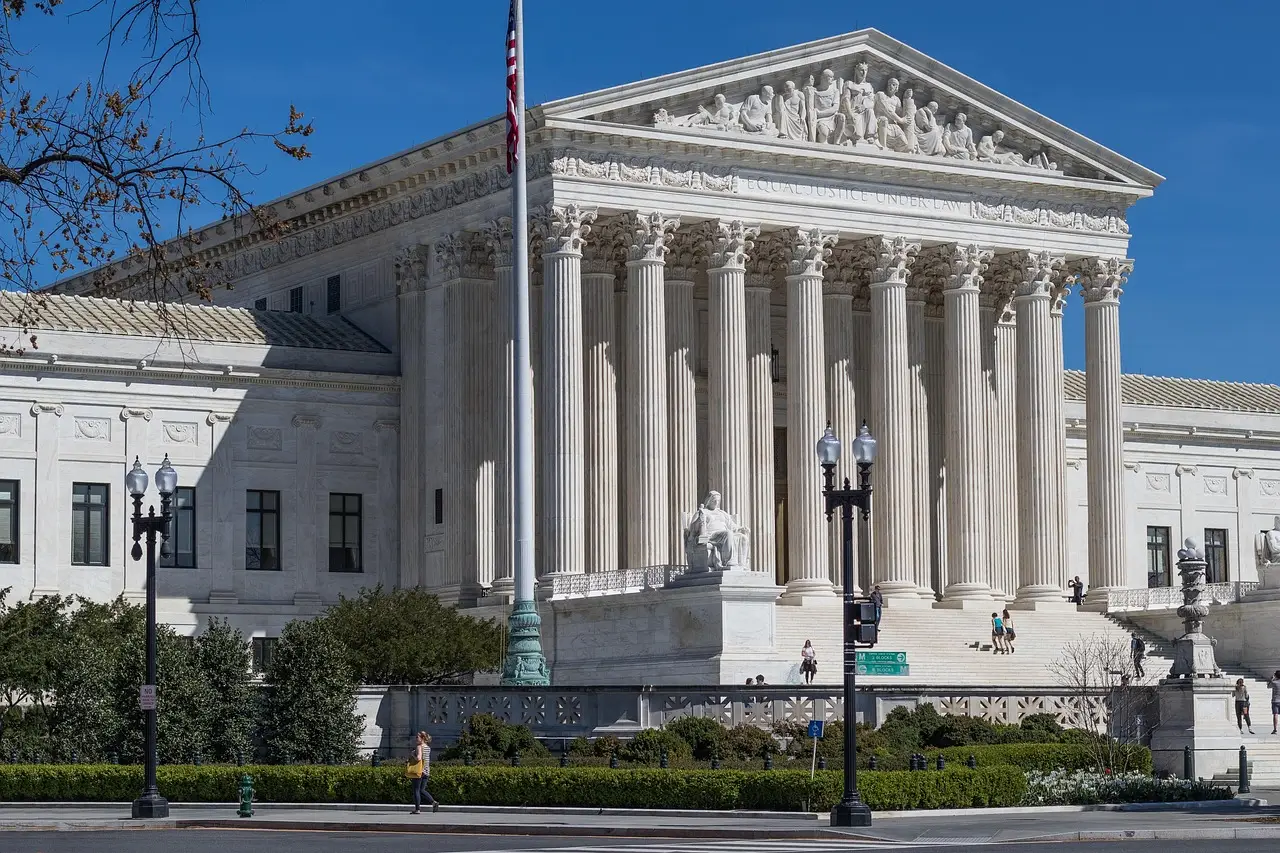
The U.S. Supreme Court on Friday agreed to hear Mullin v. Refugee and Immigrant Center for Education and Legal Services (No. 26-239), setting the stage for a direct test of whether President Donald Trump may unilaterally suspend asylum protections for migrants who cross the U.S.-Mexico border unlawfully. The grant arrives in a term that, until now, has lacked a genuine blockbuster. This case may supply one.
What did the lower court decide?
The dispute traces to a January 2025 presidential proclamation. In it, the administration asserted sweeping inherent authority, stating that the President's powers "to control the borders of the United States, including those deriving from his authority to control the foreign affairs of the United States, necessarily include the ability to prevent the physical entry of aliens involved in an invasion into the United States, and to rapidly repatriate them to an alternative location." That is the operative language on which the entire suspension rests. Note what it presumes: an ongoing "invasion."
In April 2026, the U.S. Court of Appeals for the District of Columbia Circuit rejected the executive argument. The appellate panel framed the issue precisely: "Our task is to determine whether Congress has granted the Executive the authority to remove foreign individuals present in the United States without adhering to the removal procedures or providing the substantive removal protections that Congress prescribed in the INA." Its answer was unambiguous. "We conclude that the INA's text, structure, and history make clear that in supplying power to suspend entry by Presidential proclamation, Congress did not intend to grant the Executive the expansive removal authority it asserts." The administration persuaded the justices to review that loss.
What is the statutory framework at issue?
Under federal immigration law, persons unlawfully present in the United States face removal proceedings. The same body of law, however, permits them to seek relief from removal through asylum or withholding of removal, under either the Immigration and Nationality Act or the Convention Against Torture. The claimed grounds are specific: persecution or torture if deported. The administration's position would bypass those protections for one category of entrants — those who crossed the southern border unlawfully.
The parallel to last term's tariff showdown is exact. In both cases the question is whether the President is wielding authority that properly belongs to a different branch. One branch writes statutes. Another executes them. The D.C. Circuit said Congress did not hand over this particular key.
Could the Court reach the constitutional question?
Possibly, and practitioners should not discount it. The proclamation's reliance on "inherent" executive power rests on the President's view that an "invasion" is occurring at the southern border, doubly empowering him to act. That is a version of a long-running argument that ordinary constitutional limits on the president should weaken, or vanish, when foreign affairs or national security are invoked. If the Court accepts that framing, the holding would travel far beyond immigration.
The more cautious prediction — and it is only a prediction — is that the justices will confine themselves to statutory interpretation and avoid the constitutional minefield. Statutory grounds are safer. They decide less. An outbreak of broader constitutional conflict nonetheless remains possible, and the stakes of that scenario are difficult to overstate.
What does this mean in practice?
For immigration practitioners, the practical consequences are immediate. Pending the Court's decision, the D.C. Circuit's ruling stands as circuit law within its jurisdiction, and clients who crossed the southern border unlawfully may still press asylum and withholding claims under the INA and the Convention Against Tortute framework as applied by that precedent. A reversal would remove those avenues for an entire class of entrants, without any act of Congress.
The case also tests a structural proposition with wide application: whether a statutory grant of power to suspend entry by proclamation doubles as a grant of power to bypass congressionally prescribed removal procedures. The D.C. Circuit said no. The administration says yes. Nine justices will now decide which reading controls, and their answer will define the outer boundary of executive discretion over removals for years to come.
One caveat belongs beside every promise of clarity here. The Court granted review of the statutory question; it has not promised to answer the invasion question, and it may resolve the case on grounds that leave the deeper constitutional argument for another day. Blockbuster or narrow ruling, the decision will arrive in a term that has so far offered few of either.
By Priya Raman, Global Law Wire
via reason.com (Source)
More from Priya Raman
Show full bio
Staff writer covering companies, deals and strategy in International law and legal practice at Global Law Wire.
324 articles
Also before the court
- Supreme Court to Review Trump Asylum Suspension at Border
- Supreme Court to Rule on Trump's Southern Border Asylum Ban
- Supreme Court Agrees to Hear Trump Asylum Suspension Showdown
- Supreme Court to Review Trump's 'Invasion' Migration Order in Mullin v. RAICES
- Supreme Court to Review Trump's Border 'Invasion' Proclamation