Law report No. GLW-3710 · filed November 14, 2026
Courts & TribunalsReported case
Supreme Court to Review Trump Asylum Suspension at Border
The Supreme Court agreed Friday to decide whether the Trump administration lawfully suspended asylum at the U.S.-Mexico border, and added a securities-fraud case from Robinhood's IPO.
By Grace Kim5 min read905 words
Holding
- The Supreme Court on Friday granted review in Mullin v. Refugee and Immigrant Center for Education and Legal Services, challenging the Jan. 20, 2025 asylum-suspension proclamation.
- The D.C. Circuit ruled the proclamation and DHS guidance unlawful; Judge J. Michelle Childs wrote the majority opinion, with Judge Justin Walker dissenting in part.
- The court also agreed to hear Robinhood Markets v. Sodha on omissions liability under securities law, one of two questions presented.
- Oral arguments in both cases are expected in spring 2027, during the 2026-27 term.
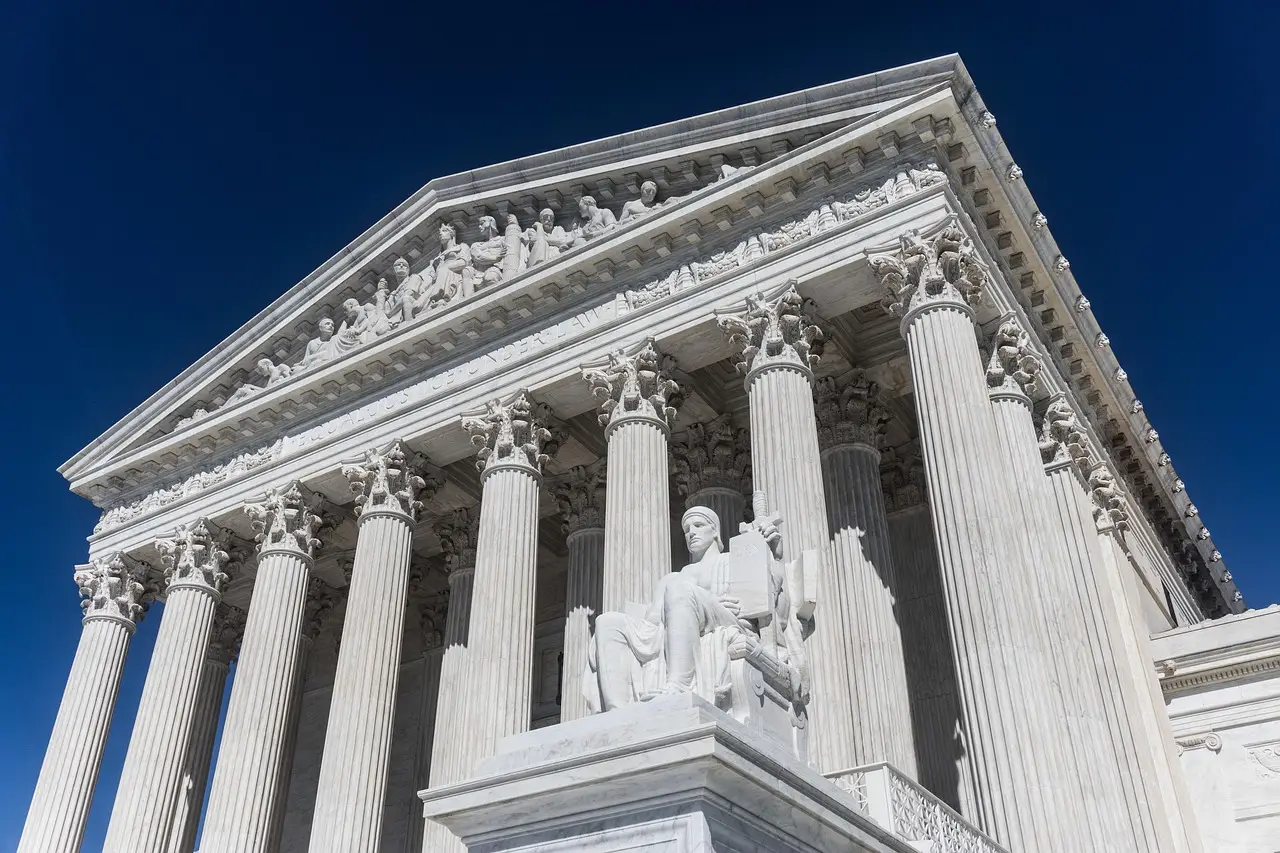
The Supreme Court on Friday agreed to decide whether the Trump administration can suspend access to asylum for immigrants at the U.S.-Mexico border. The justices announced the grant in a brief list of orders from their private conference. The case will be argued during the 2026-27 term.
The court will review Mullin v. Refugee and Immigrant Center for Education and Legal Services, a ruling by the U.S. Court of Appeals for the District of Columbia Circuit that struck down the policy as an executive overreach. The D.C. Circuit agreed to keep its ruling on hold while the government appeals. That means the asylum restrictions remain in effect for now.
Where did the case come from?
The case traces to a Jan. 20, 2025 proclamation in which President Donald Trump declared that "an invasion is ongoing at the southern border" and suspended the entry of noncitizens "engaged in the invasion." Trump indicated those noncitizens could no longer seek protections, such as asylum, allowing them to remain in the country.
The Department of Homeland Security then issued guidance barring any noncitizens from applying for asylum. The guidance also stated that anyone entering despite the suspension would be quickly removed, without some procedural protections federal law provides.
The challengers are 13 individuals who say they were persecuted or tortured in their home countries, plus three immigration-related nonprofits. They filed a class action in federal court in Washington.
U.S. District Judge Randolph Moss recognized a class of immigrants subject to the proclamation. He concluded the DHS guidance was unlawful, threw it out, and barred DHS officials from implementing actions under the proclamation.
What did the D.C. Circuit hold?
A three-judge panel initially paused part of Moss's order. A different panel later largely upheld it on the merits. Judge J. Michelle Childs, joined by Judge Cornelia Pillard, wrote that the "text, structure, and history" of federal immigration law "make clear that in supplying power to suspend entry by Presidential proclamation, Congress did not intend to grant the Executive the expansive removal authority it asserts."
The panel held the proclamation and guidance "are thus unlawful to the extent that they circumvent … removal procedures and cast aside federal laws affording individuals the right to apply and be considered for asylum or withholding of removal protections," a more limited form of protection from deportation.
Judge Justin Walker dissented in part. He contended Trump has discretion to deny all asylum applications and can therefore dispense with the application process. But he agreed the government "cannot remove aliens to countries where they will be persecuted, and the Proclamation and Guidance cannot strip them of mandatory procedures that protect against that removal."
What are the government's arguments?
The administration told the justices the border "had become overwhelmed by an ungovernable influx of millions of aliens, creating chaotic conditions that criminal and terrorist organizations exploited to threaten our national security." Solicitor General D. John Sauer called suspending entry and precluding asylum access "[t]he most important and effective pieces of the President's response."
Sauer argued the proclamation "rests on a commonsense understanding of the President's inherent and delegated powers to exclude aliens." He said Trump "acted well within his authority" in directing that the government need not accept asylum applications he would deny anyway.
Sauer also argued the lower courts lacked power to issue classwide relief, because federal immigration law bars orders requiring officials to enforce provisions allowing aliens to assert asylum claims and obtain hearings before expedited removal. He further contended the class improperly "sweeps in aliens who are currently overseas and have no imminent plans to enter the United States."
How did the challengers respond?
The challengers urged the justices to deny review. They said the D.C. Circuit "correctly held that the President may not invent by fiat a new removal system that eviscerates the protections Congress mandated by statute." They rejected the "unprecedented crisis" framing: by January 2025, border apprehensions had returned to historically routine levels, down over 90 percent from their peak.
They argued the statute Trump relies on "does not speak to the removal of noncitizens who are already here" and does not authorize abrogating protections against removal to persecution or torture. Federal law, they wrote, provides that noncitizens "may apply" for asylum "irrespective of … status."
What exactly will the court decide?
The justices agreed to consider the legality of the proclamation and guidance, and Moss's power to enter broad relief. They declined the government's request to review whether the class violates class-action rules.
The court also added a securities case
In Robinhood Markets v. Sodha, the court will decide whether an issuer can be liable under the misleading-omissions prong of securities law for failing to disclose material interim financial information "without an additional inquiry to determine whether the omission rendered any affirmative statement misleading." The case stems from Robinhood's July 2021 IPO, where the company did not disclose interim financial data not scheduled for reporting until August. The 9th Circuit ruled against the company, which petitioned in February. The investors argued there is "nothing radical" about the decision below. The Trump administration, in a brief filed at the court's request, agreed the court should hear the first question, with Sauer warning the 9th Circuit's ruling "threatens significant untoward consequences."
Oral arguments in both cases will likely take place next spring.
via supremecourt.gov (Original)
More from Grace Kim
Show full bio
Correspondent covering companies, deals and strategy in International law and legal practice at Global Law Wire.
320 articles
Also before the court
- Supreme Court to Review Trump's Asylum Suspension at Border
- Supreme Court Agrees to Hear Trump Asylum Suspension Showdown
- Supreme Court to Rule on Trump's Southern Border Asylum Ban
- Supreme Court to Review Trump's Asylum Ban at US-Mexico Border
- Supreme Court to Review Trump's Border 'Invasion' Proclamation