Law report No. GLW-6206 · filed November 19, 2026
Courts & TribunalsReported case
Bombay High Court Refuses Urgent Document Plea in $15 Billion Suit Against Bank of Baroda
Bombay High Court rejected B.R. Shetty's urgent plea for document sharing and forensic record preservation in his $15 billion suit against Bank of Baroda and 25 co-defendants.
By Amara Osei3 min read576 words
Holding
- Bombay High Court rejected B.R. Shetty's urgent interim plea for document sharing on 29 October 2026 applications.
- The underlying civil suit claims $15 billion in damages against Bank of Baroda and 25 co-defendants.
- Bank of Baroda settled ADGM insolvency litigation with NMC administrators for $600 million in July 2026.
- Bank of Baroda told BSE and NSE it has not been formally served with the suit or interim applications.
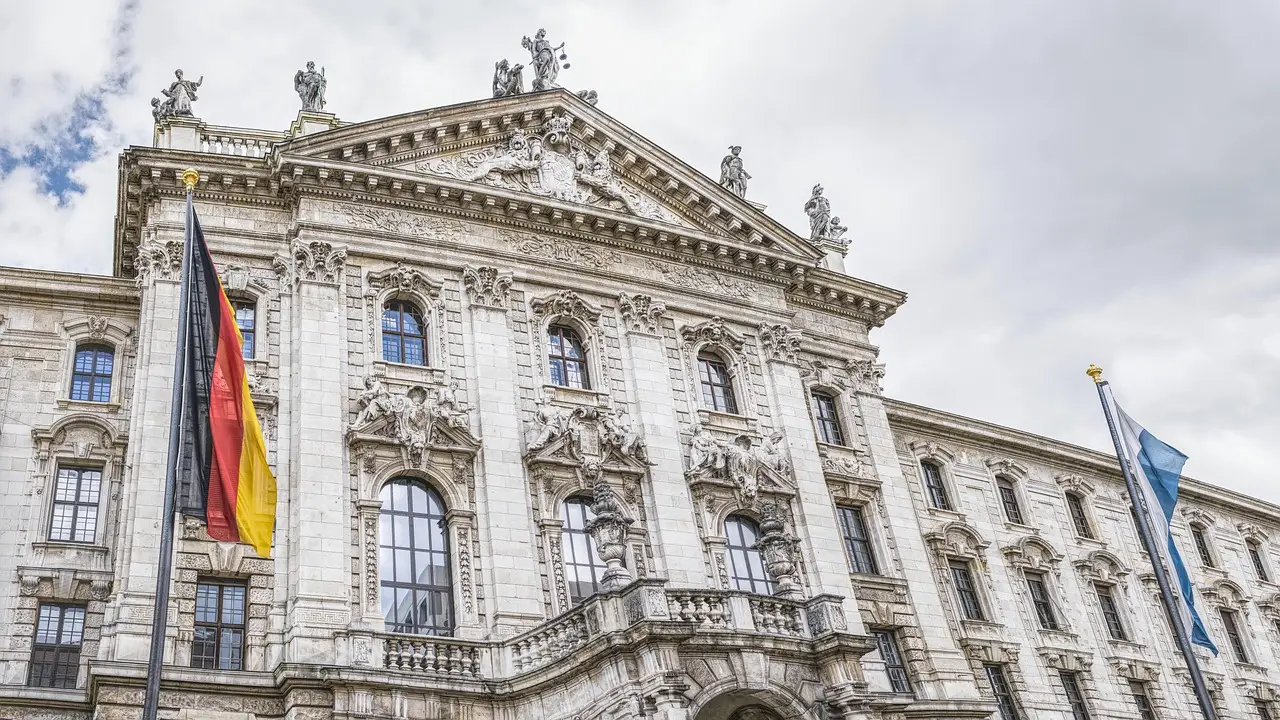
The Bombay High Court has rejected an urgent interim application by NMC Health plc founder B.R. Shetty demanding that Bank of Baroda share internal electronic communications and banking records in his $15 billion civil suit. The refusal, delivered while proceedings remain in preliminary stages, spares the public sector lender from immediate pre-trial inspection of its files.
The decision is procedural relief, not a verdict. The court declined to compel disclosure at this stage; it did not dismiss the underlying claim.
What did the court actually decide?
Shetty filed interim applications on 29 October 2026 seeking court-monitored forensic preservation and inspection of Bank of Baroda's payment systems and electronic transaction records. The Bombay High Court refused to grant the urgent relief.
The practical effect is straightforward. Bank of Baroda faces no immediate compliance burden, no compulsory discovery of internal banking communications, and no obligation to open its electronic records to the plaintiff's forensic scrutiny.
That matters because the bank has told the Bombay Stock Exchange and the National Stock Exchange that it has not been formally served with either the suit or the interim applications. The allegations, by the bank's own account, remain untested.
What is the underlying dispute?
The numbers alone justify attention. Shetty's civil suit claims $15 billion in total damages — roughly five times Bank of Baroda's entire $600 million settlement with NMC administrators — against the bank, its officials, and 25 other co-defendants.
The claim centres on alleged facilitation of transactions linked to NMC Health plc, the Abu Dhabi-listed healthcare group that collapsed into administration and spawned cross-border litigation across multiple jurisdictions.
Bank of Baroda has already closed one front. In July 2026, it settled insolvency litigation with NMC Health's joint administrators in the ADGM Court for $600 million. The domestic suit brought by Shetty is a separate, secondary front.
What does this mean for practitioners?
Three points deserve attention.
- Service remains the battleground. The bank's primary strategy in domestic courts is establishing procedural non-service. Until the suit is formally registered and pleadings served, interim applications face steep odds.
- Discovery is deferred, not denied. A future court order granting discovery, or formal admission of the civil suit, would revive the disclosure question entirely.
- Provisioning risk lingers. Should the suit proceed to full trial, financial provisioning requirements become a live question for the bank's quarterly disclosures.
For litigators on the plaintiff side, the ruling illustrates a familiar frustration: a $15 billion claim on paper counts for little until service and admission place actual documents within the court's reach.
What happens next?
The near-term triggers, on a horizon of roughly three months, are concrete:
- Formal court registration and service of pleadings on Bank of Baroda;
- Subsequent interim hearing dates set by the Bombay High Court;
- Management commentary on legal reserves during quarterly earnings.
Public sector banking stocks typically face headline volatility during high-profile litigation disclosures. The court's refusal to grant urgent interim relief eases immediate downside pressure on sentiment, though the broader legal exposure attached to a $15 billion claim has not gone anywhere.
Cross-border litigation involving state-owned lenders rarely moves quickly. The ADGM settlement resolved the primary UAE administration claim; the Indian proceedings will now proceed at their own, unhurried pace.
The takeaway
Procedural hurdles facing the plaintiff have bought Bank of Baroda time: headline risk, for now, does not translate into compulsory operational disclosure.
via sahi.com (Source)
More from Amara Osei
Show full bio
Senior reporter covering people, launches and day-to-day practice in International law and legal practice at Global Law Wire.
351 articles
Also before the court
- Calcutta High Court Turns Down ₹30 Lakh Customs Challenge Over Delay
- India's Supreme Court Strikes ₹425 Crore AI-Citation Penalty in September Roundup
- Karnataka High Court: ED Is 'Not a Super Cop', Cannot File Private Complaints
- MP High Court Rebukes State Over Fabricated Case Name in AI Pleadings
- Supreme Court: Section 37 Courts Cannot Reassess Arbitral Facts