Law report No. GLW-8725 · filed November 16, 2026
Courts & TribunalsReported case
Supreme Court Denies Review in DEI, Research Funding and Gun Cases
The Supreme Court on Monday denied review in Trump v. Thakur, Khatibi v. Yip and Novotny v. Moore, and invited the solicitor general's views on three Taliban cases.
By Sophie Lindqvist5 min read1,010 words
Holding
- On Monday, November 16, 2026, the Supreme Court denied review in Trump v. Thakur, Khatibi v. Yip and Novotny v. Moore.
- The 9th Circuit's May 2026 ruling that DEI-based grant terminations likely violate the First Amendment now stands.
- Justices Thomas and Alito dissented from the Khatibi denial; Gorsuch would have granted review.
- Thomas urged the Court to take a 'more narrowly focused' sensitive-places gun case in the future.
- The Court invited the solicitor general's views on three Taliban cases; Kagan recused from two.
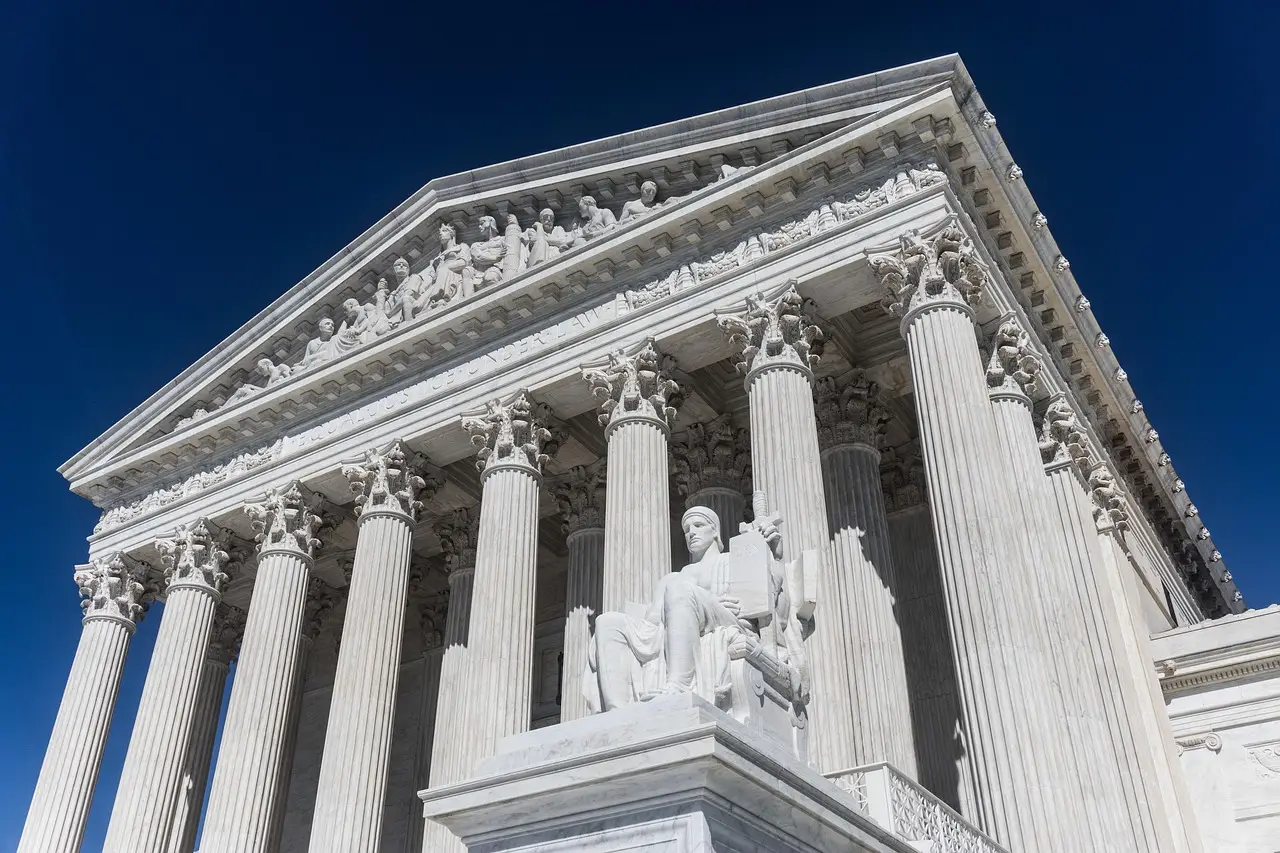
The U.S. Supreme Court on Monday denied review in a string of high-profile disputes, leaving intact a 9th Circuit ruling that shields University of California research grants terminated over DEI concerns and passing on a Second Amendment challenge to Maryland's "sensitive places" gun bans. The orders came from the justices' private conference on Friday and were released Monday morning.
The denials end, for now, the Trump administration's bid to revive broad discretion over research funding. They also leave California's implicit-bias training requirement for doctors standing. And they signal, through Justice Clarence Thomas's separate statement, that the "sensitive places" question will return in a narrower case.
What happened in the research funding fight?
Trump v. Thakur grew out of executive orders President Donald Trump issued early in his second term targeting "diversity, equity, and inclusion" (DEI) initiatives and government spending. Federal agencies cut grants linked to disfavored topics. States, universities and scholars sued.
A group of University of California faculty and researchers challenged the terminations on free speech, due process and administrative law grounds. In June 2025, a federal district court in California issued a preliminary injunction. It ordered grants reinstated for two classes:
- UC researchers who received a form termination notice "that does not provide a grant-specific explanation for the termination"
- UC researchers who lost funding because of the DEI-related orders
The court found the first group's cuts likely "arbitrary and capricious" (lacking good cause or sound reasoning) and the second group's cuts likely in violation of the First Amendment.
The 9th Circuit then split the case. In May 2026, it reversed the district court as to the form-letter class, relying on the Supreme Court's interim ruling in National Institutes of Health v. American Public Health Association, which held that lower courts lacked power to order relief enforcing "obligation[s] to pay money" under research grants. But it affirmed the First Amendment ruling for the DEI class: the government "may not discriminate between speakers within that program to suppress viewpoints with which it disagrees."
The administration petitioned for review. Solicitor General D. John Sauer asserted that the "First Amendment does not require taxpayers to continue funding projects that the government concludes no longer serve the public interest." The researchers countered that the government "can point to no case" allowing termination of competitively awarded grants "based on the perceived viewpoint of the research." The Court denied the petition without comment or noted dissent.
What does the Khatibi denial mean for doctors?
In Khatibi v. Yip, California ophthalmologist Dr. Azadeh Khatibi challenged her state Medical Board's requirement that continuing medical education courses cover "the understanding of implicit bias" (subconscious assumptions about people from different backgrounds). U.S. District Judge Monica Ramirez Almadai dismissed the suit, holding the courses are government speech outside the First Amendment's reach. The 9th Circuit affirmed.
The doctors warned that the ruling "would license states to conscript private professionals—doctors, lawyers, teachers, engineers, and others—into advancing contested government ideologies." The Medical Board answered that the 9th Circuit "merely held" that challengers "must abide by the State's restrictions" for courses to qualify for state-approved credit.
The Court denied review over three justices' objections. Justice Neil Gorsuch would have granted the petition. Justice Clarence Thomas, joined by Justice Samuel Alito, dissented, writing that the 9th Circuit "fundamentally misunderstands" precedent and the Constitution, and that "First Amendment protections do not give way simply because a State heavily regulates speech."
Why did the justices pass on the Maryland gun case?
Novotny v. Moore challenged Maryland's bans on carrying firearms in government buildings, schools, public transportation, state parks, stadiums and places selling alcohol. The 4th Circuit upheld the restrictions under the "sensitive places" concept from New York State Rifle & Pistol Association v. Bruen (2022). The challengers argued that "[t]he constitutionality of these so-called 'sensitive place' bans is among the most critical questions facing the judiciary" and that the exception is a "narrow" one. Maryland countered that lower courts share "vast areas of consensus" and that the laws rest on a "[r]ich" historical tradition.
Thomas wrote separately, calling himself "skeptical" of the 4th Circuit's reasoning. But he agreed denial was proper because the case's "breadth" would complicate review. "In an appropriate and more narrowly focused case," he wrote, "we should consider the scope of States' authority to ban firearms in 'sensitive places.'"
What else did the Court decline to hear?
Monday's orders also rejected:
- Strickland v. Moritz, from a former federal public defender who says her supervisor sexually harassed her, targeting the adequacy of the judiciary's internal claims process
- Gays Against Groomers v. Garcia, challenging Colorado's legislative hearing rules on referring to transgender or nonbinary people; the 10th Circuit held decorum rules are protected by legislative immunity
- Custodia Bank v. Federal Reserve Board of Governors, where the Fed rejected a Wyoming crypto-focused bank's account application as "highly likely inconsistent with safe and sound banking practices"; the 10th Circuit held the Fed has discretion to refuse even eligible entities
What's next on the docket?
The Court also invited the solicitor general to file briefs on three cases against the Taliban brought by victims of the 1998 embassy bombings in Kenya and Tanzania and of the September 11, 2001 attacks. The petitions concern whether the Taliban is a "foreign state" under the Foreign Sovereign Immunities Act and how the Terrorism Risk Insurance Act lets judgment holders reach seized assets, including Afghan central bank funds at the Federal Reserve Bank of New York. Justice Elena Kagan recused from two of the three, presumably from her prior service as solicitor general. There is no filing deadline.
The Court had already added two argued cases after Friday's conference: Mullin v. Refugee and Immigrant Center for Education and Legal Services, on suspending asylum access at the U.S.-Mexico border, and Robinhood Markets, Inc. v. Sodha, on undisclosed interim financial data in an initial public offering.
By Sophie Lindqvist
via supremecourt.gov (Original)
More from Sophie Lindqvist
Show full bio
News editor covering people, launches and day-to-day practice in International law and legal practice at Global Law Wire.
333 articles
Also before the court
- Supreme Court Allows Third-Country Deportations to Proceed
- Alito Recuses From Climate Case as Trump Returns to Emergency Docket
- Supreme Court to Review Trump Asylum Suspension at Border
- Cato Amicus Brief Urges First Circuit to Kill $100,000 H-1B Fee
- DOJ Accuses UCLA School of Law of Racial Discrimination in Admissions