Law report · filed November 22, 2026
ArbitrationReported case
Supreme Court Caps Arbitral Award at ₹2 Crore Reference Limit
Supreme Court holds an umpire cannot award beyond the ₹2 crore reference limit in the Neycer-GMB dispute, cutting a ₹11.69 crore award and barring further recovery.
By Priya Raman3 min read667 words
Holding
- Supreme Court bench of Justice Dipankar Datta and Justice Satish Chandra Sharma capped the award at the ₹2 crore reference limit in a ruling under the Arbitration Act, 1940.
- The umpire had awarded GMB Ceramics approximately ₹11.69 crore against a claim quantified at ₹2 crore in 1989 arbitration initiation correspondence.
- The dispute stemmed from a 1986 technical collaboration agreement between Neycer (India) Ltd. and GMB Ceramics Ltd. for a sanitaryware plant.
- The Calcutta High Court Single Judge's 2015 order restricting the award was restored after a Division Bench reversal in 2018.
- Neycer's ₹4 crore deposit — ₹2 crore principal plus ₹2 crore interest — was declared full and final satisfaction of the modified award.
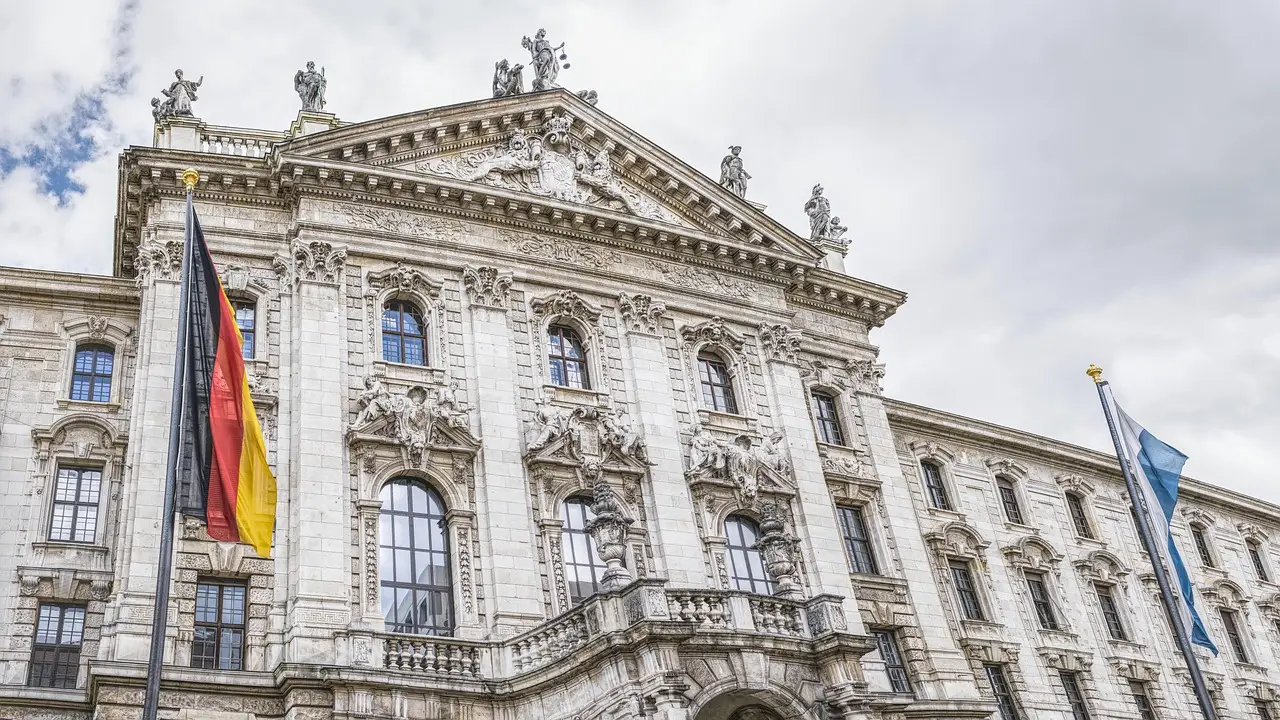
The Supreme Court of India has held that an arbitrator or umpire cannot award compensation beyond the monetary limit of the dispute expressly referred to arbitration by a party. A bench of Justice Dipankar Datta and Justice Satish Chandra Sharma, adjudicating under the Arbitration Act, 1940, allowed Neycer (India) Ltd.'s appeal and restored a Calcutta High Court Single Judge's order capping the award at ₹2 crore — roughly one-sixth of the ₹11.69 crore the umpire had originally granted GMB Ceramics Ltd.
The dispute is old. It dates to a 1986 technical collaboration agreement under which Neycer was to provide technical assistance for setting up a sanitaryware manufacturing plant. GMB alleged delays and breaches of contractual obligations. It claimed damages covering project cost overruns, projected advertising expenditure and interest on loans.
What went wrong at arbitration?
When GMB initiated arbitration proceedings in 1989, it quantified its claim at ₹2 crore in the correspondence nominating its arbitrator. That number mattered. The umpire nevertheless awarded GMB approximately ₹11.69 crore — nearly six times the sum GMB itself had put on the record as the reference limit.
Neycer challenged the award. In 2015, a Single Judge of the Calcutta High Court restricted the award to ₹2 crore, holding that the umpire could not travel beyond the scope of the reference. A Division Bench reversed that decision in 2018. Neycer then approached the Supreme Court.
What did the Court decide?
The judgment, authored by Justice Datta, held that GMB's correspondence had crystallised the monetary limit of the reference at ₹2 crore. Claims, the Court reasoned, cannot enlarge the disputes actually referred to arbitration. The umpire could not rely on subsequent correspondence or a party's reservation of rights to claim additional damages as a basis to expand his mandate.
"Umpire, it is settled law, cannot confer jurisdiction upon himself by misconstruing the terms of the reference," the Court observed.
The ruling also addressed the merits of GMB's individual claims:
- Projected advertising expenditure: The Court upheld the rejection of this claim. Actual expenditure figures existed in the company's audited accounts, and GMB had not proved its higher estimate through the person who prepared it. Evidence, not assertion.
- Plant commissioning: The Court held that Neycer's obligation to "endeavour to commission" the plant did not make it a "turnkey guarantee or an insurance policy underwriting GMB's entire business profitability and debt servicing for five years." A duty to try is not a warranty of outcomes.
- Other claims: The Court declined to interfere with the claims the Single Judge had sustained within the ₹2-crore limit.
How was the money settled?
Neycer had already deposited ₹4 crore — ₹2 crore towards the principal award and ₹2 crore towards interest — and GMB had withdrawn it. The Court directed that this amount would constitute full and final satisfaction of the modified award. Neither party can recover anything further. The appeals were allowed accordingly, and the Single Judge's 2015 order was restored.
What does this mean for practitioners?
For arbitration counsel, the practical consequence is straightforward. The monetary figure a party puts in its notice or nomination correspondence defines the outer boundary of the tribunal's jurisdiction, at least under the 1940 Act's framework, and a reservation of rights will not quietly expand it. Parties who intend to claim more must amend or restate the reference expressly. Tribunals, for their part, should verify the quantified limit before awarding; an award that exceeds it stands exposed to reduction at the setting-aside stage, as this decades-long litigation — 1989 to 2026, with ₹9.69 crore ultimately struck off — demonstrates.
There is a caveat. This case arose under the Arbitration Act, 1940, a pre-liberalisation statute now largely superseded for new disputes. How courts map this reasoning onto the 1996 Act's scheme, where statements of claim define the scope of reference, remains to be tested. The principle, though, reads as general: the reference, not the tribunal's sympathy, sets the limit.
via livelaw.in (Source)
More from Priya Raman
Show full bio
Staff writer covering companies, deals and strategy in International law and legal practice at Global Law Wire.
376 articles
Also before the court
- When Can a Court Rewrite an Arbitral Award? Not on Section 34
- Supreme Court: Arbitral Awards Enforceable Like Decrees Even During Challenge
- Supreme Court: Section 37 Courts Cannot Reassess Arbitral Facts
- India's Supreme Court Strikes ₹425 Crore AI-Citation Penalty in September Roundup
- US Court Confirms $562.5 Million Devas Award Against ISRO's Antrix