Law report No. GLW-1564 · filed November 20, 2026
ArbitrationReported case
Supreme Court Names Goa Seat Despite Delhi Clause in Arcis Franchise Row
India's Supreme Court named Goa the arbitration seat in Arcis Clean Energy despite a Delhi location clause, exposing how courts now construct, not discover, party intention.
By Grace Kim5 min read913 words
Holding
- Supreme Court in Arcis Clean Energy v. Parshva Innovation, 2026 LiveLaw (SC) 1042, held Goa the seat and Delhi a mere venue.
- Clauses 32.4 (Delhi location) and 32.5 (Goa hearings) conflicted; Clause 38 gave Goa courts exclusive jurisdiction.
- Mahanadi Coalfields, 2026 INSC 1038, refused to create a seat from hearing conduct alone; Section 34 challenge went to Sundargarh District Court.
- The Draft Arbitration and Conciliation (Amendment) Bill, 2024 proposes replacing 'place' with 'seat' and 'venue' in Section 20.
- The 246th Law Commission Report recommended the seat/venue distinction, but no amendment adopted it.
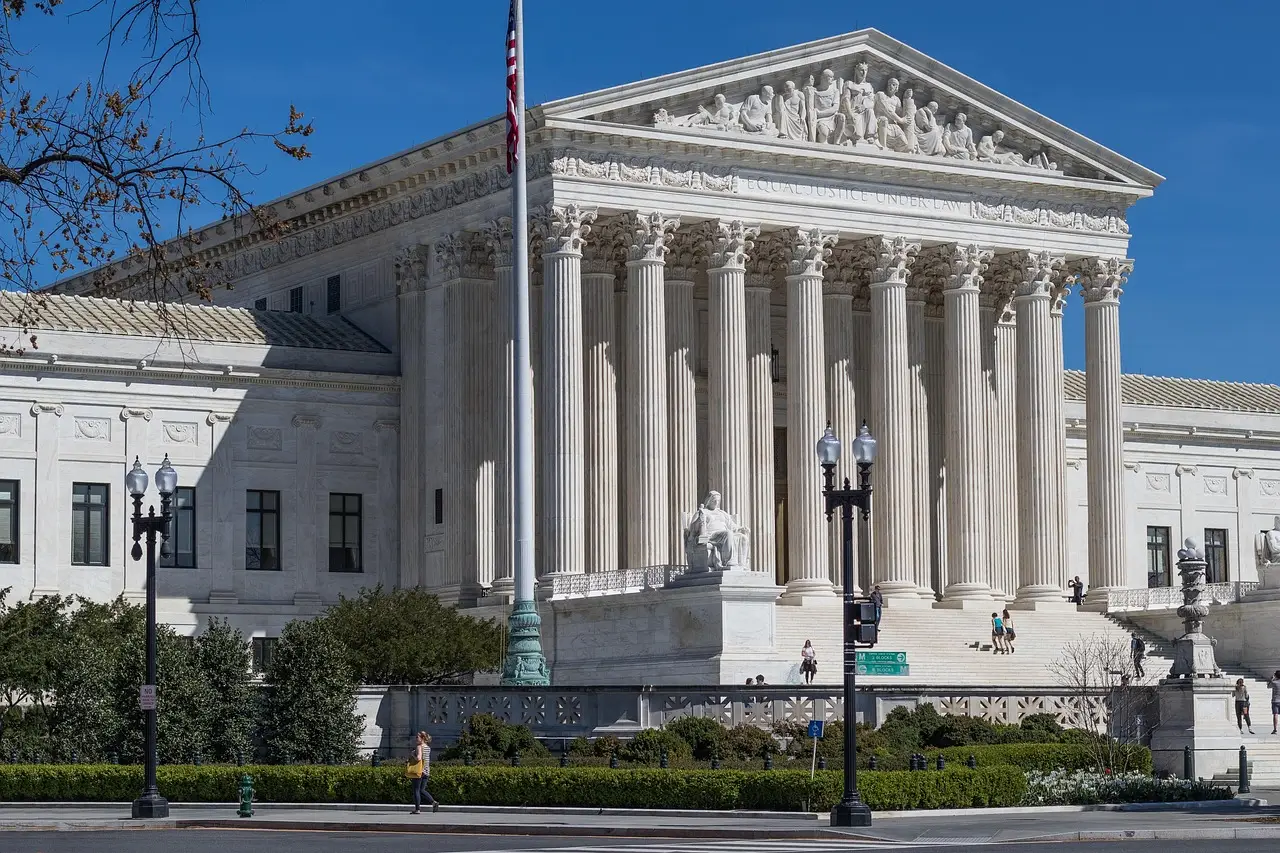
The Supreme Court of India has ruled that Goa, not Delhi, was the juridical seat of arbitration in Arcis Clean Energy Pvt. Ltd. v. Parshva Innovation, 2026 LiveLaw (SC) 1042, despite a clause stating the "precise location of the arbitration shall be within Delhi." The Court reached that conclusion in 2026 by reading the arbitration clause alongside the exclusive jurisdiction clause in the same franchise agreement, which submitted the parties to the competent courts in Goa. The decision sharpens a long-running doctrinal problem: when a contract points to two places at once, can a court honestly say the parties shared any intention about the seat?
The agreement itself was internally contradictory. Clause 32.4 placed the arbitration location in Delhi. Clause 32.5 stated the "arbitration proceedings will be held in Goa." Clause 38, governing law and jurisdiction, provided for interpretation under Indian law and exclusive jurisdiction of the competent courts in Goa. Viewing the agreement in its entirety, the Court held that the parties' intention pointed towards Goa as the seat, with Delhi a mere venue.
What does the ruling change for practitioners?
The practical consequence is straightforward. The seat determines which courts exercise supervisory jurisdiction over the arbitration, entertain challenges to the award, and exercise other powers under the 1996 Act. A party drafting or litigating an arbitration clause cannot rely on a single geographical reference; every jurisdiction clause, governing law clause, and venue designation in the contract will be read together. In Arcis, the exclusive jurisdiction clause outweighed the express "location" wording. Practitioners should audit all geographical references in a dispute resolution package before filing a Section 34 challenge, because the court that appears competent from one clause may not be.
How did the doctrine develop?
The modern framework begins with the Constitution Bench in Bharat Aluminium Co. v. Kaiser Aluminium Technical Services Inc. (2012), known as BALCO, which distinguished the juridical seat from places where hearings may be held for convenience under Section 20 of the 1996 Act. A short geographical reference in a contract can therefore decide the seat.
In Enercon (India) Ltd. v. Enercon GmbH (2014), the Court refused to let the word "venue" or the identification of London control the inquiry in isolation. It asked whether the broader structure of the agreement showed the parties intended the arbitration to be legally anchored in India. The juridical significance of a place, the Court established, does not depend entirely on the label placed before it.
Indus Mobile Distribution Pvt. Ltd. v. Datawind Innovations Pvt. Ltd. (2017) went further. The Court treated Mumbai as the seat and gave its courts exclusive supervisory jurisdiction, even though no part of the cause of action arose there.
The 2020 decision in Union of India v. Hardy Exploration and Production (India) Inc. moved the other way, refusing to convert Kuala Lumpur from a venue into a seat without clearer indications of intention, and allowing Indian courts to entertain the Section 34 challenge. Then in BGS SGS Soma JV v. NHPC Ltd., 2019 LiveLaw (SC) 929, drawing on the English decision Roger Shashoua v. Mukesh Sharma [2009] EWHC 957 (Comm), the Court held that an expressly designated venue with no significant contrary indications may be treated as the juridical seat. The courts, in effect, stopped asking whether parties actually expressed a choice and began asking whether the law should attribute one to them.
In BBR (India) Pvt. Ltd. v. S.P. Singla Constructions Pvt. Ltd., 2022 LiveLaw (SC) 493, the Court held that moving hearings to a different place does not transfer supervisory jurisdiction once the seat is fixed. Party autonomy yields there to jurisdictional stability.
What limit did Mahanadi Coalfields set?
The 2026 decision in Mahanadi Coalfields Ltd. v. GSCO Infrastructure Pvt. Ltd., 2026 INSC 1038, capped the presumption. With no juridical seat designated, jurisdiction over the Section 34 challenge fell to the District Court at Sundargarh under Section 2(1)(e) of the 1996 Act and the contractual jurisdiction clauses. A court need not retrospectively invent a contractual seat merely because hearings happened at one place.
Read together, the two 2026 decisions show both sides of the doctrine. Mahanadi Coalfields refuses to construct intention from convenience. Arcis constructs intention from contradiction, assigning greater weight to some provisions than to others.
Is legislative reform coming?
Section 20 of the 1996 Act still uses the expression "place of arbitration." Courts have read Sections 20(1) and 20(2) as referring to the seat and 20(3) as a venue, but the statute does not say so. The 246th Report of the Law Commission of India recommended replacing "place" with "seat" and "venue," but neither the 2015 amendment nor any later one adopted it. The Draft Arbitration and Conciliation (Amendment) Bill, 2024 proposes two alternatives: one replaces "place" with "seat" in sub-sections (1) and (2) and "venue" in (3); the other fixes the seat of a domestic arbitration at the place of contract execution or where the cause of action arose. The second option would reduce inference but limit party autonomy by removing the choice of a neutral juridical home.
The deeper point, as the author of the underlying analysis argues, is candour. Where parties made a discernible choice, party autonomy should govern. Where they did not, the law supplies an answer, and the article, by Dr Nuvita Kalra, Assistant Professor at MIT World Peace University, Pune, calls that exercise what it is: not the discovery of intention, but the construction of certainty.
via livelaw.in (Source)
More from Grace Kim
Show full bio
Correspondent covering companies, deals and strategy in International law and legal practice at Global Law Wire.
336 articles
Also before the court
- India's Supreme Court Reiterates: Arbitrators Cannot Rewrite Contracts
- When Can a Court Rewrite an Arbitral Award? Not on Section 34
- Supreme Court: Section 37 Courts Cannot Reassess Arbitral Facts
- Supreme Court: Contractual Bar Cannot Block Pre-Award Interest
- Supreme Court: Arbitral Awards Enforceable Like Decrees Even During Challenge