Law report No. GLW-9232 · filed September 29, 2026
Courts & TribunalsReported case
ICC Confirms Charges Against Duterte, Clearing Path to Trial
The ICC has confirmed all charges against Rodrigo Duterte and committed him to trial, after the Appeals Chamber rejected a challenge to jurisdiction arising from the Philippines' Rome Statute exit.
By Grace Kim
Holding
- In late April 2026, the ICC Appeals Chamber rejected a defence challenge to the Court's jurisdiction over the Duterte case.
- Pre-Trial Chamber I confirmed all charges against Duterte, the final step before trial.
- Prosecutors allege Duterte's 2011–2019 anti-drug campaign amounted to a 'widespread and systematic attack directed against the civilian population' with killings in the thousands; 539 victims were cleared to join the case.
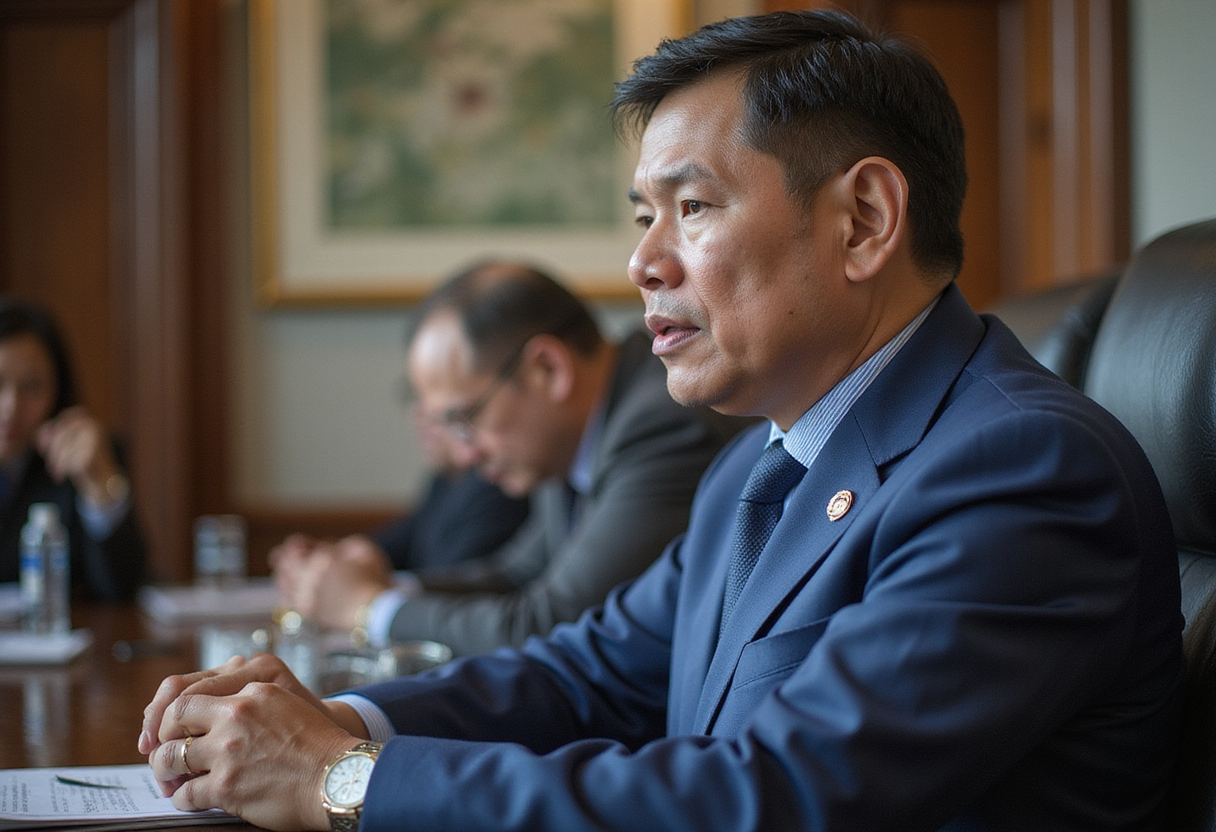
The International Criminal Court has confirmed all charges against former Philippine president Rodrigo Duterte and committed him to trial, after the ICC Appeals Chamber in late April 2026 rejected a defence challenge to the Court's jurisdiction.
The decision by Pre-Trial Chamber I marks the final procedural step before trial. It followed a confirmation of charges hearing at which judges assessed there to be 'substantial grounds to believe' that Duterte committed the alleged crimes. The Appeals Chamber's April ruling settled the contested jurisdictional question arising from the Philippines' 2019 withdrawal from the Rome Statute, affirming that withdrawal does not affect jurisdiction over alleged crimes committed while a state was still a party.
The case has moved through every stage of the ICC's pre-trial machinery: preliminary examinations and investigations, an arrest warrant, initial appearance proceedings, and victim participation. In April 2026, 539 drug war victims were cleared to join the proceedings through legal representatives.
The Prosecution's Case
ICC prosecutors argue that Duterte's anti-drug campaign between 2011 and 2019 amounted to a 'widespread and systematic attack directed against the civilian population'. They contend he played a pivotal role in a pattern of killings numbering in the thousands.
The defence has countered that these claims rest on a misreading of political rhetoric. Duterte's public statements, his lawyers argue, were 'hyperbole' rather than evidence of a coordinated criminal policy.
At its core, the case turns on a difficult question of proof under international criminal law: whether patterns of violence, combined with executive rhetoric, can establish the existence of an organised policy. The trial's outcome will depend on how the Court interprets the relationship between political speech, state practice and criminal intent.
Jurisdiction and Sovereignty
The Philippines' 2019 withdrawal from the Rome Statute has dominated domestic debate, with the Court's jurisdiction contested in political and academic discourse. The ICC has consistently maintained its position: withdrawal does not extinguish jurisdiction over alleged crimes committed during a state's membership. The ruling reinforces a principle established in the Court's jurisprudence — that states cannot unilaterally escape accountability by exiting the treaty framework after the fact.
Consequences for Practitioners
For defence counsel, the Appeals Chamber's jurisdictional ruling narrows the available avenues of challenge, shifting the battleground to the evidentiary phase. The trial will require the Prosecutor to establish the legal elements of crimes against humanity — including the existence of a widespread or systematic attack directed against a civilian population and the accused's contribution to it — under the ICC's evidentiary standards and fair trial guarantees. Counsel on both sides will need to address how statements by a sitting official translate, or fail to translate, into proof of criminal policy. For victims' representatives, the decision confirms that participation rights secured at the pre-trial stage will carry into trial proceedings.
Political Context
The case also illustrates the challenge of operationalising international criminal law where former leaders retain substantial domestic support. Duterte continues to command sizeable backing in the Philippines, and his daughter, Vice President Sara Duterte, leads early polling for the 2028 presidential election. Supporters may view the proceedings as external intervention detached from domestic realities; critics see a long-awaited forum for accountability.
The proceedings highlight Southeast Asia's complex relationship with international adjudication. Regional norms of non-interference and sovereignty remain influential, yet states in the region have selectively engaged international legal mechanisms, including before the International Court of Justice and in arbitral proceedings. The Duterte case exposes the gap between the region's growing acceptance of interstate legal disputes and enduring political sensitivities over international criminal processes that scrutinise domestic exercises of power.
Broader Stakes
The Pre-Trial Chamber's decision carries significance beyond the Philippines. With charges confirmed and the case set for trial, the ICC is reinforcing the principle that former heads of state are not beyond the reach of international criminal law.
The case also sits within a wider debate about selectivity and double standards in prosecution. Critics point to structural limits in the ICC's jurisdiction and its reliance on state cooperation — concerns particularly salient in parts of the Global South, which will shape how the Court's decisions are interpreted.
Fair trial guarantees are central to the Court's legitimacy in the proceedings ahead. The rights of the accused and the rigorous testing of evidence will determine whether the outcome commands confidence. Procedural discipline also matters for victims: families and survivors have played an important role in sustaining the case, documenting alleged abuses and participating in proceedings. For them, the ICC represents both a site of recognition and a vehicle for potential accountability.
The trial will test whether international criminal law can hold powerful leaders to account in cases where domestic legal mechanisms fail to credibly respond to allegations of systematic violence. Its outcome will bear on Duterte's legacy and on the future of international justice in Southeast Asia.
via icc-cpi.int (Original)
More from Grace Kim
Show full bio
Correspondent covering consumer brands and retail at Global Law Wire.
206 articles