Law report No. GLW-9867 · filed September 29, 2026
Courts & TribunalsReported case
Immigrants Urge Supreme Court to Keep Block on Third-Country Deportations
Immigrants' counsel says Judge Murphy's order doesn't bar third-country removals — it requires the government to carry them out lawfully, with notice and a hearing.
By Priya Raman
Holding
- On Monday, lawyers urged the Supreme Court to leave in place Judge Brian Murphy's order barring removal of immigrants to countries not named in their removal orders without notice and a meaningful opportunity to object.
- Solicitor General D. John Sauer filed the government's third stay request in the dispute, calling Murphy's order a loss of "an essential tool to remove certain aliens."
- The First Circuit largely upheld Murphy's ruling on Sept. 18 and dissolved a March 16, 2026 stay on Wednesday, prompting the government's latest Supreme Court application.
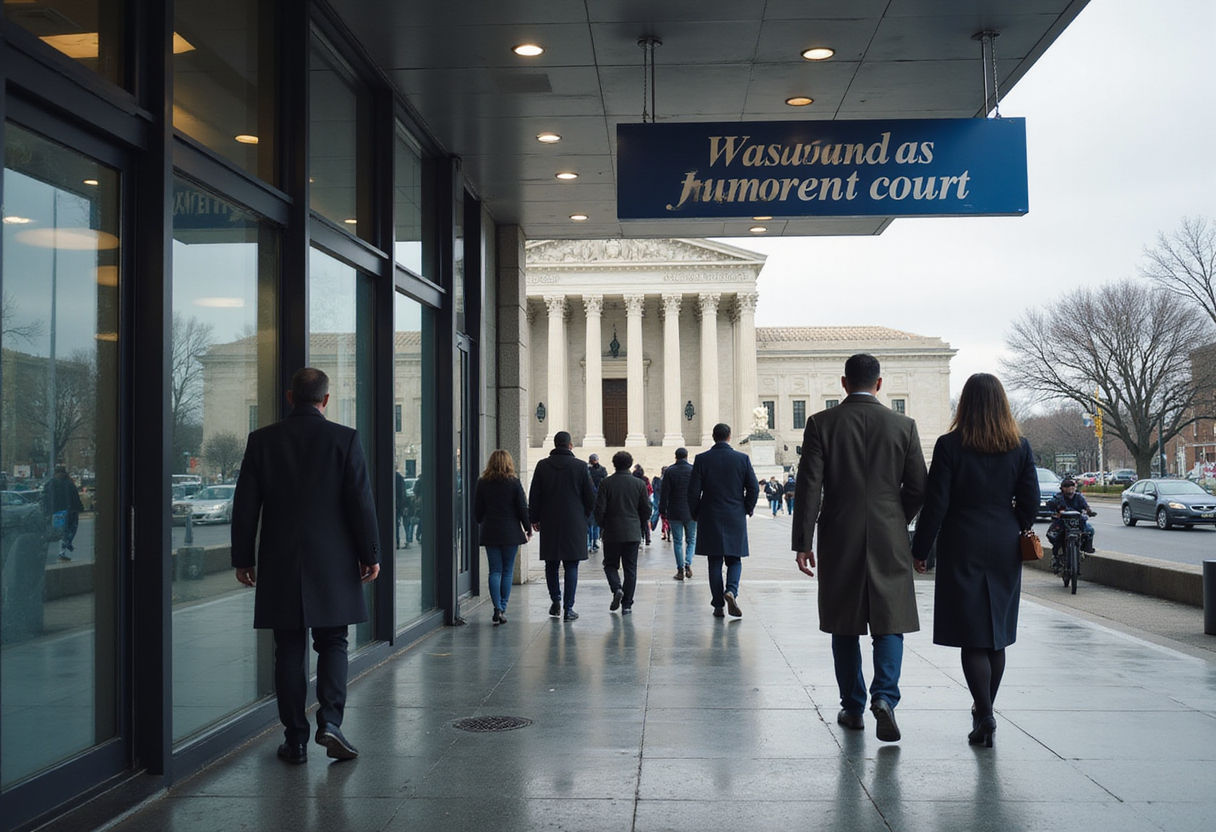
Lawyers for immigrants facing deportation asked the U.S. Supreme Court on Monday to leave in place a Massachusetts federal judge's ruling that bars the Trump administration from sending noncitizens to countries not identified in their removal orders — a practice known as third-country removals.
Trina Realmuto of the National Immigration Litigation Alliance, which represents the immigrants, told the justices that the decision by U.S. District Judge Brian Murphy "does not prevent third-country removals; rather, it simply requires" the government "to do so lawfully."
The filing came four days after U.S. Solicitor General D. John Sauer asked the justices to pause Murphy's order — the third time the government has brought the dispute to the court. Sauer contended that Murphy's order deprived the government of "an essential tool to remove certain aliens, including some of the worst criminal aliens," and argued that it "rests on the same fundamentally flawed legal premises as the previous rulings."
The litigation traces back to shortly after President Donald Trump's second inauguration, when he signed an executive order directing the Department of Homeland Security to take "all appropriate actions" to remove noncitizens remaining in the United States despite deportation orders.
Within weeks, DHS issued internal guidance instructing a division of U.S. Immigration and Customs Enforcement to determine whether undocumented immigrants with deportation orders — who had not yet been removed because of the prospect of torture in their home countries — could instead be sent elsewhere. Additional guidance issued the following month required DHS, before removing immigrants to a country not named in their orders and that has not assured the United States they will not face torture, to notify the immigrants of the planned removal, give them a chance to "affirmatively express" fear of torture, and, if needed, conduct a screening on the likelihood of torture.
Four immigrants with removal orders filed suit in Massachusetts in March, arguing they feared deportation to countries not identified in their orders.
Murphy issued an order prohibiting the government from deporting the plaintiffs and others like them to third countries without first providing written notice of the destination country and a "meaningful opportunity" to challenge the removal. Murphy also held that DHS should assess whether immigrants' fears of torture were "reasonable," rather than whether it is "more likely than not" they will be tortured. If immigrants cannot make that showing, DHS must give them at least 15 days to seek reopening of their immigration proceedings.
The government's path through the Supreme Court has been winding. Sauer first asked the justices in May 2025 to stay Murphy's order pending appeal. On June 23, over a dissent by Justice Sonia Sotomayor joined by Justices Ketanji Brown Jackson and Elena Kagan, the court granted that request.
One day later, Sauer returned, asking the justices to clarify that, after their first order, the administration could deport eight men held at a U.S. military base in Djibouti — after Murphy had ruled that efforts to remove them to South Sudan violated his order. On July 3, the court issued a brief opinion indicating its June 23 order paused Murphy's order "in full," including his later South Sudan ruling. Kagan wrote separately, stating that although she disagreed with the stay, she did "not see how a district court can compel compliance with an order that this Court has stayed." Sotomayor dissented again, joined by Jackson.
Back in his courtroom, Murphy issued a final judgment in the immigrants' favor in February 2026 and threw out the third-country removal policy. He ruled, among other things, that before removal to a third country, immigrants have the right to "meaningful notice" and a "meaningful opportunity" to contest removal on the ground that they have a reasonable fear of persecution or torture there.
On Sept. 18, the U.S. Court of Appeals for the 1st Circuit largely upheld Murphy's ruling, and on Wednesday it dissolved a March 16, 2026, order that had put Murphy's ruling on hold during the government's appeal. The administration returned to the Supreme Court on Thursday afternoon for a third time. Sauer told the justices the reinstatement of Murphy's order has "created substantial logistical problems with ongoing removal operations—including the cancellation of flights—and led to added expense, potential diplomatic issues, and the inability to remove dangerous criminals."
In their brief Monday opposing a stay, the immigrants countered that the administration's arguments "ignore the significant harm resulting from deporting thousands of longtime U.S. residents, many with no criminal history, to third countries without regard to the persecution or torture they face there." Immigrants deported "without meaningful notice or an opportunity to present" claims about what could happen in the destination countries, they wrote, "have faced prolonged and arbitrary detention, beatings and sexual assault, disappearance," and have been sent onward to countries from which the United States had already granted them protection. "These harms cannot be undone," the brief states.
The harms the administration predicts if Murphy's order remains in effect are, the immigrants argued, "neither irreparable nor caused by" his decision: the order does not require releasing immigrants from detention, "prohibit third-country removals, or undo existing arrangements." The government, they wrote, "can avoid any resulting delays by timely providing the notice and opportunity to be heard that the law requires."
For practitioners, the immediate practical consequence is that Murphy's order now governs third-country removals nationwide while the government's appeal proceeds. Immigration counsel should prepare clients for the procedural sequence the order mandates — written notice of the destination country, a meaningful opportunity to assert reasonable fear of persecution or torture, a "reasonable fear" rather than "more likely than not" torture standard, and a 15-day window to seek reopening where the showing fails. The government's pending stay application, if granted, would again suspend those requirements; a denial would leave the First Circuit's largely affirming judgment in control.
via supremecourt.gov (Original)
More from Priya Raman
Show full bio
Staff writer covering consumer brands and retail at Global Law Wire.
187 articles