Law report No. GLW-4133 · filed September 29, 2026
Courts & TribunalsReported case
DC Circuit Upholds Pentagon's Anthropic Ban in 2-1 Ruling
A DC Circuit panel upheld the Pentagon's designation of Anthropic AI as a national security supply chain risk, 2-1, leaving en banc review or the Supreme Court as Anthropic's remaining options.
By Priya Raman4 min read824 words
Holding
- A three-judge DC Circuit panel ruled 2-1 to uphold the Pentagon's designation of Anthropic's products as a 'supply chain risk' to national security, permitting a ban on Anthropic AI use by DoD personnel and defense contractors.
- Judge Gregory Katsas wrote for the majority with Judge Naomi Rao; Judge Karen Henderson dissented, arguing Congress enacted FASCSA in 2018 to guard against foreign sabotage, not US companies' safety guardrails.
- The ruling leaves Anthropic only discretionary avenues — an en banc DC Circuit rehearing or a Supreme Court petition — while a parallel case before Judge Rita Lin in the Northern District of California blocked a broader federal contracts ban.
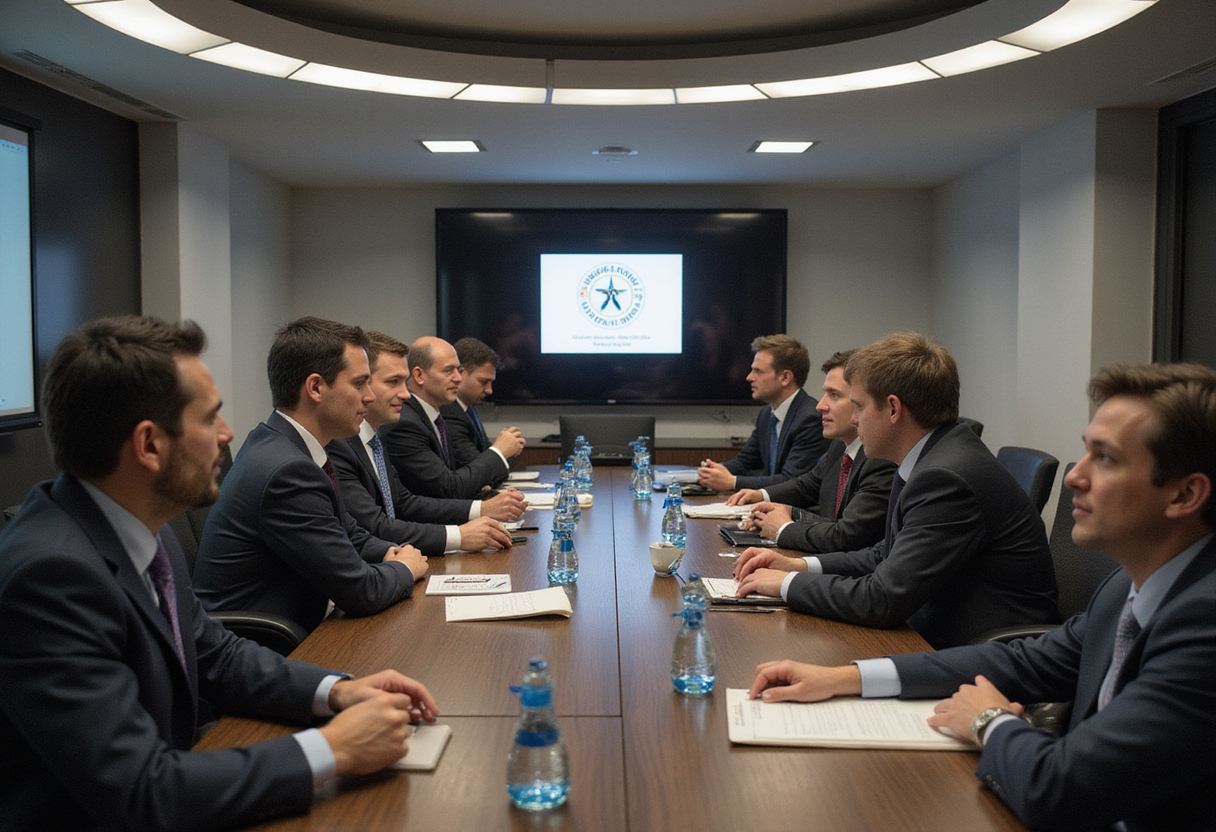
WASHINGTON — A three-judge panel of the US Court of Appeals for the District of Columbia Circuit has upheld the Pentagon's designation of Anthropic's AI products as a "supply chain risk" to national security, clearing the way for the Defense Department to bar all use of Anthropic AI by its personnel and by private-sector employees working on defense contracts.
Judge Gregory Katsas, writing for the majority alongside Judge Naomi Rao — both Trump appointees — found the Department acted within its statutory authority. "The Department had ample support for its conclusion that the continued integration of Claude into the Department's information systems, by the Department or its contractors, presented a statutorily covered national-security risk," Katsas wrote. The opinion noted that Anthropic itself encodes restrictions into its Claude models preventing certain tasks, and that those restrictions "have stopped Claude from performing tasks requested by government users" on more than one occasion.
Judge Karen Henderson, a George H.W. Bush appointee, dissented. "I cannot agree that this is the scenario the Congress had in mind when it enacted FASCSA," she wrote, referring to the Federal Acquisition Supply Chain Security Act of 2018. Henderson reasoned that Congress passed the Act explicitly to protect against sabotage by malignant foreign powers — not to target a US company openly building safety and ethics guardrails into its products.
Pentagon CTO Emil Michael, who has led the department's campaign against Anthropic, celebrated the ruling on social media. "The hammer of justice has smashed AnthropicAI[']s arguments," he wrote. "They are a Supply Chain Risk to the defense industrial base [and] warfighters will sleep better knowing that no private company will insert their opinions in the chain of command."
Anthropic signaled it will keep fighting. "We respectfully disagree with the court's decision. Another federal court has already held the government's parallel designation unlawful," the company said in a statement. "We remain confident in our position and are considering all options, including further review."
A Parallel Track in California
Today's ruling does not touch a separate lawsuit pending in the Northern District of California, where Judge Rita Lin ruled last month against the Trump administration's attempt to ban Anthropic from all federal contracts. The DC Circuit decision covers only the Defense Department ban, leaving the two litigation tracks on a collision course that could ultimately reach the Supreme Court.
Narrow Appellate Path
Because the Federal Acquisition Supply Chain Security Act routes challenges directly to the DC Circuit, the panel's ruling leaves Anthropic with two further options — both discretionary. "The only appeal from there is to the Supreme Court (which doesn't have to accept appeals; it exercises discretion and generally grants only a small percentage of appeal requests) or to an en banc panel of the D.C. Circuit (also discretionary, also not granted super often)," explained Charlie Bullock of the Institute for Law & AI in an exchange on X.com.
Yet the en banc path may hold real promise for Anthropic, practitioners said. "If a full panel is granted, all bets are off," said Sean Timmons, a former JAG Corps officer now at Tully Rinckey. The full DC Circuit includes a mix of Trump, Biden, Obama, and Bush appointees — far more diverse and unpredictable than the randomly drawn three-judge panel, which happened to seat two Trump appointees.
"You've got two people appointed by Trump [saying] we're not going to step in and undo a decision based on national security parameters, because national security is the sole prerogative of the chief executive," Timmons said. "It's pretty egregious… but when you invoke national security, the courts are kind of like Pontius Pilate: They just want to wash their hands and walk away."
Still, Timmons noted, the case is high profile and controversial enough within the legal community that the full court might feel compelled not only to grant review but to overturn the 2-1 ruling — and Anthropic's assembled legal team is, in his view, capable of making that happen.
Bullock reached a similar conclusion in his own analysis. "This was the expected outcome, given the terrible luck Anthropic had with the panel draw," he posted. "I would expect Anthropic to win before an en banc DC Circuit and likely even before SCOTUS, but they're not guaranteed any appeal at all."
What It Means for Practitioners
For now, the Defense Department ban stands and reaches beyond federal employees to contractor personnel across the defense industrial base. Government contracts counsel advising clients with DoD work should audit their supply chains for Anthropic products immediately. The divergence between the DC Circuit's holding and Judge Lin's California ruling also creates a live circuit-level split risk that parties on both sides will cite in future procurement litigation. Watch two dockets: any en banc petition filed with the DC Circuit, and the government's next move in the Northern District of California.
via cand.uscourts.gov (Original)
More from Priya Raman
Show full bio
Staff writer covering consumer brands and retail at Global Law Wire.
187 articles
Also before the court
- Supreme Court to Hear Cisco Case on ATS, TVPA Aiding-and-Abetting Claims
- US Courts Chip Away at ICC Sanctions as First Amendment Claims Mount
- Supreme Court Narrows Alien Tort Statute in Cisco Falun Gong Case
- Supreme Court IEEPA Tariff Ruling: What Comes Next
- EU's Top Court to Hear Challenge to EU-U.S. Data Privacy Framework