Law report No. GLW-5289 · filed October 2, 2026
Criminal JusticeReported case
Four Soldiers Could Face Jail Despite Immunity Deal
Four soldiers could face jail despite an immunity deal, The Australian reports, spotlighting the limits of immunity protections and the risk of criminal exposure.
By Sophie Lindqvist3 min read655 words
Holding
- The Australian reports four soldiers could face jail despite an immunity deal.
- The report does not name the soldiers, the charges, the forum, or the authority behind the immunity deal.
- The soldiers' exposure to imprisonment remains possible unless and until a court rules on the deal's scope.
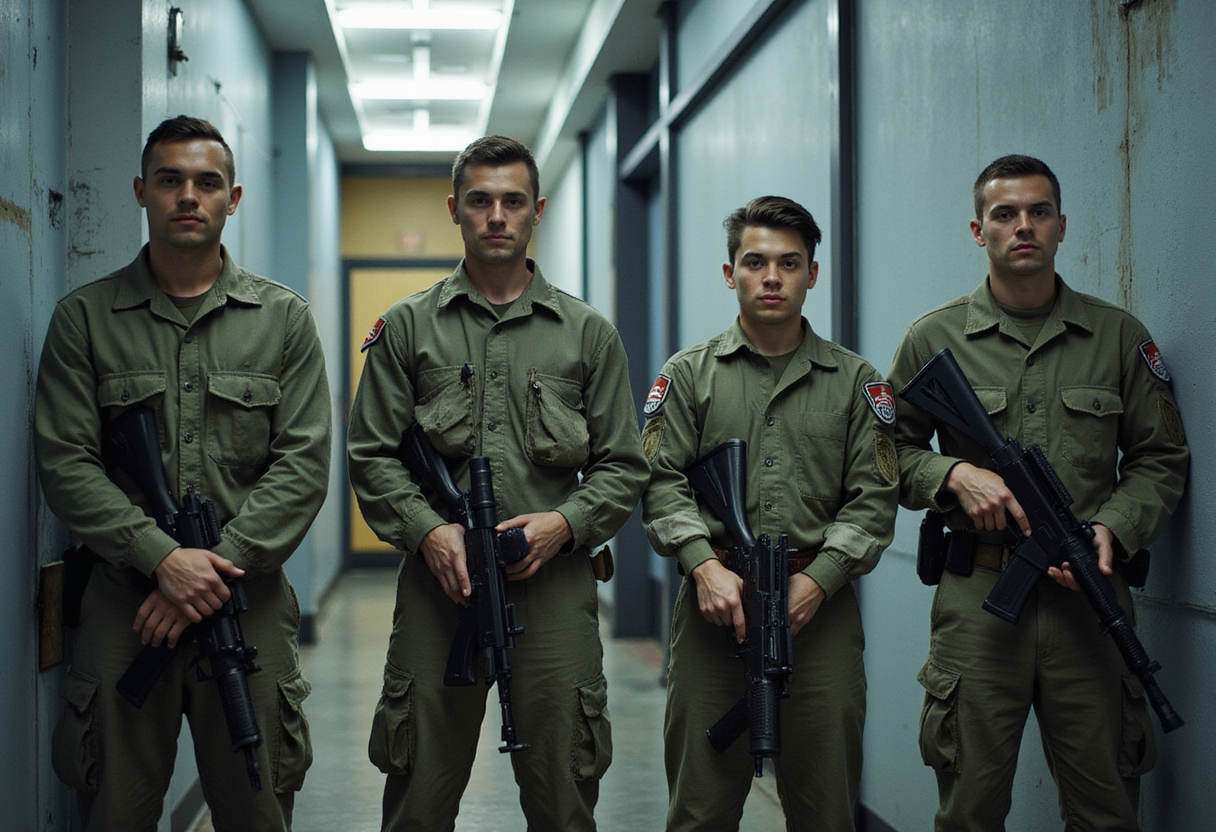
Four soldiers could face jail despite an immunity deal, according to a report by The Australian, raising the prospect of criminal proceedings against service members who believed an immunity arrangement shielded them from prosecution.
The report centers on four soldiers whose legal position has become uncertain in light of an immunity deal that, on its face, appeared to protect them from criminal exposure. According to the newspaper, that protection may not hold, and each of the four now faces the possibility of a custodial sentence.
The headline development is the tension between two legal commitments that ordinarily operate in separate spheres: an immunity arrangement, typically negotiated to secure cooperation or resolution in sensitive matters, and the criminal jurisdiction of courts that retain power to punish individuals for offences committed outside the scope of any protected conduct. When those spheres collide, practitioners know the outcome turns on the precise drafting of the immunity, the conduct it covers, and the authority of the body that granted it.
What the report tells us
The Australian's reporting establishes three core facts. First, four soldiers are implicated. Second, an immunity deal exists and bears on their legal position. Third, despite that deal, each soldier could face jail — meaning prosecutors or another decision-making authority have not ruled out imprisonment as a possible outcome.
The report does not identify the soldiers by name, specify the charges under consideration, or name the court or tribunal that would hear any proceedings. It also does not disclose which authority struck the immunity deal or on what terms. Those gaps matter, because the enforceability of an immunity arrangement against a subsequent prosecution usually depends on exactly those details.
Why immunity deals falter
Immunity arrangements occupy well-trodden but contested ground in criminal and military law. They generally take one of two forms: use immunity, which bars prosecutors from using a person's own statements against them, or transactional immunity, which shields the person from prosecution for the covered conduct altogether. A deal of the second kind is broader and, when honoured, forecloses charges. A deal of the first kind leaves prosecution open, provided the state builds its case on independent evidence.
Where soldiers are concerned, additional layers complicate the analysis. Military justice systems often run parallel to civilian courts, and an immunity granted in one forum may carry little weight in the other. Command discretion, treaty obligations in multinational operations, and domestic statutory limits on what prosecutors can waive all shape whether an immunity deal binds the state in practice.
The scenario reported by The Australian — soldiers facing possible imprisonment despite a deal — fits the familiar pattern of an immunity whose scope turned out narrower than the recipients believed, or whose enforceability against a later prosecuting authority was never secure.
Practical consequences for practitioners
For defence counsel, the report is a reminder that immunity agreements demand the same rigour as any negotiated instrument: identify the granting authority, define the covered conduct with precision, and confirm that every forum with jurisdiction over the client — military and civilian, domestic and, where applicable, foreign — is bound. Counsel who assume a deal speaks for itself may find their clients in the position these four soldiers now occupy. For prosecutors, the case illustrates the reputational and legal cost of appearing to retreat from an immunity commitment, even one that is arguably unenforceable. And for government legal advisers, it underscores the need to align any immunity deal with the charging decisions of every body that could later bring charges.
What to watch
The next material developments will be the identity of the prosecuting authority, the specific charges if any are filed, and the first court ruling on whether the immunity deal bars prosecution or merely limits the evidence the state may use. Until a court construes the deal's scope, the four soldiers' exposure to imprisonment remains, as The Australian puts it, a live possibility rather than a settled outcome.
via GN War Crimes (Source)
More from Sophie Lindqvist
Show full bio
News editor covering industry trends and analytics at Global Law Wire.
202 articles
Also before the court
- Australia's 'Most Decorated' Soldier Charged with Five War Crimes
- Australia's most-decorated soldier contests war crime charges
- Australian Ex-Soldier to Face War Crimes Trial, NPR Reports
- Ben Roberts-Smith Arrest: A Cautious Step Toward Trial
- Australia Charges Ex-Soldier With Five Afghanistan War-Crime Murders