Law report No. GLW-7449 · filed September 29, 2026
Criminal JusticeReported case
Australia's 'Most Decorated' Soldier Charged with Five War Crimes
Australian prosecutors have charged the nation's 'most decorated' soldier with five counts of murder as war crimes, advancing a rare domestic prosecution of military personnel.
By Grace Kim3 min read517 words
Holding
- Australia's 'most decorated' soldier has been charged with five counts of murder as war crimes.
- The charges stem from scrutiny of Australian special forces conduct during military operations.
- A genuine domestic prosecution forecloses ICC jurisdiction under the complementarity principle.
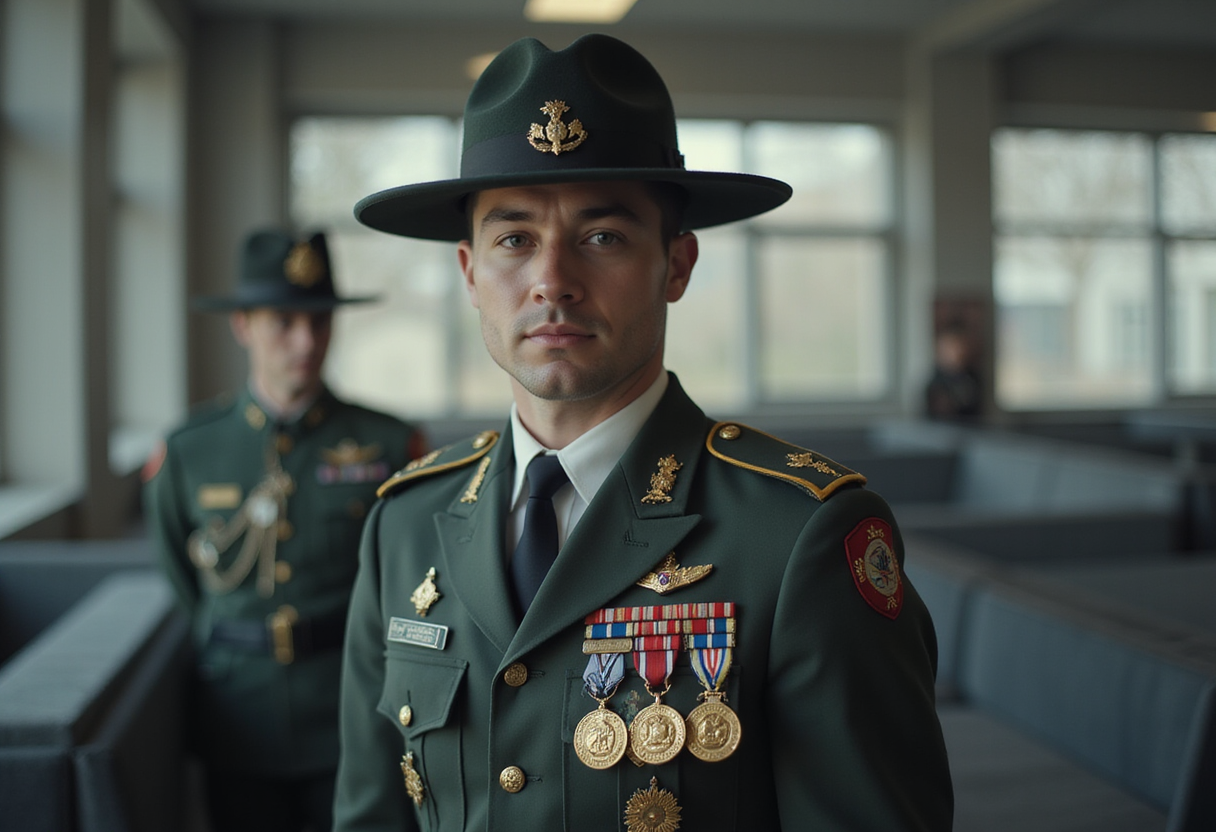
Australian prosecutors have charged the soldier widely described in domestic media as the country's "most decorated" service member with five counts of murder as war crimes. The charges represent a significant step in accountability efforts stemming from Australia's military operations, and they place the individual case before the domestic criminal courts rather than an international tribunal.
The defendant faces five separate murder counts under war crimes provisions. Each count alleges the unlawful killing of a person during an armed conflict, conduct that Australian law treats as among the gravest offenses on the statute book. The case reference and detailed charge sheet remain matters for the committing court, and the identity of the accused has been the subject of reporting restrictions in earlier related proceedings.
The charges follow years of scrutiny of Australian special forces conduct. A senior inspector's inquiry previously found credible evidence of unlawful killings by Australian personnel, and the prosecuting authority has now acted on that evidentiary foundation by bringing indictable charges against an individual soldier. Prosecutors will need to prove each killing to the criminal standard — beyond reasonable doubt — before a jury or military-equivalent forum, depending on the venue the Commonwealth selects.
For practitioners, the case raises several concrete issues. Defence counsel will scrutinize combat-immunity arguments, chain-of-command evidence, and the admissibility of battlefield forensics gathered years after the events. Prosecutors must establish the war-crimes jurisdictional elements: the existence of an armed conflict, the nexus between each killing and that conflict, and the absence of lawful-combat justification. Sentencing exposure, if convictions follow, is substantial, as murder charged as a war crime carries the same maximum penalty as ordinary murder under Australian law.
The procedural path will now run through committal, where a magistrate tests whether the prosecution's evidence is capable of satisfying a jury. Pre-trial litigation over disclosure of classified material is likely, given that the alleged conduct occurred in an operational theatre. Similar issues have delayed comparable prosecutions elsewhere, and Australian courts will have to balance national-security protections against the accused's right to a fair trial.
The case is also consequential beyond the courtroom. It tests Australia's willingness to pursue domestic war crimes prosecutions against its own personnel rather than defer to international mechanisms. Under the principle of complementarity, the International Criminal Court acts only where national systems are unwilling or unable to proceed genuinely. A vigorous domestic prosecution therefore forecloses ICC involvement for these alleged crimes.
Observers of military justice will watch several markers as the matter advances: the strength of the committal case, the treatment of command-level evidence, and whether further charges follow against other service members. The decision to charge a highly decorated soldier signals that prosecutorial authorities regard the underlying evidence as capable of meeting the criminal standard, at least for the purposes of committal.
No trial date has been fixed. The accused is presumed innocent unless and until the court finds otherwise, and reporting at this stage reflects allegations only. Global Law Wire will monitor filings as the case moves through the Australian courts.
via GN War Crimes (Source)
More from Grace Kim
Show full bio
Correspondent covering consumer brands and retail at Global Law Wire.
206 articles
Also before the court
- Australia Charges Ex-Soldier With Five Afghanistan War-Crime Murders
- Australia's most-decorated soldier contests war crime charges
- Australian Ex-Soldier to Face War Crimes Trial, NPR Reports
- Legal Scholars Warn of Hurdles in Australia's War Crimes Prosecutions
- Ben Roberts-Smith Arrest: A Cautious Step Toward Trial