Law report No. GLW-2374 · filed November 5, 2026
Human RightsReported case
UN Security Council Deadlock Ends MINURSO Mandate in Western Sahara
MINURSO's mandate expired on 31 October 2026 after rival US and Russian drafts both failed at the Security Council, ending 35 years of UN presence in Western Sahara.
By Priya Raman5 min read991 words
Holding
- MINURSO's mandate expired on 31 October 2026 after both a US draft and a Russian draft failed in the Security Council on 30 October.
- The mission had fielded 155 military personnel at nine team sites monitoring a territory the size of the UK.
- Recognition of the Saharawi Arab Democratic Republic has fallen from around 84 states to roughly 40.
- Resolution 2797 (2025) called Morocco's autonomy plan 'a most feasible solution' and 'as basis' for negotiations.
- The UN General Assembly's Fourth Committee votes on its next Western Sahara resolution in October 2027.
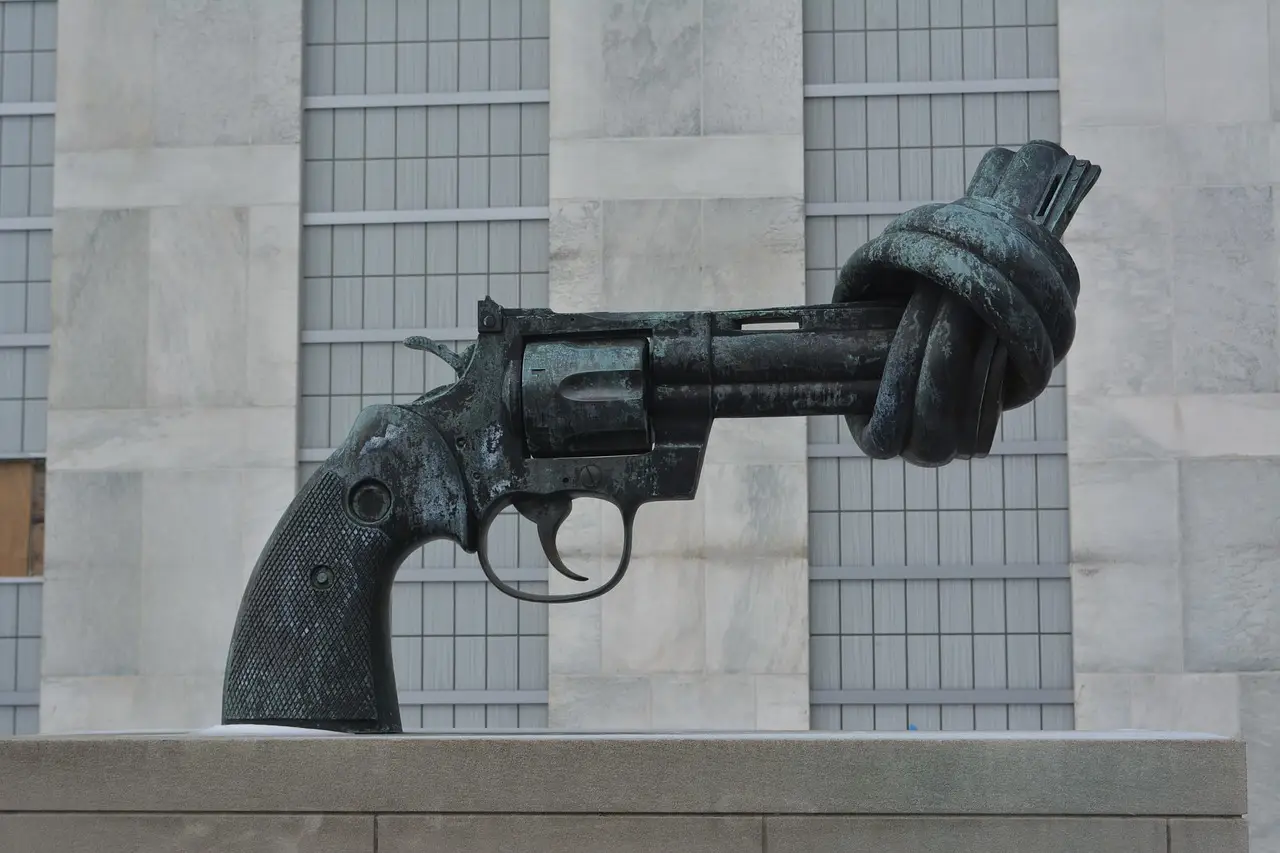
The UN Security Council failed on 30 October 2026 to renew the mandate of its Western Sahara mission, ending a continuous international presence that had lasted thirty-five years. Neither of two competing drafts survived the vote. The mandate expired at midnight on 31 October 2026, and the liquidation of mission assets began on 1 November.
The consequences are immediate and measurable. But the deeper story, as legal analysts reading the trajectory note, is a decades-long erosion of the decolonization framework at the UN. Both lenses deserve scrutiny. Neither offers comfort.
What exactly did the Security Council decide—and not decide?
The United States, as penholder, circulated a zero draft that proved contentious. It noted recognition of Moroccan sovereignty by a growing number of member states, described Morocco's autonomy plan as the 'only feasible solution' without referencing self-determination, and directed a phased drawdown of uniformed personnel by April 2027. It also renamed the mission—dropping the 'R' for 'referendum', converting MINURSO into MINUSO.
Negotiations softened the text. The draft in blue reintroduced standard self-determination language and requested detailed proposals from the Secretary-General for a re-evaluation of the mandate. The name change survived.
Russia then tabled its own one-page draft on the morning of the vote: a bare renewal containing, as the Russian Permanent Representative emphasised, nothing previously unadopted by the Council.
Eleven members backed the US draft; Russia vetoed, with China, Pakistan and Somalia abstaining. The Russian text drew three votes in favour and eleven abstentions; the US vetoed it. Neither reached nine. The mission dies by arithmetic, not by decision.
What does the withdrawal remove on the ground?
MINURSO's practical footprint was modest but concrete. As of August 2026 it fielded 155 military personnel across nine team sites—four in Moroccan-occupied territory, five in Polisario-controlled areas—monitoring a territory roughly the size of the United Kingdom.
Between October 2025 and August 2026, the mission conducted:
- some 8,000 visits to Moroccan army sites;
- ground patrols covering roughly 300,000 kilometres;
- 150 aerial reconnaissance flights;
- patrols along the berm, the sand wall separating the two zones.
That berm, built by Morocco between 1980 and 1987, is the largest contiguous minefield on the planet. MINURSO deminers cleared around 180 hectares last year. As of August 2026, 24 of 68 known minefields and 31 of 543 recorded cluster strike areas remained uncleared. That work now stops.
For the roughly 200,000 Saharawi living in refugee camps in Algeria since fleeing in 1975, the mission was widely regarded as ineffective. Their concern is different: the prevailing view in the camps and within the Polisario leadership holds that MINURSO's presence deterred further Moroccan military advance. The ceasefire broke in 2020; fighting has since been confined to low-intensity engagements along the berm. Observers fear a Moroccan push could drive the Polisario south and east into Mauritania, widening the theatre of conflict.
How did the legal framework erode over three decades?
The mission was established in 1991 under the UN-OAU Settlement Plan to monitor the 1988 ceasefire and organise a self-determination referendum scheduled for January 1992. Voter identification, disputed and laborious, concluded in 2004. The referendum never happened.
In 2006 the Council invited proposals; both sides submitted them in 2007. Polisario offered a referendum with a commitment to accept the results, guarantees for Moroccan residents, and joint exploitation of natural resources. Morocco offered a 'Sahara autonomous Region' under Moroccan sovereignty, keeping exclusive jurisdiction over defence, foreign relations, currency and the constitutional order—while submitting the statute to 'the populations concerned', including Moroccan settlers. The Court of Justice of the EU in Joined Cases C-778/21 P and C-778/21 P and C-798/21 P (para 157) reaffirmed that self-determination belongs to the 'people' of the territory, not the settler 'population'.
The Council's language shifted in step. The 1990s formula affirmed commitment to 'a free, fair and impartial referendum'. In 2000 came 'a mutually acceptable political solution'; from 2008, endorsements of 'realism and a spirit of compromise'. Resolution 2797 (2025) went further, calling Morocco's autonomy proposal 'a most feasible solution' and asking the Secretary-General to take it 'as basis' for negotiations.
Diplomacy tracked the text. Recognition of the Saharawi Arab Democratic Republic—once some 84 states—has fallen to roughly 40. The US recognised Moroccan sovereignty in 2020, prompting African consulates in the occupied territory. A majority of European states now back autonomy in varying formulations.
Why does this matter beyond the Sahel?
The applicable law has not moved. Self-determination is a peremptory norm (ICJ, OPT Advisory Opinion, para 233); it and the prohibition on territorial acquisition by force are owed erga omnes (para 274). The ICJ's 1975 Western Sahara Advisory Opinion (para 72) requires a 'free and genuine expression of the will of the people'. General Assembly Resolution 1541, principle VI, guarantees a choice among independence, association and integration—with independence the default under Resolution 1514, which demands transfer of 'all powers... without any conditions or reservations'.
As Jamie Trinidad and Stephen Allen observe, the question 'may not be at the top of the international agenda, but it has the potential to shake the legal and political architecture of the UN order to its foundations'. James Crawford argued self-determination's value lies in keeping 'the question as a dispute on the agenda of the United Nations'. MINURSO, whatever its failures, was that marker.
Its removal changes nothing in law. In fact, it may change much in practice—with implications cited for occupied territories in Ukraine and Palestine, and for future annexations. The next test falls to the General Assembly's Fourth Committee, which votes on its annual Western Sahara resolution in October 2027. Morocco has stated its ambitions plainly. In plain words: the UN has closed its eyes in Western Sahara, and the law now depends on whether anyone else keeps them open.
via docs.un.org (Original)
More from Priya Raman
Show full bio
Staff writer covering companies, deals and strategy in International law and legal practice at Global Law Wire.
269 articles
Also before the court
- CCW GGE Adopts Consensus Characterisation of Lethal Autonomous Weapons
- EU General Court Partially Annuls Sanctions on Russian Maritime Register
- CCW Consensus Text Weakens IHL Prohibitions on LAWS
- Global Courts Year-End 2025: Rulings That Reshaped Legal Frontiers
- Fourteen Governments Move to Join South Africa's ICJ Case Against Israel