Law report No. GLW-4346 · filed November 13, 2026
Trade LawReported case
UK Car Industry to Demand Two-Year Delay to Brexit EV Tariffs
UK carmakers will press for a two-year delay to 10% Brexit tariffs on EU electric car trade, as Brussels floats only a one-year technical fix before 1 January.
By Marcus Bennett3 min read640 words
Holding
- 10% tariffs on most UK-EU electric cars take effect on 1 January unless delayed.
- The Commission's proposal amounts to a one-year delay; UK industry wants two years minimum.
- ACEA estimates 82% of EU electric car and van exports to the UK would face the 10% duty in 2027.
- The lobby group puts added costs at €1.47bn (£1.23bn) next year alone.
- The rules of origin were first delayed in December 2023 after an original 1 January 2024 start date.
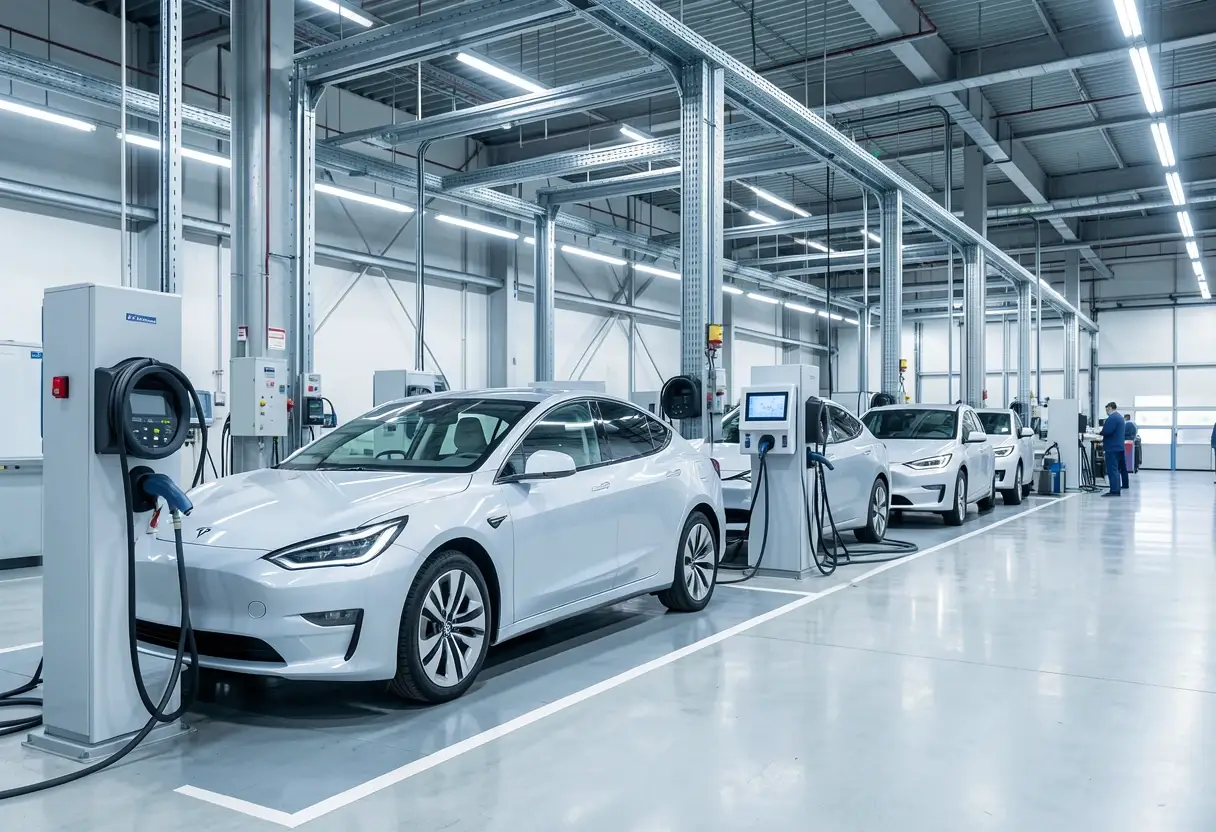
A 10% tariff threatens most electric cars traded between the UK and EU from 1 January. The UK car industry intends to push for a two-year delay to those Brexit duties, after the European Commission put forward plans for a shorter reprieve, according to sector figures.
The dispute centres on the "rules of origin" for batteries written into the Brexit deal rushed through on Christmas Eve 2020. The clause requires British and European electric cars to use batteries made in the UK or EU with local materials, or face the 10% duty. Those rules would not have existed had the UK remained in the EU.
Why are the tariffs returning now?
The rules were originally due to take effect on 1 January 2024. Their aim was simple: push the industry to invest in local lithium-ion battery manufacturing instead of relying on the dominant Chinese battery sector. In 2020, the prospects looked rosy. Three years on, several prominent projects on both sides of the Channel had collapsed, and the EU and UK agreed in December 2023 to extend the deadline.
New battery projects have since replaced the failed ones. Many have yet to produce at the scale European demand requires. Carmakers remain heavily reliant on imports from China, Japan and South Korea.
What has Brussels proposed?
The European Commission has shared proposals with the automotive industry to delay the start of the tariffs. It has not yet shared them formally with the UK government. The proposals are understood to be highly technical but essentially amount to delaying the rules of origin by one year.
Some elements would adjust customs procedures and origin calculation methodologies, offering temporary tariff flexibility.
Parts of the UK car industry consider that insufficient. They argue the sector needs more time to adapt and for battery gigafactories to produce enough units.
One UK executive said: "The industry will be really clear – two years minimum or we have the same discussion next year. Giga-industrialisation is happening in the EU and UK but it is not producing at the required volume yet."
Another person involved said negotiations would also focus on the technical details of the proposals, rather than simply aiming for a fixed time delay.
How costly would the tariffs be?
The European Automobile Manufacturers Association, an influential lobby group in Brussels, has called the tariffs a serious concern for Europe's automotive industry. It estimated that 82% of EU electric car and van exports to the UK would face the 10% customs duty in 2027 under the rules. The group said the duties would add costs of €1.47bn (£1.23bn) next year alone.
Carmakers in the UK and Europe are united in calling for the rules of origin to be delayed again. An agreement has yet to be reached.
What else is on the table?
The EU and UK are also wrangling over two linked issues: whether Britain can be included in "Made in Europe" subsidies, and whether the UK should match EU tariffs on Chinese car imports. Both topics are likely to form part of an EU-UK summit planned for next week.
For practitioners, the stakes are procedural as much as commercial. Any delay would require the two sides to agree a second extension of the deadline, as they did in December 2023, before the 1 January cut-off. Firms advising automotive clients on customs treatment, origin calculations and supply-chain sourcing should track the summit closely. The technical nature of the Commission's proposals — customs procedures and origin methodologies rather than a blanket postponement — suggests lawyers will need to parse the drafting carefully, since the difference between a one-year and two-year window shapes battery sourcing decisions and tariff exposure through at least 2027.
The clock is running. Tariffs bite on 1 January unless London and Brussels strike a deal.
via theguardian.com (Source)
More from Marcus Bennett
Show full bio
Market editor covering regulation, policy and their impact on International law and legal practice at Global Law Wire.
319 articles
Also before the court
- EU Weighs Response After US Supreme Court Blocks IEEPA Tariffs
- EU Moves to Raise Costs of Cheap Imports: E-Commerce Faces New Rules
- India Bans Export of Battery Waste and Lithium-Ion Black Mass
- WTO Panel Rules Against Turkey's 40% Tariff on Chinese Electric Vehicles
- China Escalates WTO Challenge to India's EV Subsidy Regime