Law report No. GLW-1311 · filed November 11, 2026
Human RightsReported case
U.S. Skips U.N. Human Rights Review for Second Year, a First Among 193 Members
The U.S. became the first of 193 U.N. member states to skip the universal periodic review twice, as the ACLU accused Washington of violating rights "unabashed."
By Marcus Bennett3 min read615 words
Holding
- The U.S. is the only country among 193 U.N. member states ever to skip the universal periodic review twice.
- Israel skipped one review in 2013 but returned nine months later after a rescheduling.
- The ACLU's Jamil Dakwar said the administration violates human rights "unabashed," citing immigrants, student protesters and the LGBTQ community.
- The U.N. has postponed a decision on its response until early next year.
- The review is obligatory for all 193 member states, distinct from the 47-member Human Rights Council the U.S. has left.
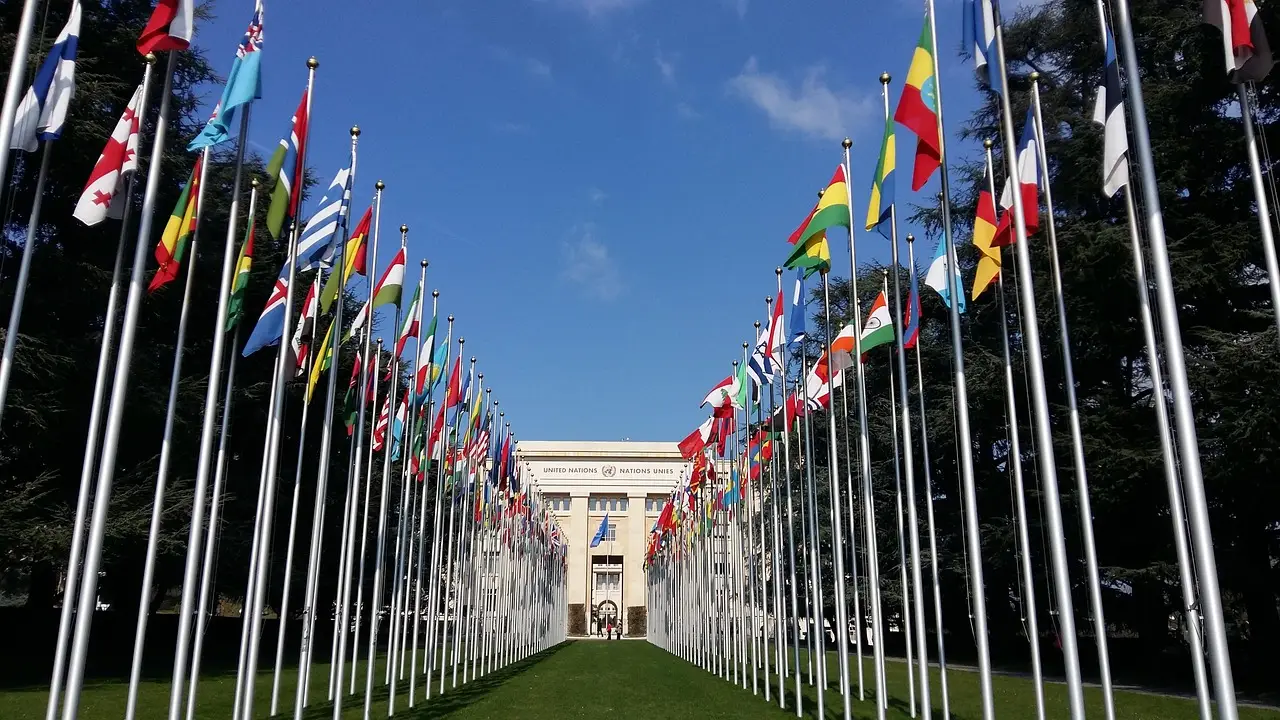
The United States has boycotted its U.N. human rights review for the second consecutive year, becoming the only member state among 193 to stay away twice. The empty chair sat in Geneva on Monday, at a proceeding designed to be obligatory for every country in the world body.
The process is the universal periodic review. Each of the 193 U.N. member states submits its human rights record to peer examination by fellow members every four to five years. No state, however powerful, is meant to escape it. Civil society groups may also submit evidence, and several traveled to Geneva, led by the American Civil Liberties Union.
What did the ACLU say in Geneva?
Jamil Dakwar, the ACLU's human rights director, told journalists that the current U.S. administration continues to violate human rights "unabashed." He cited the treatment of immigrants, student protesters and the LGBTQ community as examples. Dakwar said the U.N. must hold the United States accountable. He warned that the Trump administration wants to "dismantle human rights."
The State Department answered in a written statement. It noted that Washington has already formally withdrawn from the U.N. Human Rights Council, a 47-member elected body, and accused the council of "pushing anti-American rhetoric."
That withdrawal does not, however, release Washington from the review itself. The universal periodic review is distinct from the council and is mandatory for all 193 member states. Human rights groups read the boycott as part of a broader pattern of American disengagement from multilateral institutions. They point to U.S. sanctions on the International Criminal Court and the decision to leave the World Health Organization as evidence of active opposition, not mere distance.
What happens when a state does not show up?
The U.N. has few tools to sanction a country that refuses to cooperate with the review. Israel skipped one review in 2013, protesting what it called anti-Israel bias, but returned nine months later after the U.N. rescheduled. Before the American no-shows, no country had ever failed to appear twice. Even North Korea, an authoritarian state, participates in the process.
Rights groups want the U.N. to hold the review anyway and take evidence about alleged violations inside the United States. Member states had already prepared questions for American diplomats. The list included queries on the use of the death penalty and on restrictions on abortion.
U.N. insiders see danger in that route. Holding a review with no one at the table to answer could set a risky precedent, they fear. If the U.N. proceeds without U.S. participation, other member states may conclude they can stay away too, leaving advocacy groups to present evidence, as one put it, "in a vacuum."
What are the consequences for practitioners?
For human rights lawyers and advocacy organizations, the practical impact is immediate: a peer-review mechanism regarded as a last resort for victims of violations is now unavailable to U.S. citizens. Litigators who might have cited the review's findings or recommendations in domestic and international advocacy have no fresh record to draw on. Groups wanting to press claims about U.S. conduct must instead look to treaty bodies, regional forums or domestic courts, none of which carries the same universal peer legitimacy. The State Department's posture, meanwhile, gives counsel advising multinational clients one more data point on Washington's stance toward Geneva-based institutions.
The U.N. has postponed the hard deliberations on how to respond until early next year. Until then, the question of what to do with an absent superpower remains open. One rights activist in Geneva called the situation "a crisis of accountability."
via feeds.npr.org (Source)
More from Marcus Bennett
Show full bio
Market editor covering regulation, policy and their impact on International law and legal practice at Global Law Wire.
319 articles
Also before the court
- UN Human Rights Council Defers US Review to January After Trump Snub
- US Skips UN Human Rights Review for Second Time
- UN Members Press Tajikistan on Rights Abuses at Geneva Peer Review
- ICJ Finds UN Rights Council Made 'Significant but Limited' Progress
- UN Experts Welcome General Assembly Resolution Backing ICJ Climate Opinion