Law report · filed November 26, 2026
Regulation & EnforcementReported case
Tesco suspends e-waste providers over faulty returns found in Ghana
Tesco suspended its third-party e-waste providers on Thursday after Unearthed and Greenpeace Africa found faulty returns from British supermarkets dumped at Agbogbloshie, Accra's vast e-waste tip.
By Grace Kim6 min read1,182 words
Holding
- Tesco said on Thursday it suspended its third-party electronic waste management providers with immediate effect while completing a full audit.
- No facilities in west Africa are approved to receive British WEEE, according to the Environment Agency.
- Exporting broken electrical goods to Africa is illegal under UK waste export rules in almost every circumstance.
- One Ghanaian vendor said about 10% of goods in some mixed shipments from UK brokers are unusable.
- Dozens of British items bearing returns labels, many marked faulty, were found for sale in secondhand shops near Agbogbloshie.
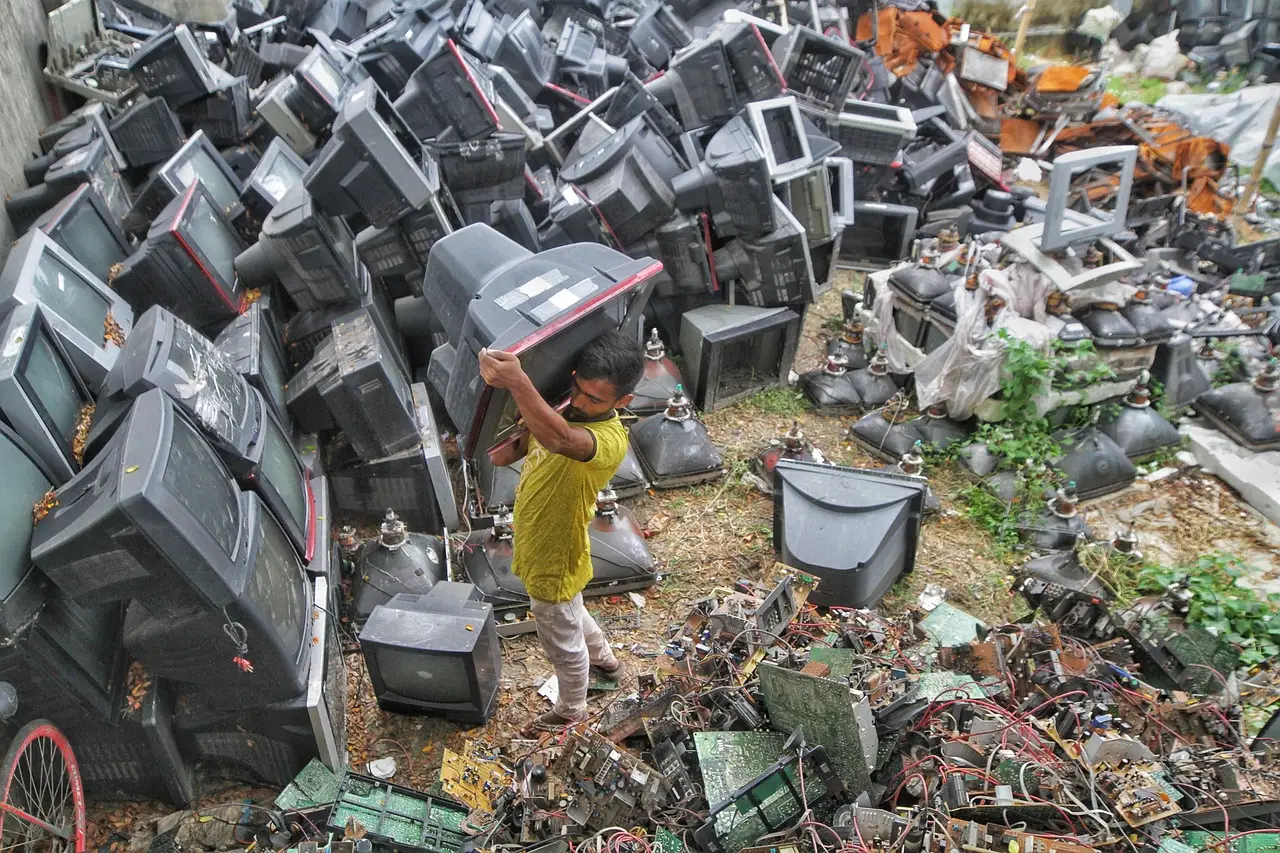
Tesco suspended its third-party electronic waste management providers with immediate effect on Thursday, after an Unearthed and Greenpeace Africa investigation found faulty electrical returns from British supermarkets dumped at Agbogbloshie, one of the world's largest e-waste sites in Ghana's capital, Accra.
Tesco own-brand slow cookers and toasters, Crockpot-branded slow cookers, including at least one with a Tesco label, and Argos Cookworks slow cookers, toasters and food slicers were found at the dump. Mountains of household items are burned and stripped down there by workers without protection such as gloves and masks, the investigation alleges.
The regulatory position is blunt. Exporting broken electrical goods to Africa is illegal under UK waste export rules in almost every circumstance, and the Environment Agency says no facilities in west Africa are approved to receive British waste electrical and electronic equipment, or WEEE.
What did investigators find at the tip?
Beyond the branded appliances, the investigation found dozens more British items bearing returns labels for sale in secondhand shops in the area, including many marked as faulty.
One vendor told Unearthed about the mixed shipments of home electrical equipment he buys from brokers in the UK: “The percentage of unusable products varies [by shipment] but sometimes it can be about 10% … What do I do with the broken ones? I put it in this box and the Agbogbloshie boys come to collect it.”
The plain takeaway is that faulties from British stores reached a site the regulator says cannot lawfully take British electrical waste.
How do faulty returns leave the store?
All major UK retailers selling electrical goods operate take-back schemes. A shopper can bring an old toaster to the store when buying a new one. Those goods should be logged as e-waste and count toward stores meeting their government-mandated recycling targets. Under the WEEE regulations, they must be passed on to approved processors, and they can be exported only if the shipper can prove they will be handled in high-quality facilities.
Recently bought items follow a different route. When a customer returns a purchase for a refund, even because it is faulty, the item can enter a separate stream, the liquidation market, alongside other consumer returns, the investigation found.
Many of the items Greenpeace found at Agbogbloshie and in secondhand stores carried stickers labelling them “untested return”. Returned goods are often sold off in bulk at a fraction of shop shelf price, sometimes through the retailers' own stock liquidation channels, where pallets of returns, including job lots of small household electricals, change hands. “Jobbers” — individuals and small businesses who buy by the palletload — then extract whatever value they can, listing items individually on eBay or Vinted, selling them in bargain-bin stores, or exporting them.
E-waste expert Mark Sayers told the investigation: “Just because somebody in the supermarket says it's not working, doesn't always mean they've technically declared it as waste.”
Jim Puckett, founder of Basel Action Network, which campaigns against the export of toxic waste to poorer countries, called treating untested returns as anything other than waste a “major loophole”. He said: “It should be considered waste until proven otherwise … Especially if people are buying it at auction or whatever and shipping it all around the world.”
That distinction decides which rules apply, because waste exports must be notified and approved before they leave the country.
What did the retailers and the regulator say?
Tesco said on Thursday it had suspended its third-party electronic waste management providers with immediate effect while it completes a full audit of them and their practices. The supermarket added: “We're extremely concerned about these claims … We remain committed to removing or reducing the waste across our operations wherever we can and we work closely with experts to ensure we handle materials responsibly, in line with legal requirements and our own robust standards.”
Argos, whose own-brand Cookworks products were among the goods found at the dump, said it is mounting an investigation into how the items had ended up there. It said: “As a responsible retailer, we have processes in place for products returned to Argos. We take these findings seriously and are reviewing the information provided to establish what further action is needed to ensure our requirements are met.”
Asda referred approaches to the British Retail Consortium. The BRC said: “Retailers take their responsibility to tackle electrical waste seriously, so reports of faulty electronics being dumped in Ghana are deeply concerning.” It added: “Used electronics should only be exported for legitimate reuse where they are safe and functional and must not place the burden of dealing with UK waste on communities overseas. We also need greater investment in the UK's recycling infrastructure so more electrical waste can be safely reused and recycled here.”
An Environment Agency spokesperson said: “Illegal waste exports are a serious crime. There is no excuse for exporting waste to be dumped or landfilled overseas. Waste leaving England must be sent for legitimate recovery or recycling.”
The regulator set out its enforcement position: “New controls mean exports of waste electrical and electronic equipment must be notified and approved before they leave the country. The Environment Agency is using intelligence to intervene earlier, target suspicious shipments and disrupt the criminals behind illegal waste exports.” The spokesperson warned: “Anyone who breaks the law risks having shipments stopped, facing prosecution and financial penalties. Waste criminals should be in no doubt, we are watching, we are acting and you will face the consequences.”
What changes for compliance teams?
Three points for practitioners. First, documentation decides the classification. An “untested return” sticker is not evidence that an appliance works, and the Environment Agency calls illegal waste exports a serious crime, so files must record testing, functional status and destination before goods move.
Second, the chain of custody to approved processors has to hold through liquidation and secondhand channels, and notification and approval for any waste export must be secured before departure rather than afterwards. Third, third-party providers now face immediate suspension and audit, following Tesco's Thursday announcement, which puts retailer contracts, audit rights and subcontractor oversight under close review.
Joshua Awuku-Apaw, a Ghanaian environmental consultant, told Unearthed: “Ghana is not a dumping ground for broken appliances or failed retail returns from the UK … Shipping faulty, non-functional kitchen appliances abroad under the cover of ‘reuse’ or ‘second-hand trade’ shifts the financial, environmental, and health costs of overconsumption on to Ghanaian communities and workers … Ghana's communities should not bear the health burden of UK retail waste.”
Greenpeace UK's chief scientist, Dr Doug Parr, said: “Customers will be appalled to learn that, instead of being repaired or recycled, these faulty returns ended up in a notorious megadump leaching toxic run-offs that poison entire communities. This isn't the circular economy, but long-range fly-tipping, and it's shameful.”
For now, the responses are audits and internal investigations, while the existing controls already require notification, approval and proof of proper handling before any British electrical waste crosses a border.
via theguardian.com (Source)
More from Grace Kim
Show full bio
Correspondent covering companies, deals and strategy in International law and legal practice at Global Law Wire.
376 articles
Also before the court
- UK ministers to drop foie gras import ban for EU food deal
- South Africa's Consumer Crackdown: A Warning Shot for Global Businesses
- Cyprus Under EU Pressure Over Waste Management Failures Since 2013
- UK-EU SPS Deal Set for March 2028, but Exporters Refuse to Cheer Yet
- Sudan Lifts 20-Month Ban, Reopening Market for Kenyan Tea