Law report No. GLW-2147 · filed September 29, 2026
Courts & TribunalsReported case
Proposed U.S. Sanctions on ICC Could Trigger Detainees' Release
Just Security analysis warns proposed U.S. sanctions against the International Criminal Court could disrupt its detention operations and lead to the release of detainees in The Hague.
By Priya Raman4 min read781 words
Holding
- Just Security published an analysis titled "Proposed U.S. Sanctions Against the Int'l Criminal Court Could Lead to Detainees' Release."
- The ICC relies on external states and contractors for detention and sentence enforcement, which sanctions could disrupt.
- The proposed sanctions remain in legislative form; their final scope will determine the practical impact on the court's custody operations.
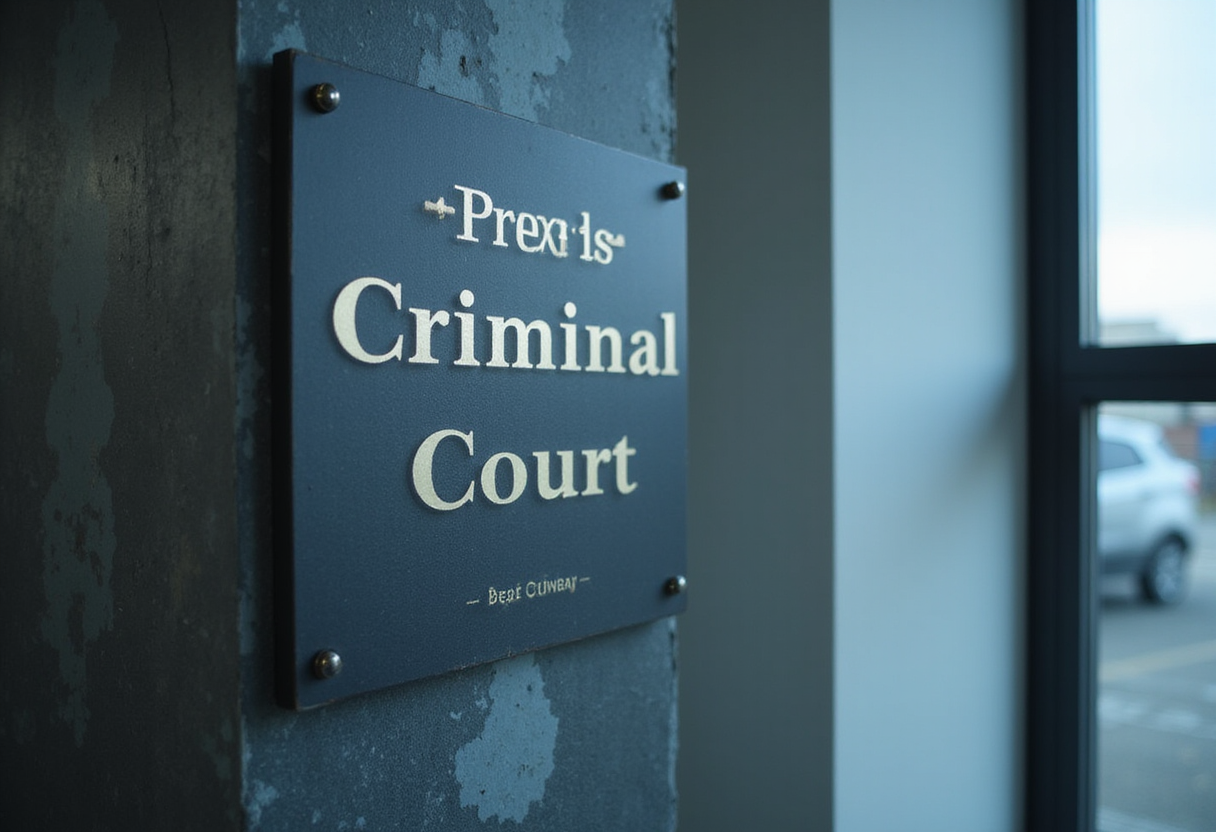
A proposed package of United States sanctions against the International Criminal Court could have an unintended structural consequence: the release of individuals currently in the court's detention, according to an analysis published by Just Security.
The report, titled "Proposed U.S. Sanctions Against the Int'l Criminal Court Could Lead to Detainees' Release," examines pending U.S. legislative measures designed to penalize the Hague-based court and warns that the practical effect of those measures may extend well beyond their intended target — the institution itself — to the court's custody operations.
The proposed sanctions form part of a recurring pattern in U.S. legislative policy toward the ICC. Congress has previously adopted measures restricting court personnel, most notably under the American Service-Members' Protection Act and later visa-ban and asset-freeze legislation directed at officials involved in investigations touching U.S. nationals or certain allies. The current proposals, as described in the Just Security analysis, would go further by imposing financial and operational sanctions on the institution.
The core of the problem, as the report frames it, is operational. The ICC does not operate its own prison system in the way domestic jurisdictions do. Detainees awaiting trial or appeal — and those convicted and sentenced — are held in the court's detention centre in The Hague, and convicted persons serve sentences in prisons of states that have agreed to accept them. The entire custody chain depends on states cooperating voluntarily, on service providers being willing and legally able to contract with the court, and on financial channels remaining open.
Sanctions that restrict transactions with the ICC, or that expose banks, contractors, and member states to secondary legal risk, could interrupt that chain. If the court cannot pay the suppliers of its detention facility, cannot move funds to transport detainees, or cannot secure states willing to enforce sentences, the legal consequence may be release. International criminal procedure provides that prolonged detention without a realistic prospect of trial or transfer can violate the rights of the accused, and judges at the ICC have previously grappled with detention-review obligations when proceedings stall.
For practitioners, the implications cut in several directions. Defence counsel at the ICC may find in sanctions-induced disruption a new avenue for arguing release or stay of proceedings, on the basis that the court cannot guarantee a fair and expeditious trial or the enforcement of any eventual sentence. Prosecutors and registry officials, by contrast, would face the burden of demonstrating that operational continuity can be preserved. Counsel advising corporate clients — banks, insurers, logistics providers, and contractors with ICC-linked exposure — will need to assess whether the proposed measures capture indirect transactions with the court and how secondary-sanctions language is drafted.
The episode also illustrates a broader tension in sanctions practice. Measures designed to discipline an international institution operate differently from those aimed at states or individuals. The ICC has no economy to squeeze; it has functions. Sanctioning its functions produces third-order effects — on detainees, on victims who are parties to proceedings, and on witnesses — that legislators may not have fully weighed.
Just Security, the forum publishing the analysis, is an online editorial platform based at the Reiss Center on Law and Security at New York University School of Law. It regularly carries expert commentary on international law and U.S. national security policy.
The report's warning arrives amid heightened friction between Washington and The Hague. The court's docket has increasingly touched the interests of the United States and its allies, prompting repeated legislative responses in Congress. Each previous round of restrictions has drawn legal objections from international lawyers and bar associations, who argue that measures against court personnel interfere with judicial independence and the administration of justice.
What distinguishes the current analysis is its focus on consequences rather than legitimacy. Whatever position one takes on whether the ICC should face sanctions, the report suggests, lawmakers should account for what happens to people in the court's custody if the institution's operating capacity is impaired. Detainees held under international arrest warrants, some transferred with the cooperation of member states, could find their legal limbo resolved not by a judicial order on the merits but by a budgetary or banking failure in the sanctions regime.
The timing of any legislative movement on the proposals remains a question for Congress. As of the report's publication, the measures exist in proposed form, and their final scope — whether they target individuals, transactions, or the institution wholesale — will determine the severity of the custody risk the analysis identifies.
Global Law Wire will continue to track the legislation and any response from the ICC Presidency or Assembly of States Parties.
via GN War Crimes (Source)
More from Priya Raman
Show full bio
Staff writer covering consumer brands and retail at Global Law Wire.
187 articles
Also before the court
- ICC Deputy Prosecutor Says Court Can Withstand US Sanctions
- US Imposes New Sanctions on International Criminal Court
- US Sanctions the International Criminal Court Itself
- US Sanctions the International Criminal Court: What Comes Next?
- Explainer: How US Sanctions Would Undermine the Global War Crimes Court