Law report · filed November 22, 2026
Courts & TribunalsReported case
Pentagon Tells Court Eight Staffers Cannot Clear 400 Wind Projects
A Pentagon declaration reveals eight federal signatories face a 400-project wind backlog, with a 491-day average review time, as an Oregon judge extends deadlines to December.
By Amara Osei5 min read915 words
Holding
- Only 8 federal employees can sign wind mitigation agreements; about 400 projects await review.
- Average time from first notice to signed agreement was 491 days from 2012 to 2025.
- Judge Karin Immergut extended plaintiffs' deadline to Dec. 17; the department responds Dec. 24.
- The Senate passed the Bipartisan American Affordability and Jobs Act 62-33 on Nov. 19.
- One Oregon developer waited 15 months for a countersignature on a roughly $300 million project.
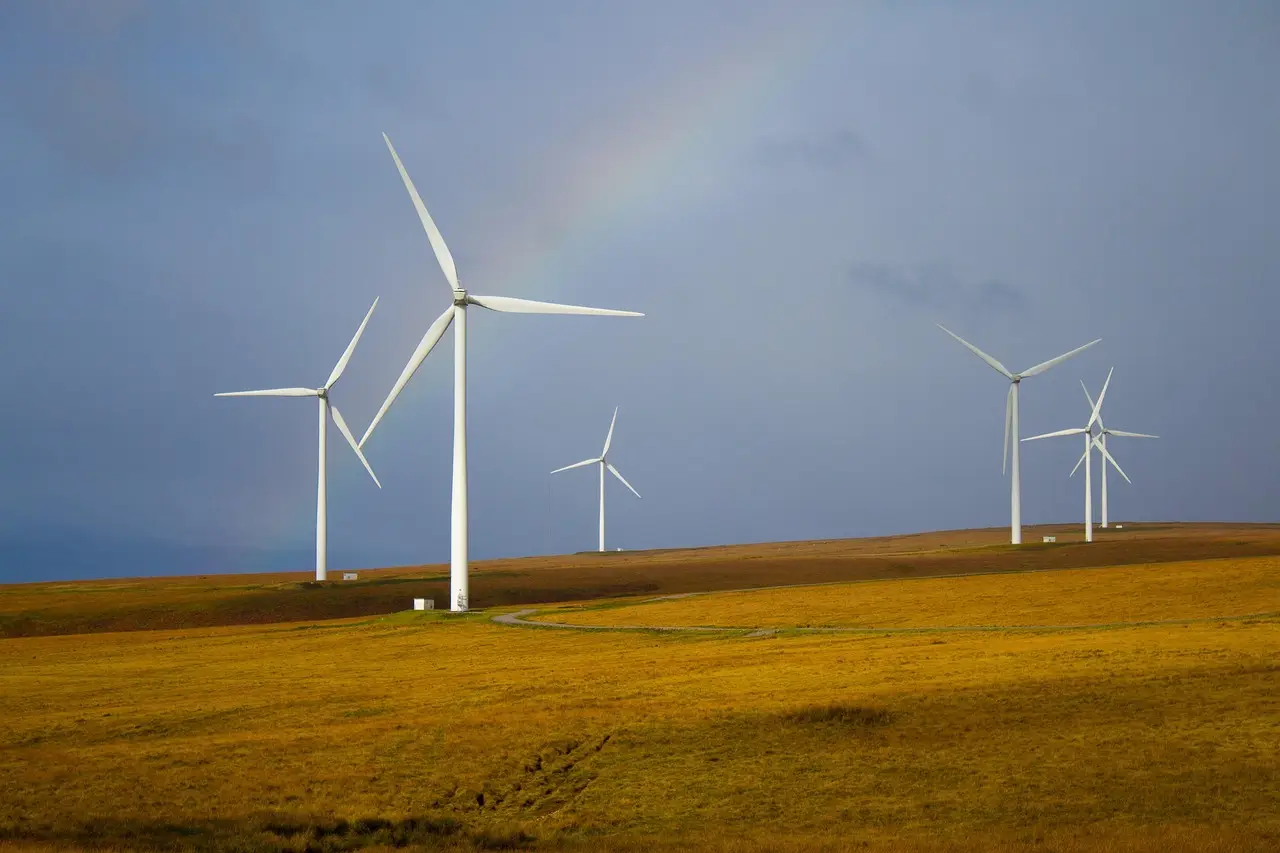
The Pentagon informed a federal court on Nov. 3 that only eight federal civilian employees can sign off on roughly 400 wind projects stuck in its security review queue. Dale Marks, the assistant secretary of war for energy, installations and environment, disclosed the figure in a court declaration filed in litigation before U.S. District Judge Karin Immergut of Oregon, a Trump appointee who suspended the department's nationwide review freeze in August.
Who can actually sign?
The answer is narrow. According to Marks, contractors cannot legally execute mitigation agreements. Only two federal employees at the department's Siting Clearinghouse, two at the Air Force and four at the North American Aerospace Defense Command hold that authority. The clearinghouse also has four contractors; the Air Force has three.
"None of these teams are sized to manage the dramatic influx of applications received in recent years," Marks wrote. The four NORAD staffers handle wind reviews as "but one of their professional duties," while that command has seen "a dramatic increase of threat activity in its area of responsibility, notably involving unmanned aerial systems."
The arithmetic is stark. The department historically signed 13 mitigation agreements per year on average; recently the figure has hovered around 30, while staffing "remain[s] largely unchanged." From 2012 to 2025, the average time from first notice to a fully signed mitigation agreement ran 491 days — roughly 16 months per project. In short, the pipeline was never built for the volume.
What did the judge decide?
Judge Immergut agreed on Nov. 16 to give the wind groups another month to respond to the department, pushing their deadline to Dec. 17. The department's own response is due Dec. 24. The plaintiffs had argued the extension would "permit Plaintiffs to review DoD's next status report," noting the department has since "countersigned mitigation agreements for certain projects" and that more "may be executed shortly."
The backdrop is Immergut's Aug. 6 opinion, which found the Pentagon began slowing wind reviews in August 2025 and halted them entirely on May 7, 2026, citing a memo on "the advancement of adversarial capabilities and the evolving global threat-picture." She suspended the freeze nationwide and ordered status reports every 30 days. Her operative language was blunt: "Congress did not give DoD free rein to review energy projects in whatever way DoD deems fit."
Where do the 400 projects stand?
The queue divides into tiers, per Marks's declaration:
- 33 projects whose developers already signed mitigation agreements. The department "intends to act with dispatch" on them, and a new analytical method found all "pose risks to national security that require mitigation measures." The department is assessing whether it may countersign the original agreements for this category alone.
- About 110 projects still in talks with military teams as of early October. For any without an extension, the department has "exceeded the 90-day regulatory timeline."
- 52 projects that early screening found "do not generate radar interference" affecting the military. All but six reviews "have exceeded the statutory 75-day review period." Seven similar projects went to the Federal Aviation Administration in the month before the declaration.
Even a military objection is not the final word. Government lawyers wrote Nov. 3 that a finding of unacceptable risk "is no more than a non-binding recommendation to the FAA."
What does this mean for practitioners?
Developers face a binding-agreement bottleneck with eight signatories, a 491-day historical average and a new 119-page mitigation template that one industry witness says functions as "a revocable consent." Tom Vinson, a vice president at the American Clean Power Association, wrote in an Oct. 20 filing that "despite the Court's clear orders, DoD has not resumed review." He cited one Oregon developer that signed its agreement in July 2025, waited 15 months for the department's signature and has roughly $300 million in planned investment riding on it. In Vinson's experience, "lenders and investors do not finance a project whose mitigation agreement... can be withdrawn in that way," and negotiating the new terms "could take a year or longer."
Marks countered that the template originated in an Air Force negotiation over a transmission line and went to the Army for solar projects: "the model MA is not unique to wind, nor intended to encumber wind development projects." Government lawyers also cited an Oct. 28 agreement signed after 45 duty days — about 65 calendar days — of talks, which Marks said "suggests the dire predictions forecast in the Vinson declaration are unlikely to come to pass."
What about Congress?
The Senate passed the Bipartisan American Affordability and Jobs Act 62-33 on Nov. 19, after adopting a substitute from Republican West Virginia Sen. Shelley Moore Capito 69-27. Bloomberg News reported the administration offered to let about 30 stalled wind projects proceed as part of the deal. President Trump backed the bill but told reporters he "will not approve wind turbines because wind turbines are a major loser." Democratic Rhode Island Sen. Sheldon Whitehouse, a negotiator, wrote on X that the bill's "ultimate success" depends on the administration "getting wind turbines up and spinning."
Steve Milloy of the Energy and Environment Legal Institute offered the counterpoint: "The Pentagon should take as long as is needed under the law. National security comes first." The department said it "does not comment on pending or ongoing litigation." The takeaways are simple: the court's schedule holds, the backlog is real, and December will test both.
via conservativedailynews.com (Source)
More from Amara Osei
Show full bio
Senior reporter covering people, launches and day-to-day practice in International law and legal practice at Global Law Wire.
382 articles
Also before the court
- Trump Order Requires Federal Contractors to Clear Congressional Responses With White House
- DC Circuit Upholds Pentagon's Anthropic Ban in 2-1 Ruling
- 27 Iranian Airlines Sanctioned: Third States Face IHL Clash
- 95 States Back Autonomous Weapons Treaty Talks; U.S. and Russia Refuse
- Subpoenas Are Coming: Washington Law Firms Brace for a Probe Boom