Law report No. GLW-9091 · filed November 13, 2026
Trade LawReported case
Lords committee warns UK-EU deal will draw Parliament scrutiny
A House of Lords committee warned on 13 November 2026 that closer UK-EU food and emissions deals could bring more EU law before Parliament, while key legal details remain unresolved.
By Amara Osei3 min read600 words
Holding
- On 13 November 2026, a House of Lords committee warned of growing pressure for Parliament to scrutinise more EU legislation.
- The report covers two policy areas—food and emissions—ahead of a joint UK-EU summit the following week.
- Dynamic alignment would mark a major change from the UK-EU relationship under the Trade and Cooperation Agreement.
- The legal and institutional form of dynamic alignment remains to be determined.
- Parliament may face scrutiny of significant volumes of EU legislation as UK alignment increases.
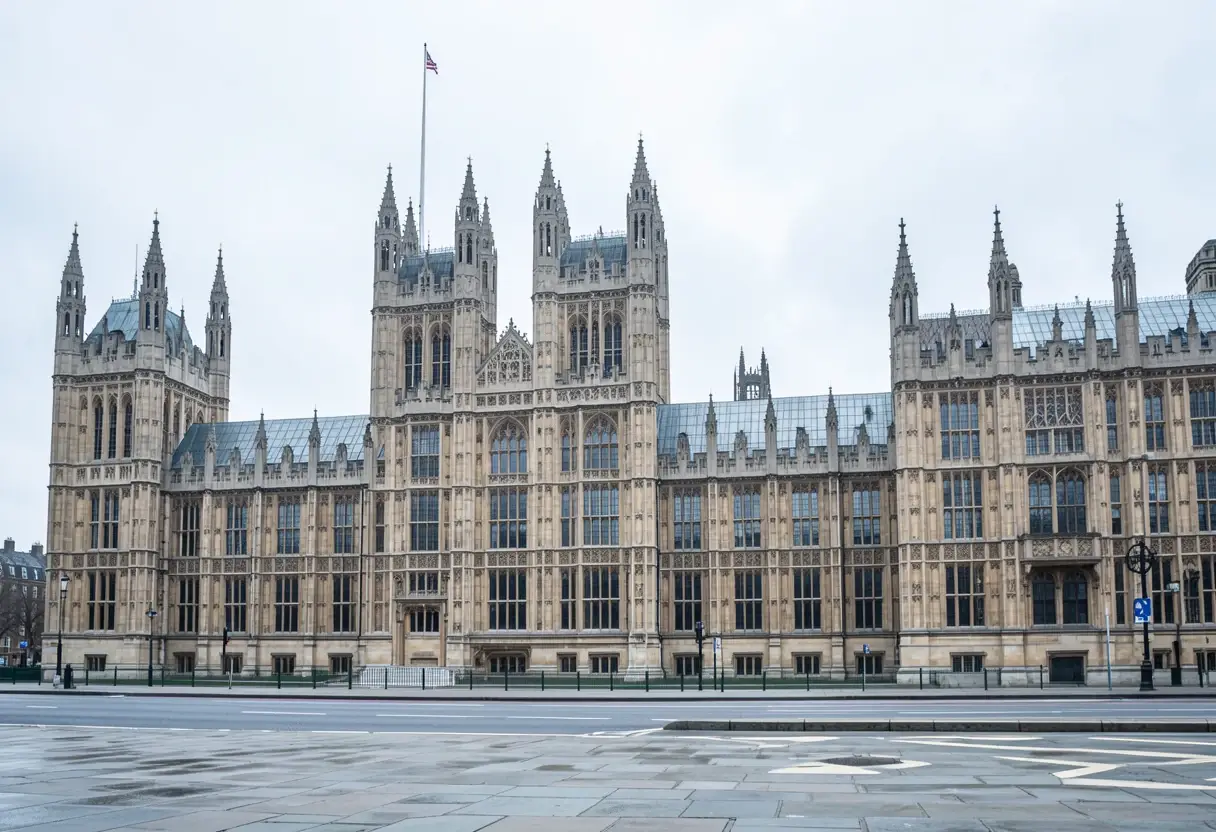
A House of Lords committee warned on 13 November 2026 that closer UK-EU alignment on food and emissions would create “growing pressure” for the UK Parliament to scrutinise a larger volume of EU legislation. Its report came ahead of a joint UK-EU summit the following week; the food and emissions deals were set to be sealed before it.
The destination is clearer than the route. The legal route is not.
What did the committee warn?
The committee said the legal and institutional form of “dynamic alignment” remained to be determined, even though introducing it would mark a major change in the UK-EU relationship under the Trade and Cooperation Agreement.
The committee offered a measured political assessment: “I believe there is a good deal to be done that could be a win-win for Britain and Europe.”
It paired that with a blunter warning: “The deal is not done, and there’ll be some long nights ahead in the next seven days.” Neither quotation describes an agreement already in force; both describe negotiations still in progress.
Takeaway: The political case for closer alignment remains open, while the legal settlement remains unfinished.
What remains legally unresolved?
Important details about the legal and institutional form of dynamic alignment still need to be determined. The committee nevertheless described its introduction as a major change to the nature of the UK-EU relationship as it exists under the Trade and Cooperation Agreement.
That is the central legal point. The Trade and Cooperation Agreement remains the stated baseline, while closer alignment on food and emissions could change the relationship between EU rules and the UK legal system. The report did not identify the institutional mechanism, the treatment of existing EU law or Parliament’s procedure. Those are substantial gaps, not drafting footnotes.
Takeaway: A major change is identified in outline; the rules governing it remain largely unwritten.
Why will Parliament come under more pressure?
As the UK aligns with more EU law, Parliament will face growing pressure to scrutinise significant volumes of EU legislation. The logic is direct: closer alignment increases the European material before the legislature, while the prospective framework’s detailed architecture remains unsettled.
For practitioners, the immediate consequence is a heavier monitoring workload across food, emissions and related regulatory work. Teams will need to track closer EU alignment and the parliamentary scrutiny it generates. They cannot yet rely on a settled institutional design, and advice on implementation must account for Parliament’s scrutiny of the legislation involved. Political momentum is not procedural certainty.
Takeaway: More alignment means more EU law to examine, not less uncertainty about how to examine it.
What else changed in the live briefing?
Several unrelated developments appeared in the same live coverage:
-
Alan Milburn’s review will recommend that some young people with disabilities lose their personal independence payments and apply instead to a local fund for short-term expenses and equipment. The recommendation, not yet the policy itself, is the point.
-
Sadiq Khan became the most high-profile Labour figure to weigh into the increasingly fractious debate over what the government should do with electric-vehicle targets.
-
The Guardian learned that Nigel Farage appeared on Russell Brand’s US podcast nine months after police investigated the comedian over allegations of sexual assault.
-
The UK government appointed the world’s first special representative for climate security, described as the strongest sign yet of fears that climate breakdown would bring chaos to the country.
Takeaway: The committee’s legal warning sat beside payments, vehicles, broadcasting and climate security—an unusually broad day, even by live-blog standards.
via theguardian.com (Source)
More from Amara Osei
Show full bio
Senior reporter covering people, launches and day-to-day practice in International law and legal practice at Global Law Wire.
327 articles
Also before the court
- EU-UK Summit Talks Enter Final Week as Tuition Fees Block Trade Deals
- Spain Backs "Closest Relation Possible" Between UK and EU Ahead of Summit
- FCA Finalises UK Disclosure Rules Aligned to SRS for Listings
- EU to Revise Palm Oil Biofuel Rules After WTO Backs Indonesia
- UK-EU SPS deal will 'dissolve' £60m a year in plant trade costs