Law report No. GLW-9403 · filed September 29, 2026
Courts & TribunalsReported case
ICC Appeals Chamber Confirms Jurisdiction in Duterte Case
On 22 April 2026 the ICC Appeals Chamber confirmed by majority the Court's jurisdiction over alleged crimes committed in the Philippines between 1 November 2011 and 16 March 2019.
By Amara Osei4 min read784 words
Holding
- On 22 April 2026 the ICC Appeals Chamber confirmed by majority the Court's jurisdiction over alleged crimes committed in the Philippines from 1 November 2011 to 16 March 2019.
- The Chamber held that articles 12 and 13 of the Rome Statute must be read together with article 127, which governs when withdrawal takes effect.
- The ruling rejected the Defence appeal against Pre-Trial Chamber I's decision of 23 October 2025; Judge Gocha Lordkipanidze issued a partly dissenting opinion.
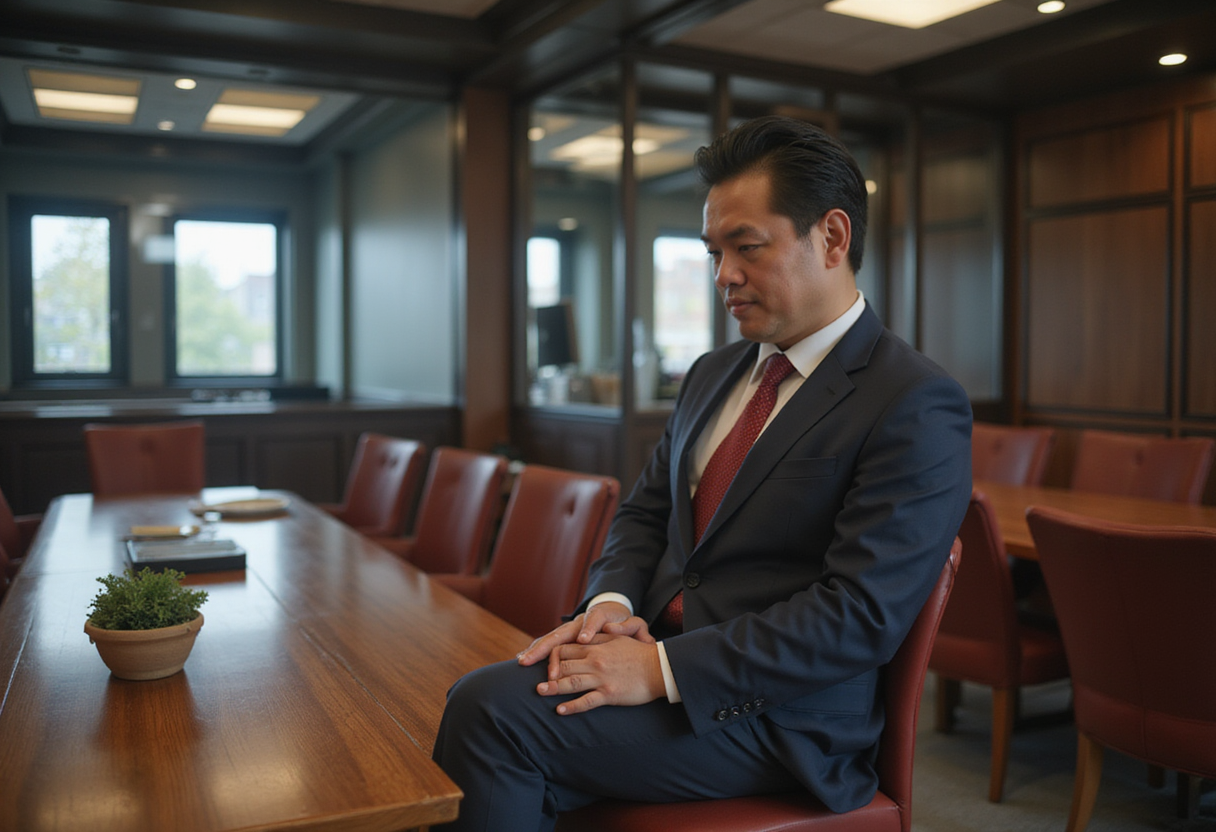
The Appeals Chamber of the International Criminal Court on 22 April 2026 confirmed, by majority, the Court's jurisdiction in the case of The Prosecutor v. Rodrigo Roa Duterte. The five-judge chamber rejected in its entirety the Defence appeal against the decision of Pre-Trial Chamber I of 23 October 2025, which had held that the Court may exercise jurisdiction over alleged crimes committed on the territory of the Republic of the Philippines while it was a State Party to the Rome Statute — that is, from 1 November 2011 to 16 March 2019.
The judgment, delivered in open court in The Hague, resolves the central jurisdictional question in one of the Court's most closely watched prosecutions. Rodrigo Duterte, former president of the Philippines, is suspected of the crimes against humanity of murder and attempted murder under article 7(1)(a) of the Rome Statute, allegedly committed as part of a widespread and systematic attack against a civilian population between 1 November 2011 and 16 March 2019 in the context of the so-called "war on drugs" campaign.
The Statutory Reasoning
At the heart of the ruling lies the interaction between three provisions of the Rome Statute. The Appeals Chamber confirmed that articles 12 and 13 require the relevant State to be a Party to the Statute at the time the Court exercises its jurisdiction, and that these provisions must be read together with article 127, which establishes when a withdrawal takes effect and the jurisdictional regime applicable in such circumstances.
The Chamber reasoned that the Rome Statute must be interpreted systemically and in line with its object and purpose: to put an end to impunity for the perpetrators of the most serious crimes of concern to the international community as a whole. It ruled that it would be incompatible with that object and purpose to enable a State Party to evade its responsibilities under the Statute by depositing a written notice of withdrawal once it discovers that alleged crimes committed on its territory or by its nationals are under examination by the Prosecution.
At the same time, the Chamber acknowledged the countervailing concern. A State's right to withdraw from the Statute would not be effective if the Court could exercise jurisdiction indefinitely despite the State no longer being a Party. The Appeals Chamber described its interpretation as striking an appropriate balance between the ability of States to withdraw effectively and the responsibilities States accept upon ratification, while providing a clear timeline within which a preliminary examination must be pursued.
Bench Composition and Procedure
The Appeals Chamber in this matter comprised Presiding Judge Luz del Carmen Ibáñez Carranza, Judge Tomoko Akane, Judge Solomy Balungi Bossa, Judge Gocha Lordkipanidze and Judge Erdenebalsuren Damdin. Judge Lordkipanidze issued a partly dissenting opinion. Mr Duterte did not attend the delivery; he has waived his right to be present and was represented by his Defence Counsel.
Procedural History
The procedural timeline is dense. The Philippines, a State Party to the Rome Statute since 1 November 2011, deposited its written notification of withdrawal on 17 March 2018. The withdrawal took effect on 17 March 2019, yet the Court retains jurisdiction over alleged crimes committed on Philippine territory up to and including 16 March 2019.
Pre-Trial Chamber I issued the warrant of arrest against Mr Duterte as "Secret" on 7 March 2025, following a request by the ICC Office of the Prosecutor, and reclassified it as "Public" on 11 March 2025. Mr Duterte was surrendered to the Court on 12 March 2025. His initial appearance took place on 14 March 2025, and the confirmation of charges hearing ran from 23 to 27 February 2026.
What This Means for Practitioners
The ruling removes the last threshold obstacle to the case proceeding on the merits: the Defence's flagship jurisdictional challenge has now failed at both the pre-trial and appellate levels, and the confirmation of charges hearing has already concluded. For counsel practising before international criminal tribunals, the judgment offers the appellate court's most authoritative reading to date of how articles 12, 13 and 127 interact, confirming that withdrawal does not extinguish the Court's jurisdiction over conduct during membership and rejecting any suggestion that a withdrawal notice triggered by an examination can shut that window early. States contemplating or pursuing withdrawal, and their legal advisers, will need to plan around a fixed temporal cut-off — here 16 March 2019 — rather than the date of the withdrawal notice. Judge Lordkipanidze's partly dissenting opinion is likely to attract close analysis in the coming weeks, as will the fuller reasoning of the majority judgment, both published on the Court's record as document ICC-01/21-01/25-415.
via icc-cpi.int (Original)
More from Amara Osei
Show full bio
Senior reporter covering industry trends and analytics at Global Law Wire.
186 articles