Law report No. GLW-5475 · filed September 30, 2026
Trade LawReported case
After SCOTUS Tariffs Ruling, Refund Fight and New Trade Actions Loom
SCOTUS struck down Trump's IEEPA tariffs 6-3, but $100B in refunds, Section 122 challenges, and major questions doctrine splits remain unresolved.
By Grace Kim6 min read1,140 words
Holding
- Supreme Court ruled 6-3 in Learning Resources v. Trump that IEEPA does not authorize President Trump's 2025 tariffs.
- Over 2,000 refund lawsuits are pending in the Court of International Trade; interest accrues at an estimated $650 million per month.
- Trump imposed new 10% tariffs (rising to 15%) under Section 122 of the Trade Act of 1974; CIT challenges and 75 new Section 301(b) investigations followed.
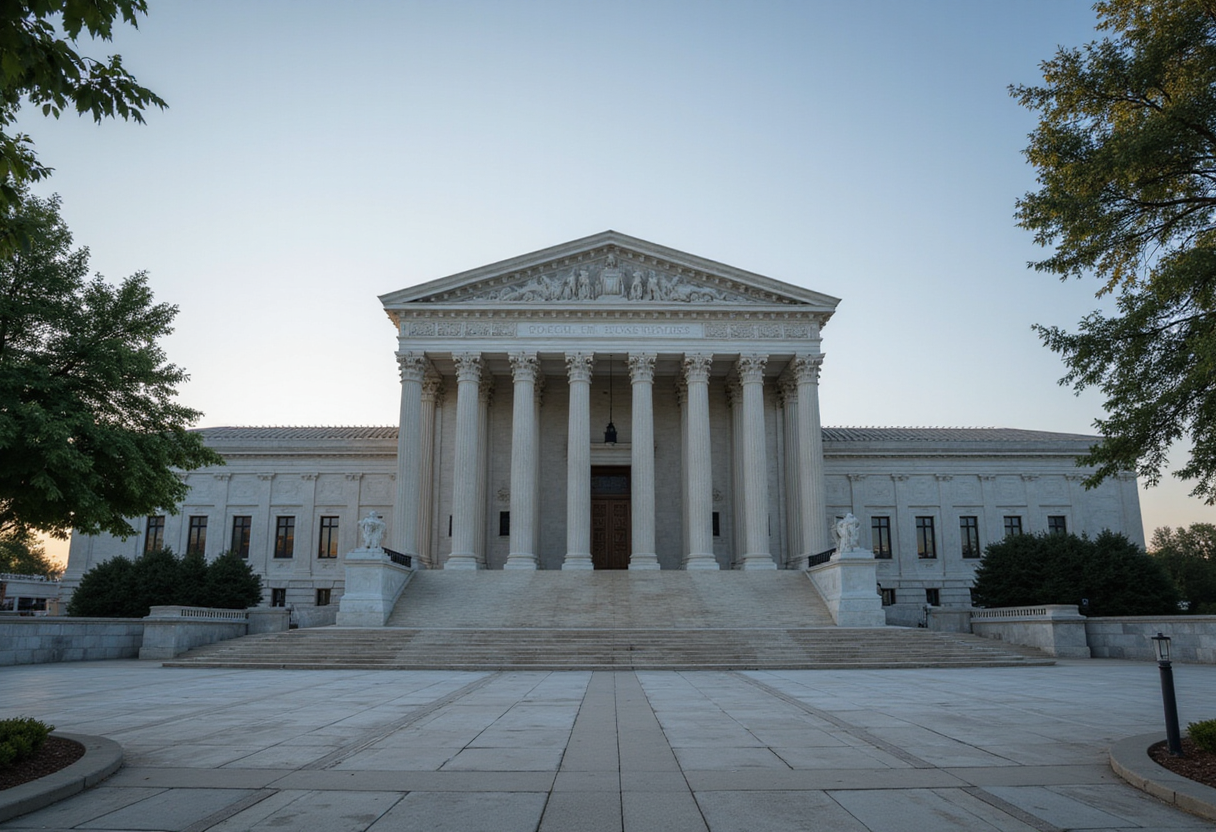
The U.S. Supreme Court ruled 6-3 last month that the International Emergency Economic Powers Act, a 1977 statute authorizing the president to regulate commerce during national emergencies created by foreign threats, did not give President Donald Trump the authority to impose sweeping tariffs through a series of 2025 executive orders. The decision in Learning Resources v. Trump united the court's Democratic appointees with Chief Justice John Roberts and Justices Neil Gorsuch and Amy Coney Barrett. Justice Brett Kavanaugh dissented, joined by Justices Clarence Thomas and Samuel Alito.
The landmark ruling left a series of consequential questions unanswered. Here is where matters stand.
Refunds: over $100 billion in limbo
Before the decision, the government had promised refunds with interest to the small businesses challenging the tariffs if the tariffs fell, and later indicated it would extend refunds to other litigants in the Court of International Trade. Roberts' majority opinion did not address the refund question at all. In dissent, Kavanaugh warned that "[t]he United States may be required to refund billions of dollars to importers who paid the IEEPA tariffs," and suggested the process "is likely to be a 'mess.'"
The original dispute returned quickly to the New York-based Court of International Trade, where more than 2,000 refund lawsuits have now been filed — including actions by FedEx, Costco, L'Oreal, Dyson, and Nissan North America. FedEx has indicated it will return any refunds to customers who paid the tariffs.
On March 4, in a separate lawsuit, CIT Judge Richard Eaton ordered the government to provide refunds, with interest, to virtually all importers who paid IEEPA tariffs. Interest is accruing at an estimated $650 million per month. Two days later, a senior Customs and Border Protection official, Brandon Lord, told Eaton in a court filing that the government was "not able to comply" with the order. "CBP," Lord wrote, "is now facing an unprecedented volume of refunds" for which "[i]ts existing administrative procedures and technology are not well-suited" — in some cases requiring personnel to calculate interest manually.
Lord said the government is developing a web-based system to "streamline and consolidate refunds and interest payments" and hoped to have it ready within 45 days. Eaton paused his order requiring immediate refunds. In a March 12 report, Lord said components of the new system were between 40% and 80% complete, and Eaton directed the government to provide another update in seven days.
Alternative statutory authority
Kavanaugh argued in dissent that the ruling "might not substantially constrain a President's ability to order tariffs going forward," because "numerous other federal statutes authorize the President to impose tariffs and might justify most (if not all) of the tariffs at issue in this case — albeit perhaps with a few additional procedural steps." Roberts responded that the laws Kavanaugh cited "contain various combinations of procedural prerequisites, required agency determinations, and limits on the duration, amount, and scope of the tariffs they authorize," but concluded: "[w]e do not speculate on hypothetical cases not before us."
Days after the decision, Trump announced across-the-board tariffs of 10%, later stating on social media that they would rise to 15%. He relied on Section 122 of the Trade Act of 1974, which permits temporary import quotas or tariffs of up to 15% for up to 150 days to address "large and serious balance-of-payments deficits."
The CIT's May 2025 ruling striking down the IEEPA tariffs had pointed to Section 122 as an explicit non-emergency statute with greater limitations, characterizing the trade deficit as "a type of balance-of-payments deficit" and reasoning that the IEEPA tariffs "fit under Section 122" and "must conform with the limits" it imposes. The Trump administration, however, told the Federal Circuit that trade deficits are "conceptually distinct from balance-of-payments deficits."
New challenges have already reached the CIT. A lawsuit filed by a group of states contends that Trump "has not met the statutory prerequisites" and that "Section 122 cannot be invoked merely to address trade deficits on their own."
Separately, U.S. Trade Representative Jamieson Greer announced on March 11 investigations under Section 301(b) of the Trade Act of 1974 into excess manufacturing capacity in China, the European Union, and 13 other countries, with tariffs among the available remedies. A day later, Greer announced 60 additional Section 301(b) investigations into whether governments failed to take adequate measures against forced labor.
The major questions doctrine fracture
Only three justices in the majority — Roberts, Gorsuch, and Barrett — relied on the major questions doctrine. Roberts called Trump's assertion of broad "statutory power over the national economy" "'extravagant' by any measure" and concluded that "'a reasonable interpreter would [not] expect' Congress to 'pawn[]' such a 'big-time policy call[] . . . off to another branch.'"
Justices Sonia Sotomayor, Elena Kagan, and Ketanji Brown Jackson declined to join that portion. Kagan, referring to the "so-called major-questions doctrine," contended the case turned on "straight-up statutory construction": IEEPA gives the president significant authority over transactions involving foreign property, but not the power "to unilaterally impose tariffs."
Gorsuch located the doctrine in separation of powers, requiring "clear statutory authority" for "extraordinary . . . power." Barrett countered that the doctrine is simply a route to a statute's "most natural meaning." Kavanaugh accepted the doctrine as an "important canon" but found it satisfied here, and argued it should not apply when the president exercises foreign affairs power — urging courts to "read the statute as written." Roberts rejected a foreign affairs exception for tariffs, noting only Congress may impose tariffs during peacetime.
Open IEEPA questions
The majority held only that IEEPA does not authorize tariffs. It did not decide whether the fentanyl-related tariffs "deal with" an "unusual and extraordinary threat," or whether courts may review that presidential determination at all. It also declined to define the scope of the president's power to "regulate . . . importation," which Roberts called "plain dicta."
Rehearing odds
Trump suggested on social media that his administration might ask the court to reconsider. Any petition for rehearing would be due 25 days after the ruling — by March 17 — and Solicitor General D. John Sauer would have to certify it was filed "in good faith and not for delay." A grant would require votes from all three dissenters plus two justices from the majority. The court has not granted rehearing in an argued case since 1965, nor reversed its own ruling on rehearing since 1956. The administration's odds appear long.
Practical takeaway: Practitioners should track the CIT's refund supervision closely — interest accrues at roughly $650 million monthly — and prepare clients importing goods for litigation over Section 122's balance-of-payments predicate and the new Section 301(b) investigations. The fractured major questions analyses across six opinions leave the doctrine's future application unsettled.
via scotusblog.com (Original)
More from Grace Kim
Show full bio
Correspondent covering consumer brands and retail at Global Law Wire.
206 articles
Also before the court
- Supreme Court Strikes Down Trump's IEEPA Tariffs in 6-3 Ruling
- Federal Court Strikes Down New Global Tariffs Imposed After Supreme Court Loss
- Supreme Court Strikes IEEPA Tariffs; Trump Pivots to Section 122
- New Federal Court Challenge Targets Trump's Latest Global Tariffs
- US Appeals Court Pauses Ruling Against Trump's 10% Global Tariff