Law report No. GLW-5102 · filed September 29, 2026
Courts & TribunalsReported case
New Federal Court Challenge Targets Trump's Latest Global Tariffs
A federal court has begun hearing a newly filed challenge to President Trump's latest global tariffs, reopening the fight over presidential trade powers.
By Grace Kim3 min read582 words
Holding
- A federal court is hearing a newly filed case challenging President Trump's latest global tariffs.
- The case is the latest in a series of lawsuits contesting the administration's use of tariff authority.
- No ruling has issued yet; the litigation is at an early procedural stage.
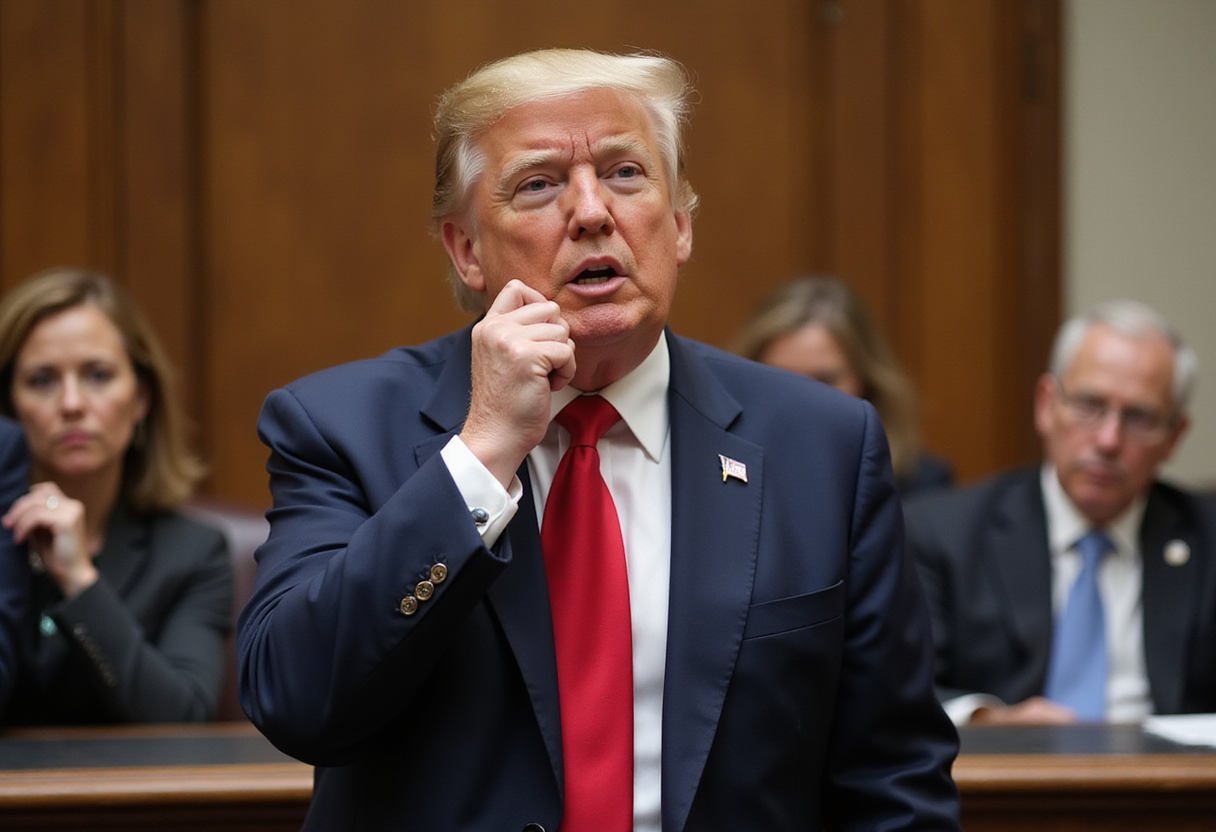
A federal court is hearing a newly filed challenge to President Donald Trump's latest round of global tariffs, opening a fresh front in the escalating legal battle over the scope of presidential trade powers.
The case, reported by PBS, arrives at the federal bench as the latest in a series of lawsuits contesting the administration's use of tariff authority. Plaintiffs are asking the court to scrutinize the legal foundation on which the newest global tariffs rest and to determine whether the administration acted within the powers Congress has delegated to the executive branch.
At the center of the dispute is a familiar question in US trade litigation: whether the President can lawfully impose sweeping tariffs on goods from around the world under the statutory tools the administration has invoked, or whether such broad measures exceed the authority Congress granted. The new filing brings that question back before a federal judge after earlier rounds of tariff litigation tested similar arguments in other courts.
For the challengers, the lawsuit represents another opportunity to persuade a federal court that the latest tariffs suffer from the same structural defects they have alleged in prior challenges — namely, that worldwide tariffs of this breadth are not the kind of measure the relevant trade statutes authorize. For the administration, the case is the next defense of a tariff program that has become a defining feature of its economic policy.
The procedural posture matters. A newly filed case in federal court typically begins with briefing on the merits or, if the government seeks it, on threshold questions such as standing and the proper forum. Practitioners watching the docket will want to track whether the government moves to dismiss, whether the plaintiffs seek a preliminary injunction to halt tariff collection while the case proceeds, and how quickly the assigned judge moves to substantive arguments. Each of those procedural choices will shape the timeline — and the commercial exposure of importers in the interim.
The practical stakes are straightforward. If the challenge succeeds, importers who have paid the contested duties could have a path to refunds, and the administration's tariff architecture would face a significant judicial constraint. If the court sides with the government, the latest global tariffs would stand on firmer legal ground, at least at this stage, and future challenges would need to find different footing. Either way, the ruling that eventually emerges will give traders, customs counsel, and tax practitioners a clearer picture of how far presidential tariff authority extends.
The case also adds to a broader pattern. Federal courts have become the primary arena in which the administration's tariff agenda is being tested, with challengers ranging from businesses to state governments bringing suit after suit. Each new filing narrows the field of unanswered questions: which statutes the administration can rely on, how broadly it can apply them, and whether courts will police the boundaries or defer to the executive's trade judgments.
For now, the litigation is at its beginning. The court has the case, the parties have their positions, and the tariff fight — already one of the most consequential legal contests over executive power in recent years — has a new venue. Businesses that import goods subject to the latest tariffs, and the lawyers who advise them, will be reading the docket closely in the weeks ahead.
No decision has issued yet. The court has simply begun hearing the case, and the operative question — whether the latest global tariffs can survive judicial review — remains open.
via GN International Courts (Source)
More from Grace Kim
Show full bio
Correspondent covering consumer brands and retail at Global Law Wire.
206 articles
Also before the court
- Forced Labor Tariff Fight Lands at U.S. Court of International Trade
- Trump's Latest Global Tariffs Drawn Into Trade Court Challenge
- Federal Court Strikes Down New Global Tariffs Imposed After Supreme Court Loss
- US Trade Court Finds Trump Tariffs Illegal, Narrow Block Follows
- Supreme Court Strikes IEEPA Tariffs; Trump Pivots to Section 122