Law report No. GLW-1918 · filed September 29, 2026
Courts & TribunalsReported case
Trump Administration Returns to Supreme Court Over Deportations
Solicitor General D. John Sauer asks the Supreme Court for a third time to lift Judge Brian Murphy's bar on third-country deportations, citing flight cancellations and diplomatic strain.
By Sophie Lindqvist
Holding
- Solicitor General D. John Sauer filed a 42-page application on Thursday, September 24, 2026, asking the Supreme Court to stay Judge Brian Murphy's injunction against third-country removals in Department of Homeland Security v. D.V.D.
- The 1st Circuit on Friday largely upheld Murphy's ruling and on Wednesday dissolved the March 16, 2026, stay, prompting the administration's third emergency application in the case.
- Justice Ketanji Brown Jackson set a response deadline of 4 p.m. EDT on Monday, September 28, for the immigrants in the case.
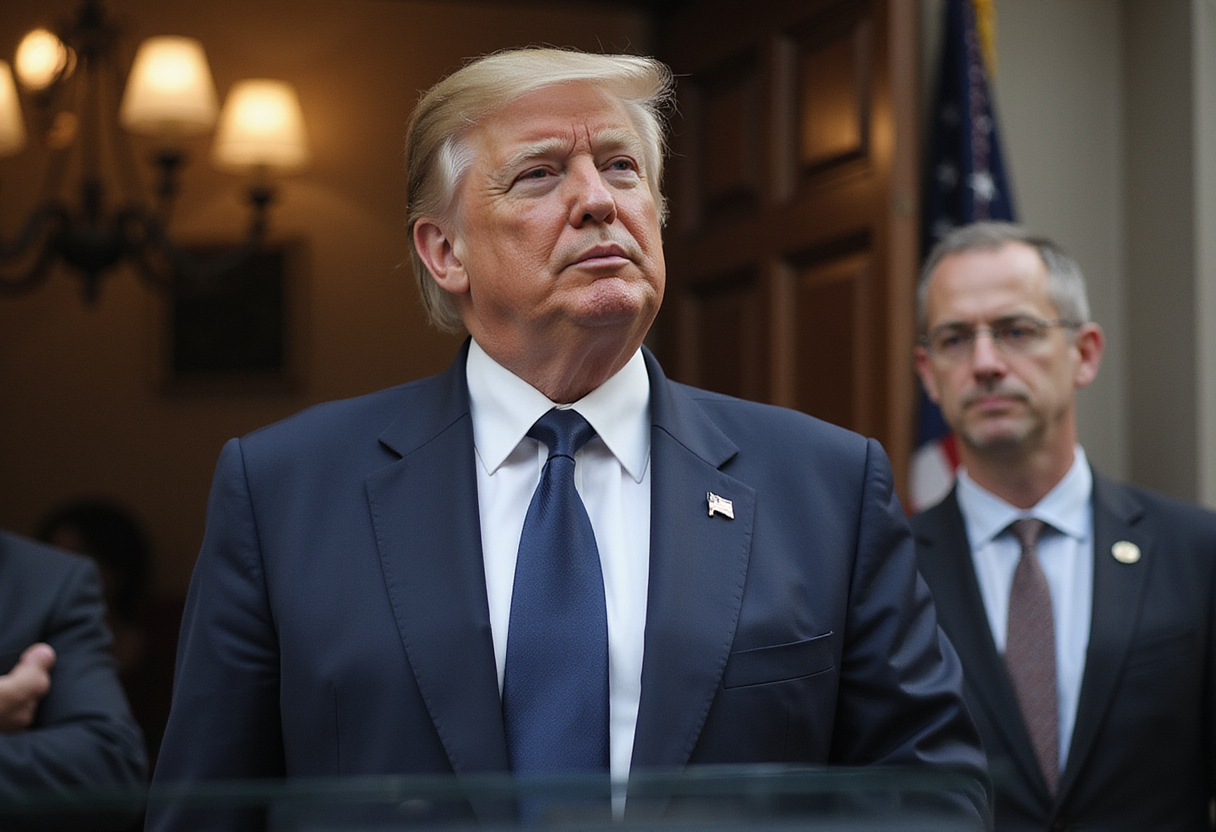
The Trump administration asked the Supreme Court on Thursday, September 24, 2026, to clear the way for the government to resume deporting noncitizens to countries not identified in their removal orders — the procedure known as "third-country removals."
U.S. Solicitor General D. John Sauer filed a 42-page application in Department of Homeland Security v. D.V.D., the administration's third trip to the justices in the litigation over the policy. Sauer told the court that a U.S. Court of Appeals for the 1st Circuit decision reinstating an injunction has deprived the government of "an essential tool to remove certain aliens, including some of the worst criminal aliens." He asked the justices to enter an "immediate administrative stay" that would allow deportations to continue while the court considers the request.
Justice Ketanji Brown Jackson, who handles emergency appeals from the 1st Circuit, directed the immigrants in the case to respond by 4 p.m. EDT on Monday, September 28.
Background of the dispute
The dispute traces back to a January 20, 2025, executive order in which President Donald Trump instructed the Department of Homeland Security to take "all appropriate actions" to remove noncitizens who remained in the United States despite deportation orders. In February, DHS issued internal guidance directing a division of U.S. Immigration and Customs Enforcement to determine whether undocumented immigrants who had not yet been removed because of torture risks in their home countries could instead be removed elsewhere. Guidance issued the following month required DHS, before removing an immigrant to a country not named in the removal order and that has not provided torture assurances, to notify the immigrant, give the immigrant a chance to "affirmatively express" fear of torture, and, if needed, conduct a screening.
In March, four immigrants with removal orders went to federal court in Massachusetts, arguing they feared removal to countries not identified in their orders.
U.S. District Judge Brian Murphy barred the government from deporting the immigrants and others like them to third countries without first giving them and their lawyers written notice of the destination country and a "meaningful opportunity" to challenge the removal. Murphy also instructed DHS to apply a "reasonable" fear standard rather than "more likely than not," and to give immigrants at least 15 days to seek reopening of their immigration proceedings if they cannot make that showing.
Three trips to the Supreme Court
Sauer first asked the justices to stay Murphy's order. On June 23, 2025, the court granted that request over a dissent by Justice Sonia Sotomayor, joined by Justices Ketanji Brown Jackson and Elena Kagan.
One day later, Sauer returned, asking the court to "clarify" that its order allowed the deportation of eight men held at a U.S. military base in Djibouti, after Murphy ruled that efforts to remove them to South Sudan violated his order. On July 3, the court issued a brief opinion holding that its June 23 order paused Murphy's order "in full" and covered the later South Sudan ruling. Kagan concurred, writing that she did "not see how a district court can compel compliance with an order that this Court has stayed," despite disagreeing with the stay. Sotomayor dissented again, joined by Jackson.
Back in the lower courts, Murphy issued a final judgment in the immigrants' favor and vacated the third-country removal policy. He ruled that before removal to a third country, immigrants have the right to "meaningful notice" and a "meaningful opportunity" to contest removal on the ground that they have a reasonable fear of persecution or torture there.
On Friday, the 1st Circuit largely upheld Murphy's ruling. On Wednesday it dissolved the March 16, 2026, order that had kept Murphy's ruling on hold during the appeal — prompting Thursday's third emergency application.
The government's arguments
Sauer wrote that reinstatement of Murphy's order has "created substantial logistical problems with ongoing removal operations—including the cancellation of flights—and led to added expense, potential diplomatic issues, and the inability to remove dangerous criminals."
He argued that Murphy's latest order "rests on the same fundamentally flawed legal premises as the previous rulings," and that the lower courts "simply relied on the same meritless grounds" as the earlier injunction. "The courts," he said, "again disregarded multiple jurisdictional bars that preclude" judicial review of an immigrant's "claims of persecution or torture except in a petition for review from a removal order. And they again rejected the government's reliance on countrywide assurances that particular nations will not torture or persecute anyone."
If the third-country deportation process is delayed, Sauer warned, "the consequence … is that the government will often need to restart the entire removal process afresh, freezing things as the government attempts to rework arrangements with foreign countries."
Practical consequences
For practitioners, the application tees up the substantive future of third-country removals nationwide. If the justices grant the stay, DHS may resume removals to non-designated countries under the March 2025 internal guidance pending review. If the court declines, Murphy's final judgment — with its written-notice, "meaningful opportunity," reasonable-fear, and 15-day reopening requirements — remains operative and binds removal operations. Respondents face a Monday, September 28, 4 p.m. EDT filing deadline before Justice Jackson, who may act alone or refer the matter to the full court.
via supremecourt.gov (Original)
More from Sophie Lindqvist
Show full bio
News editor covering industry trends and analytics at Global Law Wire.
202 articles