Law report No. GLW-2904 · filed November 8, 2026
Courts & TribunalsReported case
Supreme Court Declines Deeper Delhi Air Pollution Intervention
India's Supreme Court declined deeper intervention in Delhi-NCR air pollution, deferring to CAQM and GRAP and warning that more court orders would multiply violations.
By Amara Osei5 min read926 words
Holding
- Supreme Court bench of CJI Surya Kant heard the matter on 8 November 2026 (SMW(C) No. 11/2026)
- Stubble burning contributed 14% of Delhi's air pollution as of 5 November, the amicus said
- Diesel autorickshaws to be phased out by 1 January 2027 under CAQM plans
- A 2012 study cited 43.5% lung function reduction in Delhi school children
- Only 9 of 126 toll plazas, handling 90% of traffic, show no vehicle idling, MCD claimed
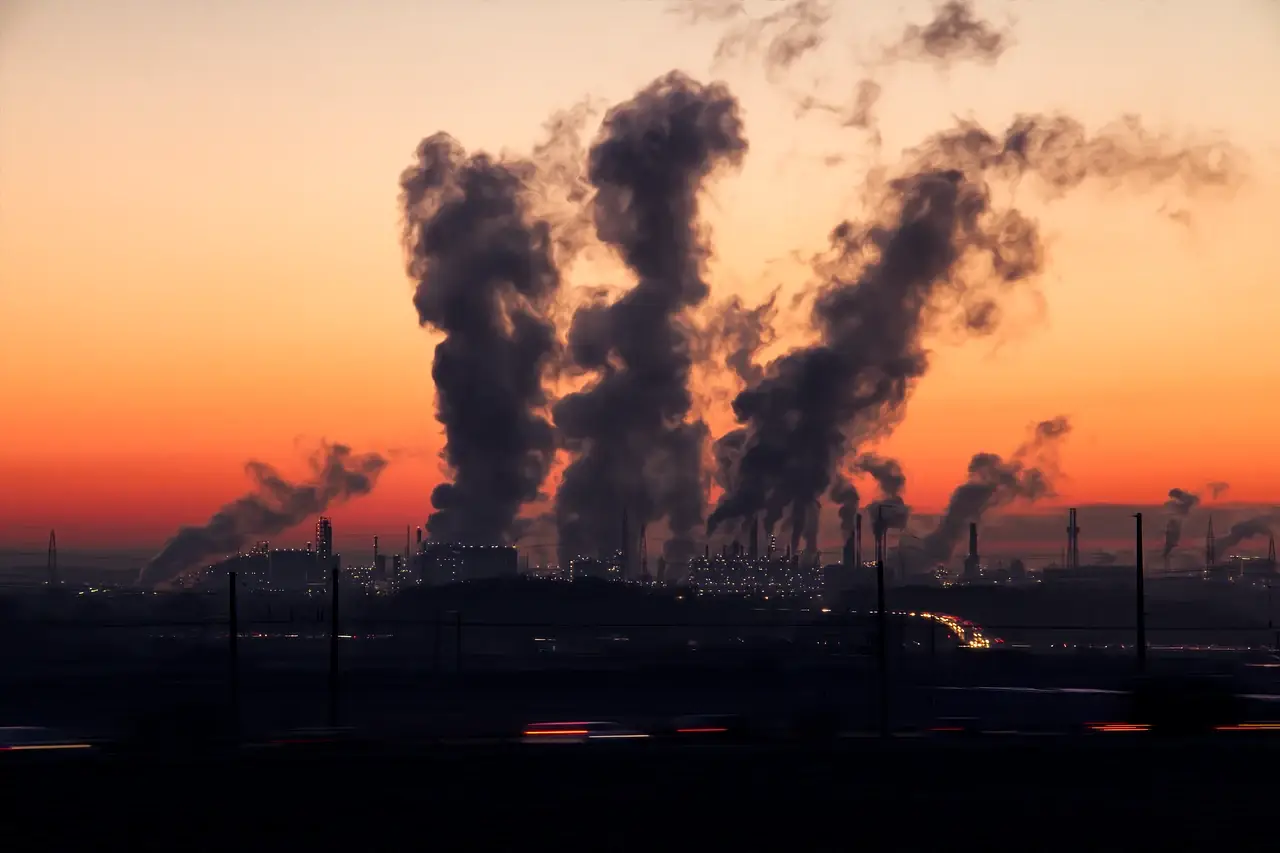
India's Supreme Court on 8 November 2026 declined to widen its intervention in Delhi-NCR's air pollution crisis, with Chief Justice Surya Kant warning that further judicial orders would only encourage lawbreaking. "No restrictions are going to work. More the court will pass orders, it will multiply the violations. It is the tendency of people," the CJI said in In Re: Curbing Air Pollution in the National Capital Region, SMW(C) No. 11/2026.
The bench comprised CJI Surya Kant, Justice Joymalya Bagchi and Justice V Mohana. It will call for reports and updates from concerned authorities rather than issue directions and demand state compliance, as it had initially suggested. The takeaway is simple: the Court trusts the experts, and only peer-reviewed research will move it.
What did the amicus tell the Court?
Senior Advocate Aparajita Singh, appearing as amicus curiae, pressed the urgency of the situation. Air quality, she said, was already hovering around the 'severe' category. "We are losing our voice as well. It's like smoking 30 cigarettes a day," she told the bench. She cited a Ganga Ram Hospital chest surgeon's report that in Delhi, even the lungs of children are not pink.
The Court was unmoved by anecdote. Justice Bagchi said the bench was not inclined to go into "anecdotal" opinion and would follow expert and GRAP positions unless contradicted by peer-reviewed research. "We have reason to believe that CAQM takes into consideration all expert opinion, including health professionals... whether the lungs of a young child is better in adaptation, we have no [knowledge]. Whatever GRAP says, unless you can rebut it with peer reviewed research papers, we are not going to go into these persuasive arguments," the judge said.
The amicus also cited a 2012 research report finding 43.5% lung function reduction in Delhi school children. Justice Bagchi replied that CAQM had considered the research before adopting its graded response.
How did the bench treat stubble burning?
Singh reported that stubble burning contributed 14% of Delhi's air pollution as of 5 November. She argued that Delhi's air is already polluted, and stubble burning merely "tips over" the bad air quality; focusing entirely on it creates problems.
The CJI observed that stubble burning would decline as farmers turn to sowing. The amicus then pointed to a practical flaw: the Centre supplies stubble-management equipment, but fuel is expensive, and the solution fails on small farms.
The bench offered structural suggestions instead:
- Justice Bagchi noted the Centre had proposed a policy for acquiring stubble from farmers.
- The CJI suggested the government notify a rate in advance, so farmers know what they will earn by preserving and selling stubble.
- He recalled his earlier suggestion that equipment go to Gram Panchayats rather than individual farmers, who cannot afford it.
- He proposed engaging agricultural produce procurement corporations to provide warehousing for stubble in exchange for money.
"Kind of education of farmers is required," the CJI said, predicting farmers will retain stubble rather than burn it once they understand the economics.
What about vehicular pollution?
The amicus argued that transport is a major part of the problem, and that despite court orders, vehicles stopped at Delhi borders idle and generate more pollution. She noted the Court has passed three orders requiring NHAI and MCD to work in tandem.
The CJI pressed the point himself. "Major part of the problem... this vehicular pollution. Look at the roads in Delhi. Look at the roads connecting NCR with Delhi," he said, describing bumper-to-bumper traffic. Public transport, he added, is lacking: "people may have their own justification because if they have to go, how to go? there is no public transport system to facilitate them."
Additional Solicitor General Aishwarya Bhati, for the Union, informed the Court of several measures:
- Winter-season directions (November to end-January) barring entry to Delhi for all vehicles except BS-VI models.
- A five-category framework covering industrial, vehicular and other pollution sources.
- A CAQM note including phasing out diesel autorickshaws by 1 January 2027, with transition to CNG or electric.
- Geo-tagging of pollution certificates, denial of fuel without a certificate, and immediate action on complaints of visibly polluting vehicles.
The MCD counsel claimed no idling occurs at 9 of 126 toll plazas, which handle 90% of traffic. The ASG conceded implementation remains incomplete. The CJI questioned whether any scientific assessment explains why pollution persists despite measures, noting that Delhi alone holds half the country's vehicles and that a "free-for-all" allows unmonitored vehicles from any state.
Why did the Court reject school restrictions?
A counsel sought parity between primary and secondary students under GRAP, which prescribes hybrid schooling for primary children at GRAP 3 and secondary children at GRAP 4. "The lungs of a 5th grader are not different from that of a 6th grader," she urged.
"We don't know, neither do you," Justice Bagchi replied, deferring to CAQM's expertise. "Let's not second guess an authority's classification. By age classification is a reasonable one." He expressed strong disinclination to restrict schooling, observing that online education quality is questionable. He added that any intervention would be "proportionate minimal" and that education, like commerce and industry, should have free access.
Justice Mohana urged the Union to enhance public awareness of pollution's health consequences. "We will give more impetus," the ASG responded. Justice Bagchi closed by suggesting Diwali programmes incorporate pollution awareness, with local counsellors and mohalla committees discouraging polluting celebrations. The Court, it appears, prefers persuasion to prohibition.
via livelaw.in (Source)
More from Amara Osei
Show full bio
Senior reporter covering people, launches and day-to-day practice in International law and legal practice at Global Law Wire.
270 articles
Also before the court
- Climate cases surge worldwide as courts take up emissions fights
- Climate Strategy Shifts From Parliaments to Courtrooms, eNCA Reports
- ICJ Issues Landmark Advisory Opinion on Climate Obligations
- UN General Assembly Backs ICJ Climate Obligations Ruling
- ICJ Climate Opinion: Does Inaction Now Create Legal Liability?