Law report No. GLW-8353 · filed October 10, 2026
Courts & TribunalsReported case
UN General Assembly Backs ICJ Climate Obligations Ruling
The General Assembly endorsed the ICJ's 2025 climate advisory opinion by 141 votes to eight, framing climate action as a legal duty under international law rather than a political choice.
By Sophie Lindqvist3 min read594 words
Holding
- The UN General Assembly adopted the resolution on 20 May 2026 with 141 votes in favour, 8 against and 28 abstentions.
- The ICJ issued its advisory opinion on States' climate obligations on 23 July 2025 in The Hague.
- Vanuatu drafted the resolution together with several other countries.
- The ICJ ruled that breaching states may be required to cease wrongful conduct, give non-repetition guarantees and make full reparation.
- Eight states voted against: Belarus, Iran, Israel, Liberia, Russia, Saudi Arabia, the US and Yemen.
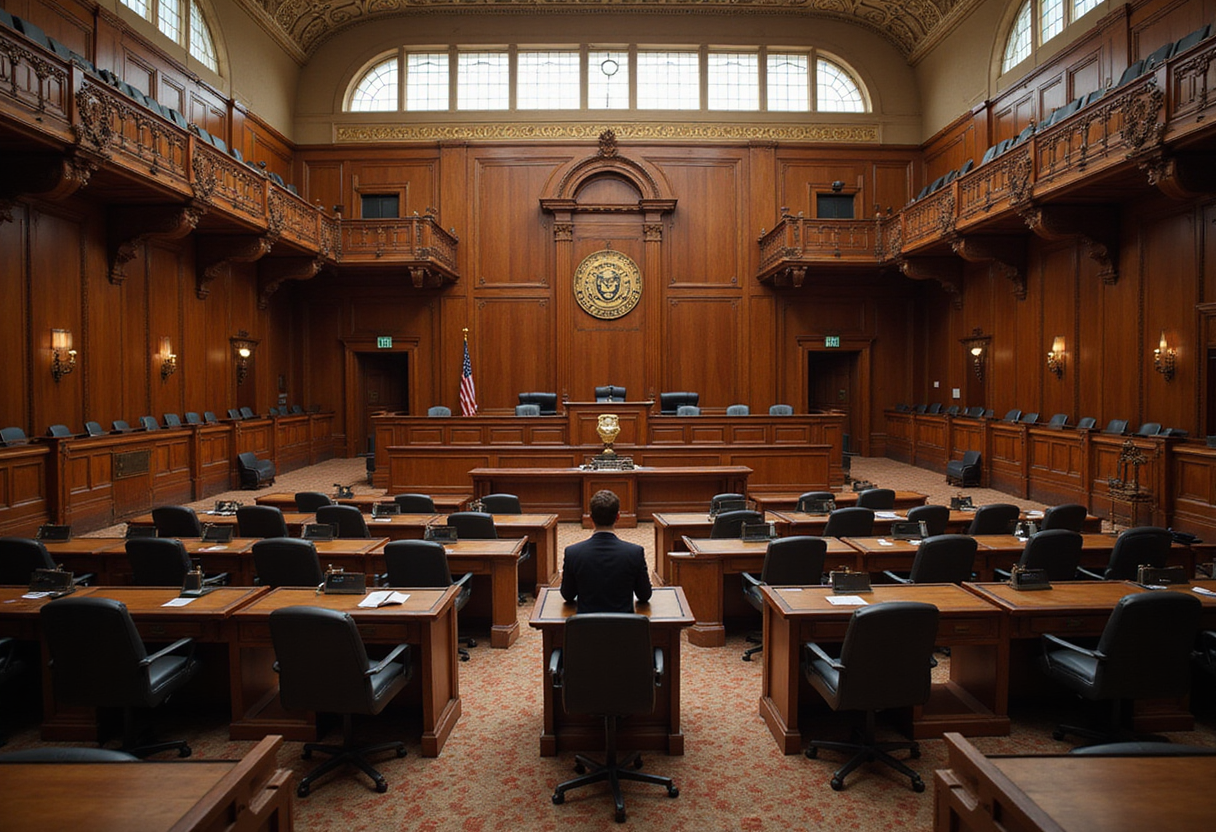
The UN General Assembly adopted a landmark resolution on Wednesday, 20 May 2026, endorsing the International Court of Justice's 2025 advisory opinion on States' climate obligations — by a vote of 141 in favour, eight against and 28 abstentions.
The resolution, titled "Advisory opinion of the International Court of Justice on the obligations of States in respect of climate change," was drafted by Vanuatu, a Pacific island nation on the frontline of the climate crisis, together with several other countries. It followed intense discussion and multiple proposed amendments before the vote.
Belarus, Iran, Israel, Liberia, Russia, Saudi Arabia, the United States and Yemen voted against the text.
What did the ICJ decide?
The ICJ, the UN's principal judicial body based in The Hague, ruled in July 2025 that States have an obligation to protect the environment from greenhouse gas (GHG) emissions. The Court's President, Judge Iwasawa Yuji, read out the advisory opinion on Wednesday, 23 July 2025. The decision was widely hailed as a breakthrough, and UN Secretary-General António Guterres described it simply as "a victory for our planet."
The Court also ruled that States breaching these obligations are legally responsible and may be required to:
- stop the wrongful conduct;
- offer guarantees that it will not happen again;
- make full reparation, depending on the circumstances.
Are advisory opinions binding?
ICJ advisory opinions are not binding. They nevertheless carry significant legal and moral authority, helping to clarify and develop international law by defining States' legal obligations.
Wednesday's General Assembly adoption sends a strong message that tackling the climate crisis is a legal duty under international law — not merely a political choice.
"The world's highest court has spoken," Guterres said in response. "Today, the General Assembly has answered."
He earlier called the resolution "a powerful affirmation" of international law, climate justice and science, adding that it makes clear Member States' responsibility to protect their own people from what he called an "escalating climate crisis."
What does the resolution call for?
The resolution calls on all UN Member States to:
- take all possible steps to avoid causing significant damage to the climate and environment, including emissions produced within their borders;
- follow through on existing climate pledges under the Paris Agreement;
- cooperate in good faith and continuously coordinate efforts to tackle climate change globally;
- ensure climate policies safeguard the rights to life, health and an adequate standard of living.
In a statement released after the vote, Guterres declared that those least responsible for climate change are paying the highest price. He said the path to climate justice "runs through a rapid, just, and equitable transition away from fossil fuels towards renewable energy."
The Secretary-General noted that renewables have proved to be the cheapest and most secure form of energy and that the goal of limiting global temperature rises to no more than 1.5 degrees above pre-industrial levels remains within reach.
What does this mean for practitioners?
For lawyers advising states, subnational governments and corporations, the combination of the ICJ opinion and its endorsement by 141 states strengthens the doctrinal basis for climate litigation across jurisdictions. Although advisory opinions do not bind, domestic courts and regional tribunals routinely cite them as authoritative statements of international law. The ICJ's framing of cessation, non-repetition guarantees and full reparation for climate harm gives claimants a template for remedies. States voting in favour may now find it harder to resist arguments that emissions within their borders engage legal responsibility. Practitioners should expect the opinion to feature in pending and future climate cases worldwide.
via GN International Courts (Source)
More from Sophie Lindqvist
Show full bio
News editor covering industry trends and analytics at Global Law Wire.
201 articles