Law report No. GLW-1174 · filed November 14, 2026
Courts & TribunalsReported case
Norway's Supreme Court Invalidates Three North Sea Oil Licenses
Norway's Supreme Court, sitting with eleven judges, invalidated three North Sea oil licenses for failing to assess combustion emissions from burned oil.
By Amara Osei4 min read754 words
Holding
- Norway's Supreme Court ruled on Friday that three North Sea oil licenses are invalid due to procedural errors.
- Eleven judges heard the case, instead of the usual five, reflecting its importance.
- Greenpeace Norway and Young Friends of the Earth Norway filed the case in 2023 over the Tyrving, Breidablikk and Yggdrasil fields.
- Yggdrasil was due to start production in 2027; Breidablikk and Tyrving are currently operational.
- The ministry must reassess the approvals, but the ruling does not force operations to stop.
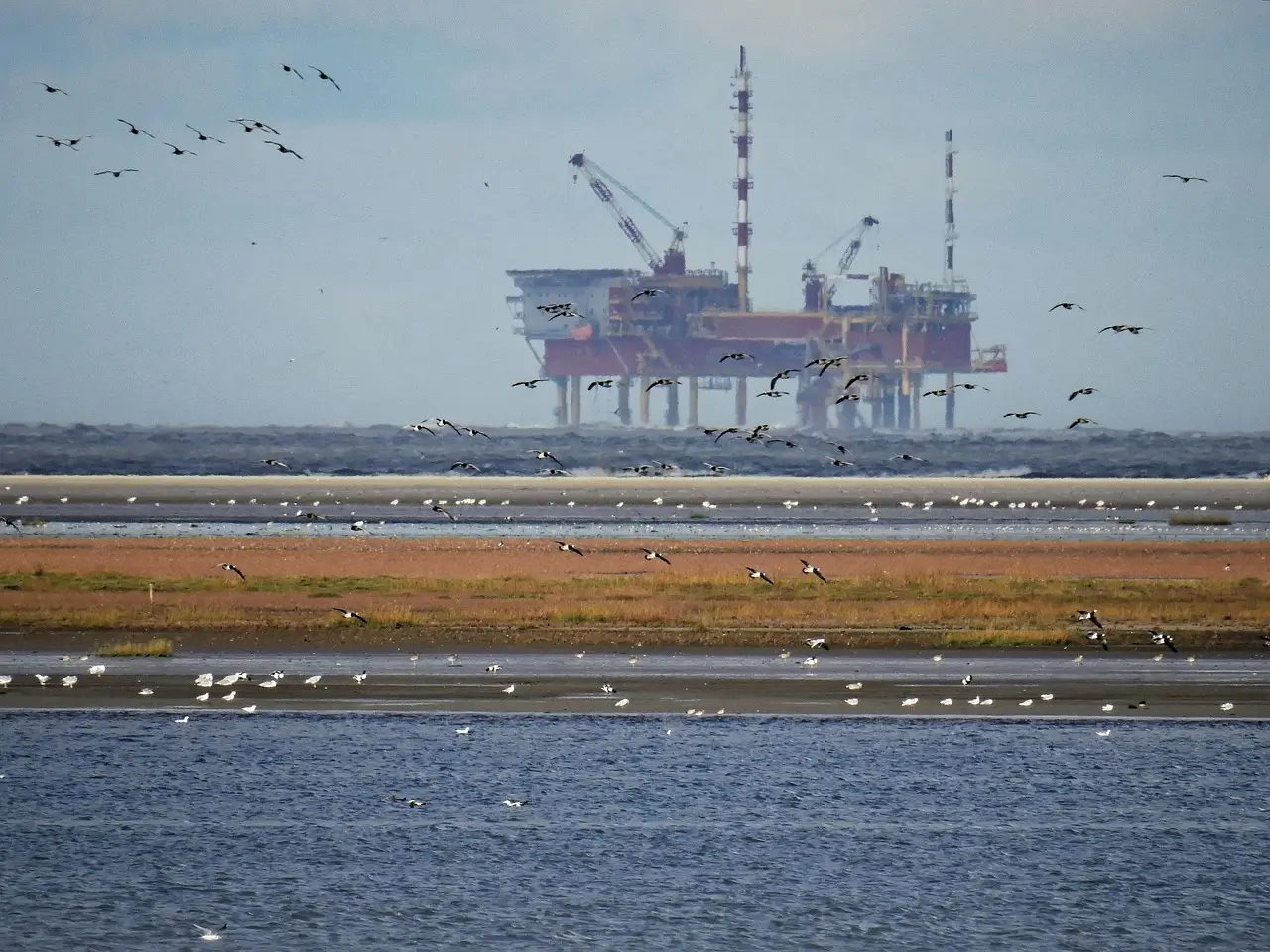
Norway's Supreme Court on Friday invalidated three North Sea oil licenses because the state failed to assess the greenhouse gases released when the extracted oil is burned. Eleven judges heard the case — more than double the usual five, a format Norway reserves for matters of real consequence.
The court found the approvals for the Tyrving, Breidablikk and Yggdrasil fields were, in its operative language, "invalid due to procedural errors." The assessments carried out covered only production emissions. They ignored what the court called the subsequent "combustion emissions." The bench stated plainly: "the combustion emissions resulting from petroleum production must be subject to an impact assessment" before any plan wins approval.
What does the ruling change?
Everything, and nothing — at least not immediately. The Supreme Court noted that the oil companies themselves were not parties to the case, and that invalidation does not automatically extinguish the licenses. "The ministry must, however, reassess the case on the basis of proper procedure," the court said.
For practitioners, the practical consequence is precise. Any Norwegian approval of petroleum development must now model, disclose and weigh downstream emissions — the carbon released where the oil is ultimately burned, not merely at the platform. Ministries and operators across the sector will need to redo impact assessments in a form that captures combustion emissions. Expect paperwork. Expect delay. Expect appeals to procedure rather than substance in future challenges.
The case began in 2023, when Young Friends of the Earth Norway and Greenpeace Norway challenged the permits. The campaigners won at first instance in January 2024. The energy ministry appealed. An appeals court upheld the win in November 2025. The ministry appealed again. Three courts, three losses.
Operations continued throughout. Breidablikk and Tyrving are producing today. Yggdrasil, whose potential reserves were recently revised upward, was scheduled to begin production in 2027.
Energy Minister Terje Aasland conceded the point with governmental composure. The "ruling is important because it clarifies the requirements for the decisionmaking process in cases like these," he said in a statement, adding that his ministry will "of course, follow these requirements." He stressed that the court had "made it very clear that this does not mean that activities at the three fields must stop," and that the decisions simply require reassessment. "We need to study the ruling more closely before we can say more about how we will proceed," he said.
Who hailed the decision?
Haldis Tjeldflaat Helle, head of Greenpeace Norway, did not hold back. "This is a historic victory for the climate and for Norwegian democracy," she told AFP. "Big polluters are now forced to admit exactly how much they will contribute to the climate crisis that we are in the middle of." She added that the ruling "will give Norwegian public and Norwegian decisionmakers a much clearer, better picture of how much the Norwegian oil and gas industry is actually contributing to the climate crisis."
The stakes extend beyond the courtroom. Norway has overtaken Russia as Europe's main gas and oil supplier since the war in Ukraine sharply cut Russian deliveries to the continent. The judgment was watched closely beyond Norway's borders by legal experts and NGOs who have pursued similar challenges to production licenses on climate grounds elsewhere.
Is this part of a global pattern?
It is. Courts on three continents have now reached for the same reasoning.
- Australia. The High Court in October blocked the expansion of a coal mine in New South Wales, finding planning bodies had not properly examined the local impacts of planet-heating emissions from the coal. New South Wales has since introduced laws that would permit the expansion anyway. Legislatures answer to different masters.
- France. A court in June ordered TotalEnergies to account for emissions linked to all its products in its corporate vigilance plan.
- United Kingdom. The Supreme Court in 2024 ruled for opponents of an oil drilling project, finding its environmental impact had not been sufficiently considered.
Sarah Finch, who led the UK campaign, told AFP she was "absolutely delighted" by the Norwegian ruling. "I'm so proud that our fight against one oil field in England has set off a wave of climate- and future-friendly judgments around the world," she said.
The pattern is now difficult to dismiss. When a court requires regulators to count the carbon that burned hydrocarbons will release, the arithmetic rarely favors the driller.
The takeaway: Norway's highest court has rewritten the procedural baseline for its petroleum industry, and regulators from Oslo to Westminster are counting the same numbers.
via Courthouse News (Source)
More from Amara Osei
Show full bio
Senior reporter covering people, launches and day-to-day practice in International law and legal practice at Global Law Wire.
327 articles
Also before the court
- EU Top Court Rejects Nord Stream 2 Bid to Escape Gas Market Rules
- EU Court Rejects Poland's Seven-Pronged Attack on Climate Laws
- EU Court Partly Annuls Commission's Green Taxonomy on Methane Emissions
- EU Court Clears Nuclear and Gas as Green Investments
- Mapuche Complaint Against Statkraft Tests Norway's Transparency Act