Law report No. GLW-1915 · filed October 9, 2026
Courts & TribunalsReported case
Nobel Peace Prize Goes to International Lawyer Navi Pillay
The Norwegian Nobel Committee awarded the 2026 Peace Prize to Navi Pillay for her legal work — the first such honour since René Cassin in 1968 — as the US sanctioned the ICC the same day.
By Priya Raman4 min read754 words
Holding
- The Norwegian Nobel Committee awarded the 2026 Nobel Peace Prize to international lawyer Navi Pillay on October 9, 2026.
- Pillay is the first international lawyer honoured primarily for legal work since René Cassin in 1968.
- Pillay has served as a judge on the ICTR and ICC, UN High Commissioner for Human Rights, and is currently a judge ad hoc at the ICJ.
- On the same day, October 9, 2026, the United States sanctioned the ICC as an institution.
- The Nobel citation states: 'Peace requires justice' and warns that judges 'are sanctioned, and their institutions are attacked.'
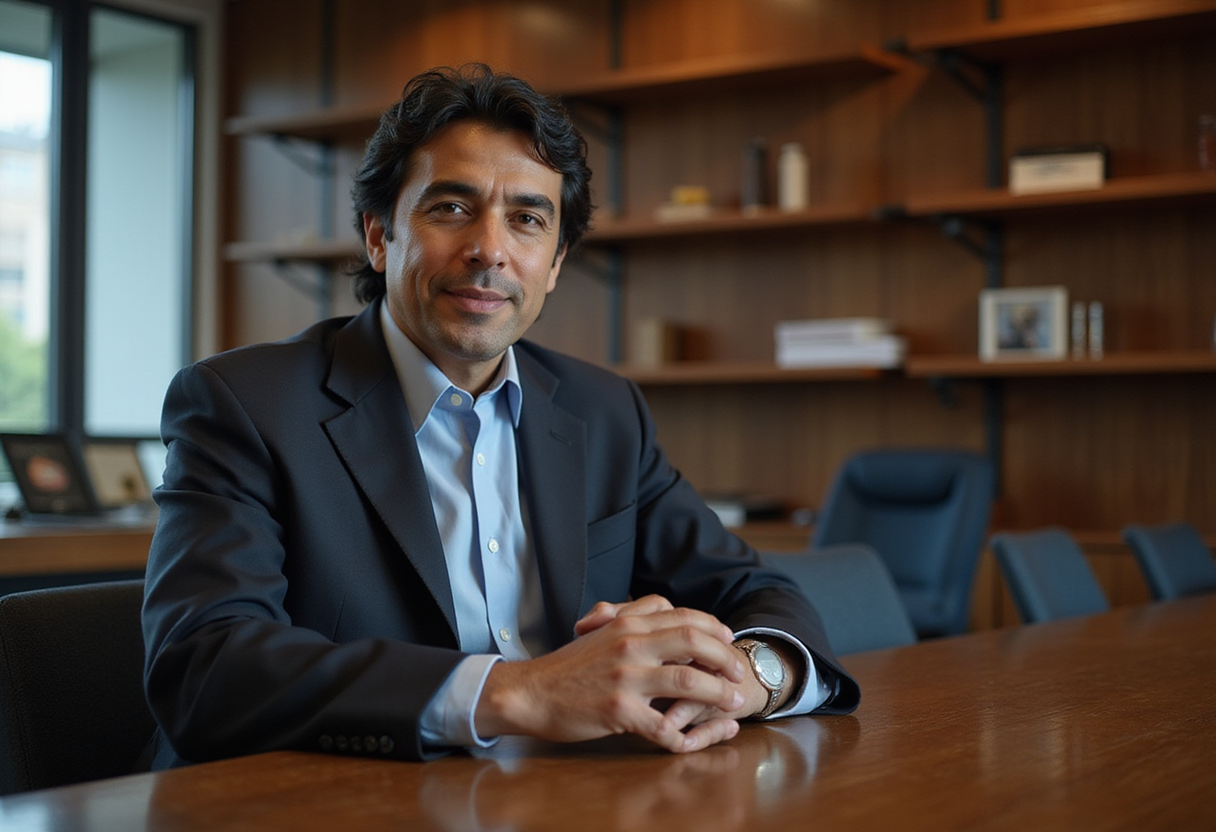
The Norwegian Nobel Committee awarded the 2026 Nobel Peace Prize on October 9 to Navi Pillay, the South African international lawyer who has served as a judge on the ICTR and the ICC, UN High Commissioner for Human Rights, and currently sits as a judge ad hoc at the International Court of Justice. She received the Prize specifically for her legal work — a distinction no international lawyer has received on those grounds since René Cassin in 1968.
The choice is historic in a second sense. The Committee used its citation not primarily to praise Pillay personally, but to defend international law as a project at a moment when, in its words, "the system of international law is under tremendous pressure, and its institutions are under attack."
What did the Committee actually say?
The citation traces the arc of the Prize itself. "The first Nobel Peace Prize was awarded 125 years ago," the Committee noted. "Already then, the Norwegian Nobel Committee underscored the importance of resolving conflicts through international law." Its key historical claim: "lasting peace must be built on legal principles, not on the will of the strong or a fragile balance of power."
The statement is blunt about the system's failures. "The greatest powers have often evaded responsibility. In practice, cases brought under international law have produced different results depending on who is the perpetrator and who is the victim." Yet the Committee concludes that "international law is no longer just a supplement to peace and security. It is an absolute necessity."
Most pointed is the closing passage directed at the judiciary: "History has shown that a world operating without the rule of law is unjust, unwise and inhumane. The judges — those who guard the thin red line between order and chaos — are therefore highly deserving of our praise. But today, as these same judges are sanctioned, and their institutions are attacked, we need people of courage, vision and determination — qualities that Navi Pillay demonstrates in her work on the bench." The Committee's bottom line: "Peace requires justice."
Why is this award unusual for a lawyer?
The early Prize went to institution-building international lawyers: the Institut de Droit International won collectively in 1904, and figures such as Tobias Asser were honoured in the first half of the twentieth century. Since René Cassin's 1968 award for what the Nobel Committee described as "fathering" the Universal Declaration of Human Rights, no laureate has been recognised chiefly for legal work.
Seán MacBride (1974) and Shirin Ebadi (2003) received the Prize for human rights activism, though neither was an international lawyer as such. Mohamed ElBaradei (2005) was one, but the Prize recognised his work at the IAEA, not legal practice. Pillay breaks that pattern. By honouring her judicial record, the Committee has, in effect, conferred legitimacy on international courts and tribunals as institutions.
What does it mean for practitioners?
For the international bar, the award functions as a public endorsement at a moment of sustained institutional pressure. The same day the Prize was announced, the United States sanctioned the ICC as an institution, according to the Treasury Department's OFAC listing of October 9 — a coincidence that sharpens the Committee's warnings about judges being sanctioned and institutions attacked. Practitioners appearing before the ICJ, the ICC and ad hoc tribunals can expect the award to feed into broader debates over enforcement, sanctions regimes targeting court personnel, and state cooperation with judicial organs. Pillay's role on the UN commission of inquiry on the Occupied Palestinian Territory and Israel, and her current ad hoc seat at the ICJ, will inevitably frame part of the public reaction, whatever the Committee's broader intent.
How did Pillay react?
Agnes Callamard, who was with Pillay at the Palace of Justice in Nuremberg when the news arrived, posted the moment on X: "Amazing moment. Navi Pillay has received the Nobel Peace Prize! We are at the Nuremberg Court; I cannot think of a stronger symbol for her Nobel prize. We are all so thrilled!"
In a short impromptu speech to the applauding crowd, Pillay remarked dryly that if they applauded harder she might share her Prize with Trump — an allusion to last year's controversy, when María Corina Machado said she had presented Trump with her own Nobel medal.
The symbolism of the venue was not lost on observers: Nuremberg, where the modern era of international criminal law began, is where one of its most persistent judges learned she had won the world's most famous peace award.
via nobelprize.org (Original)
More from Priya Raman
Show full bio
Staff writer covering consumer brands and retail at Global Law Wire.
187 articles
Also before the court
- South African ICJ Judge Navi Pillay Wins 2026 Nobel Peace Prize
- Nobel Peace Prize Awarded to Navi Pillay of International Court of Justice
- Navi Pillay, Leading Human Rights Jurist, Awarded Nobel Peace Prize
- ICJ Judge Navi Pillay Wins 2026 Nobel Peace Prize for International Law Work
- Navi Pillay Awarded Nobel Peace Prize for War Crimes Work