Law report No. GLW-2051 · filed September 29, 2026
Courts & TribunalsReported case
Justice Alito Recuses From Suncor Climate Case a Week Before Argument
Justice Alito will not participate in Suncor Energy v. Boulder County, No. 25-170, the clerk announced, one week before oral argument in the climate tort case.
By Grace Kim
Holding
- Clerk Scott Harris announced Monday that Justice Alito will not continue to participate in Suncor Energy Inc. v. County Commissioners of Boulder County, No. 25-170, one week before the Oct. 5 argument opening the 2026-27 term.
- The letter gives no reason, stating only that "Justice Alito has determined that he will not continue to participate."
- The case tests state-law tort claims seeking to hold oil and gas companies liable for climate change, with nationwide implications for similar pending suits.
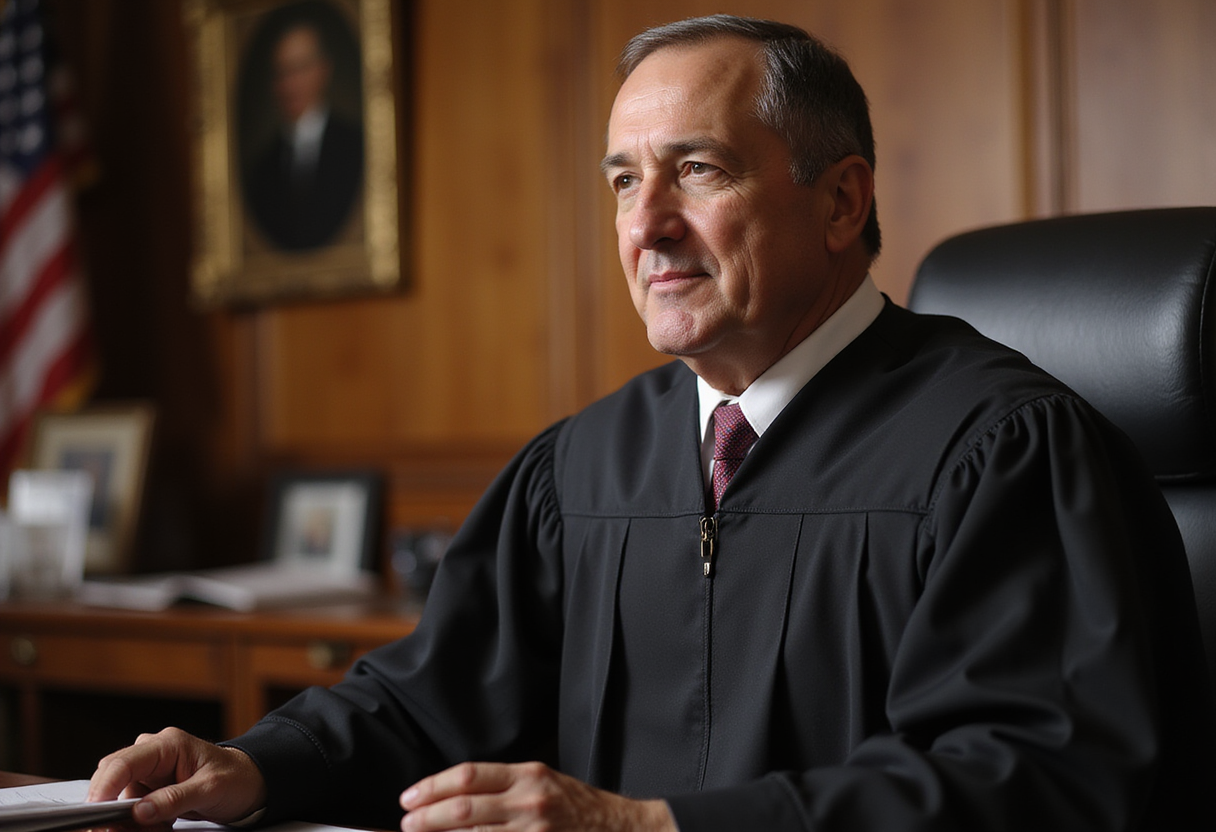
The U.S. Supreme Court announced on Monday that Justice Samuel Alito will no longer participate in Suncor Energy Inc. v. County Commissioners of Boulder County, No. 25-170, a major climate-liability dispute scheduled for oral argument on Monday, Oct. 5 — the first day of the 2026-27 term.
Scott Harris, the clerk of the Supreme Court, disclosed the recusal in a short letter to counsel in the case. The letter offers no explanation. It states simply that "Justice Alito has determined that he will not continue to participate."
The case tests whether state-level tort claims can hold oil and gas companies financially liable for their alleged role in worsening climate change. The dispute involves officials in the Boulder, Colorado, area, but its reach is likely national: similar lawsuits are pending in states across the country. Alito's withdrawal means eight justices will hear the argument, raising the possibility of an evenly divided court.
A recusal preceded by calls for an investigation
In May, a coalition of left-leaning watchdog groups urged the Senate Judiciary Committee to investigate Alito's involvement in the dispute. They contended that his "substantial holdings in individual oil and gas companies," among other issues, would "undermin[e] public confidence in the impartiality of the Court." The groups noted that Alito had "previously recused from considering a petition brought by" the same companies involved in Suncor Energy. "There is no apparent reason for this change in Justice Alito's recusal practices, and Alito provided no statement justifying his failure to recuse," they wrote.
At the time, a Supreme Court spokeswoman told NBC News that "Justice Alito does not have a financial interest in any party" and that the Court's legal counsel had advised him that "recusal is not required."
What the code of conduct requires
Under the Supreme Court's code of conduct, which the justices issued in November 2023, a justice must recuse from "a proceeding in which the Justice's impartiality might reasonably be questioned." The code defines that standard as a situation in which "an unbiased and reasonable person who is aware of all relevant circumstances would doubt that the Justice could fairly discharge his or her duties." The code expressly covers cases in which a justice "has a financial interest in the subject matter in controversy or in a party to the proceeding."
Justices are not required to explain recusals, although they sometimes do — especially when the recusal stems from "prior … judicial service," meaning the justice worked on the case at an earlier stage of the proceedings.
The silence in Monday's letter stands out against the Court's own recent practice. In January, less than a week before oral argument, Harris announced that Alito would not continue to participate in Chevron USA Inc. v. Plaquemines Parish, Louisiana, No. 24-813 — a dispute over when a federal contractor can move a case from state to federal court that also involved oil and gas companies. On that occasion, Harris gave detail. He pointed to Alito's "financial interest in ConocoPhillips, the parent corporation for Burlington Resources Oil and Gas Company."
Harris explained in that January letter that "Justice Alito initially decided not to recuse because on June 2, 2025 Burlington was dismissed as a petitioner in this Court under Rule 46.1 after Burlington advised the Court by letter that it was 'withdrawing' from the petition and that 'neither Burlington Resources nor ConocoPhillips will be a party to (or have any other involvement in) the above-referenced case.' Later briefing, however, noted that Burlington remained a party in the district court."
What it means for practitioners
For lawyers arguing Suncor Energy on Oct. 5, the practical effect is immediate: the bench loses a justice who has been a reliable vote for business interests in tort and jurisdictional disputes, and an eight-member court heightens the risk of a 4-4 affirmance by an equally divided court, which would leave the lower court's ruling intact without a nationwide precedent. Counsel on both sides must now calibrate arguments to a bench of eight, and court watchers will scrutinize the recusal closely given the May letter urging a Senate Judiciary Committee inquiry. Whether Alito offers any explanation — and whether the Court addresses its recusal-disclosure practices — remains open as the term opens.
via nbcnews.com (Original)
More from Grace Kim
Show full bio
Correspondent covering consumer brands and retail at Global Law Wire.
206 articles