Law report No. GLW-3194 · filed November 19, 2026
Courts & TribunalsReported case
Iowa Election Result Threatens Supreme Court Review of State Immigration Law
Iowa AG Brenna Bird lost reelection after asking the Supreme Court to revive SF 2340. Democrat Nate Willems can now drop the case, ending the state immigration law's last chance.
By Sophie Lindqvist4 min read769 words
Holding
- The Supreme Court invited the solicitor general's view on Oct. 19 — roughly 10-11 such invitations per term
- SF 2340 (April 2024) imposes up to 2 years for reentry after deportation and 10 years for failing to leave
- The 8th Circuit ruled Oct. 23, 2025 that all sections of SF 2340 are likely preempted by federal law
- AG Brenna Bird lost to Democrat Nate Willems in this month's election, endangering the cert petition
- District Judge Stephen Locher blocked the law in June 2024 under Arizona v. United States precedent
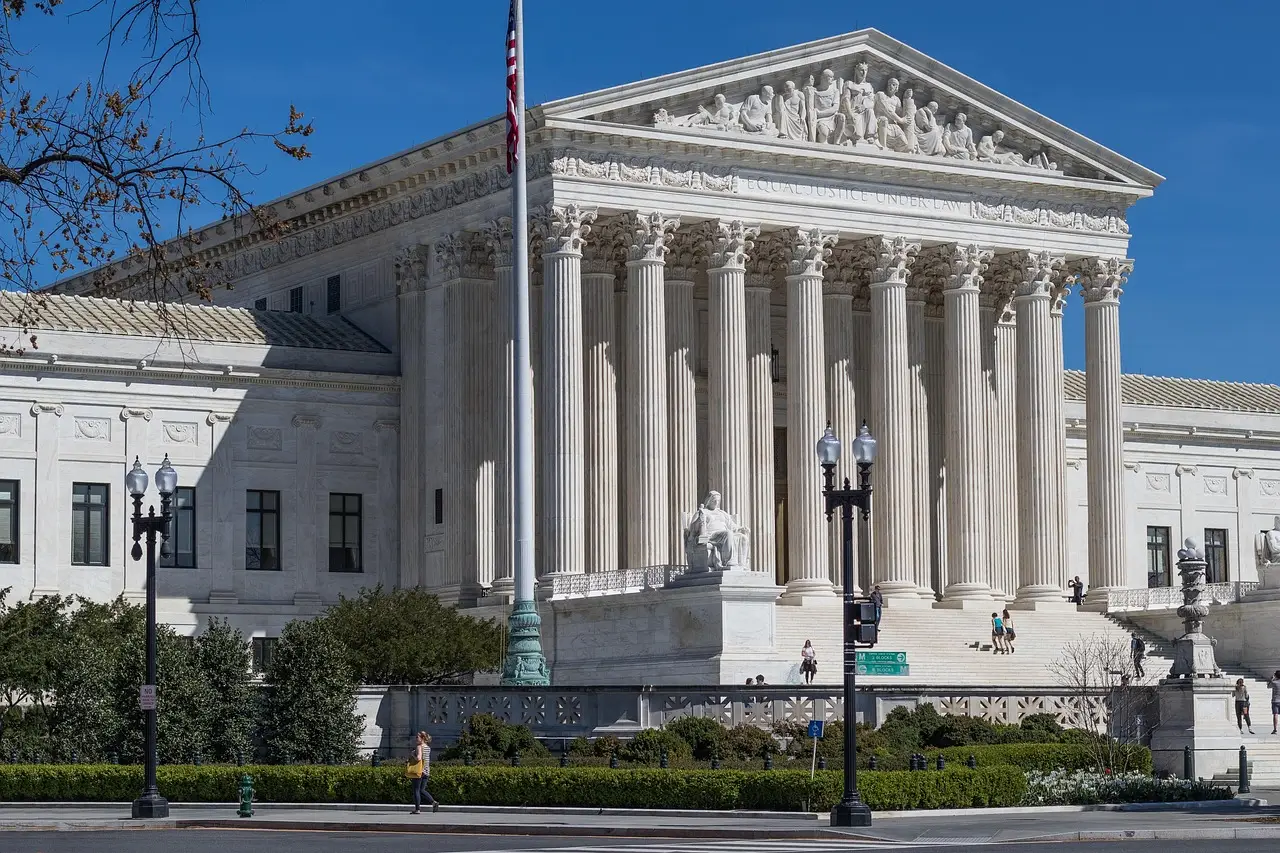
Iowa's Senate File 2340, a state immigration law already blocked by two federal courts, could vanish from the Supreme Court's docket after Attorney General Brenna Bird lost her reelection bid to Democrat Nate Willems in this month's elections.
Bird, a Republican, filed the petition asking the justices to review Bird v. Iowa Migrant Movement for Justice. The court signaled serious interest on Oct. 19, when it invited the solicitor general (the federal government's top lawyer before the Supreme Court) to file a brief expressing the Trump administration's view. But Willems, once sworn in, can drop the state's defense — and under the court's Rule 46, a case ends when both parties agree to dismiss it.
What does the Iowa law do?
Senate File 2340, enacted in April 2024, criminalizes certain immigration conduct at the state level. Anyone previously excluded or deported from the United States who "is at any time found" in Iowa can be convicted of an aggravated misdemeanor and imprisoned for up to two years. The law also lets a state judge overseeing a criminal prosecution order a defendant to leave the country. Failing to leave is a felony carrying as much as 10 years in prison.
The statute was designed to closely track the Immigration and Nationality Act. That federal law already criminalizes reentry after removal and allows immigration judges to order departure. By mirroring federal law, supporters hoped to reinforce federal enforcement. Bird told the justices the law should take effect because it merely "mirrors federal law."
Why did two courts block it?
Challengers filed two lawsuits: one from the Iowa Migrant Movement for Justice, a Des Moines advocacy group, and two Iowa residents previously removed from the country; the other from the Justice Department under President Joe Biden. In June 2024, the U.S. District Court for the Southern District of Iowa ruled for the challengers in both cases.
U.S. District Judge Stephen Locher concluded that Senate File 2340 regulates immigration — an area reserved to the federal government. The Supreme Court said as much in its 2012 decision Arizona v. United States: "The federal power to determine immigration policy is well settled." The Constitution's supremacy clause (which prioritizes federal law over conflicting state law) reinforces that allocation. Because Congress enacted a detailed scheme of immigration offenses, it "left no room" for state regulation, Locher explained. He blocked enforcement.
Bird appealed to the U.S. Court of Appeals for the 8th Circuit. On Oct. 23, 2025, that court held that every section of Senate File 2340 conflicts with federal immigration law and is likely preempted (that is, displaced under the supremacy clause). Iowa's law fared no better there — like a local ordinance purporting to set tariffs, it collided with an area Congress occupies fully.
Why did Supreme Court review look likely?
The Trump administration switched sides after the president returned to office. It asked the district court to dismiss its own lawsuit. It then urged the full 8th Circuit to rehear the case and side with Iowa. "[T]he panel opinion misapplied preemption principles to affirm the district court's preliminary injunction," the Justice Department wrote in an amicus brief (a friend-of-the-court filing).
The justices' Oct. 19 invitation to the solicitor general matters because it is rare. SCOTUSblog contributor John Elwood puts the number at "around 10 or 11 times every term" out of thousands of petitions. Such invitations "serve as powerful signals that a petition has attracted the court's serious attention," Elwood explained. The solicitor general has not yet responded. The challengers urged the court to deny review, arguing the 8th Circuit aligned with other federal courts facing similar disputes.
What changes after the election?
Willems has not taken a public position on SF 2340 specifically. But in one interview he accused Bird of having "filed too many of what I think of as political lawsuits." He said he would focus on "times when there is a real threat to Iowans or a real harm," and promised more work for consumers, workers and the environment. Democrat Rob Sand won the governor's race, giving the party two of the state's top offices.
For practitioners, the practical consequence is straightforward. If Willems agrees to dismissal with the challengers — who oppose Supreme Court intervention — the case ends and the lower-court injunctions stand. Senate File 2340 remains alive only through Bird's insistence that the judges misunderstood Iowa's role in punishing migrants. After January, that insistence leaves office with her, providing yet another reason why elections matter for the docket itself.
via legiscan.com (Original)
More from Sophie Lindqvist
Show full bio
News editor covering people, launches and day-to-day practice in International law and legal practice at Global Law Wire.
360 articles
Also before the court
- Cities Ask Supreme Court to Block Texas-DOJ Deal Killing Closure Rule
- Federal Prosecutors in Washington Will Stop Defending Many Habeas Cases
- Supreme Court to Review Trump's Border 'Invasion' Proclamation
- Supreme Court stays injunction blocking Big Bend border barriers
- Supreme Court Allows Third-Country Deportations to Proceed