Law report No. GLW-7876 · filed November 13, 2026
Courts & TribunalsReported case
Federal Prosecutors in Washington Will Stop Defending Many Habeas Cases
The U.S. Attorney's Office for the Western District of Washington says it lacks staff to defend immigration habeas petitions and will let judges rule without government opposition.
By Priya Raman4 min read705 words
Holding
- On Monday, the U.S. Attorney's Office for the Western District of Washington said it lacks staffing to defend every habeas case and will let judges rule without government opposition.
- Acting U.S. Attorney Charles Floyd disclosed the decision in a letter to U.S. District Judge David Estudillo.
- Floyd wrote that habeas cases initiate "protracted litigation" with numerous hearings, briefings and motions consuming prosecutors' resources.
- The backlog has "severely impacted the government's ability to respond" to immigration petitions and to unrelated civil litigation, Floyd said.
- The office will decline to defend "many" habeas cases, without specifying how many or for how long.
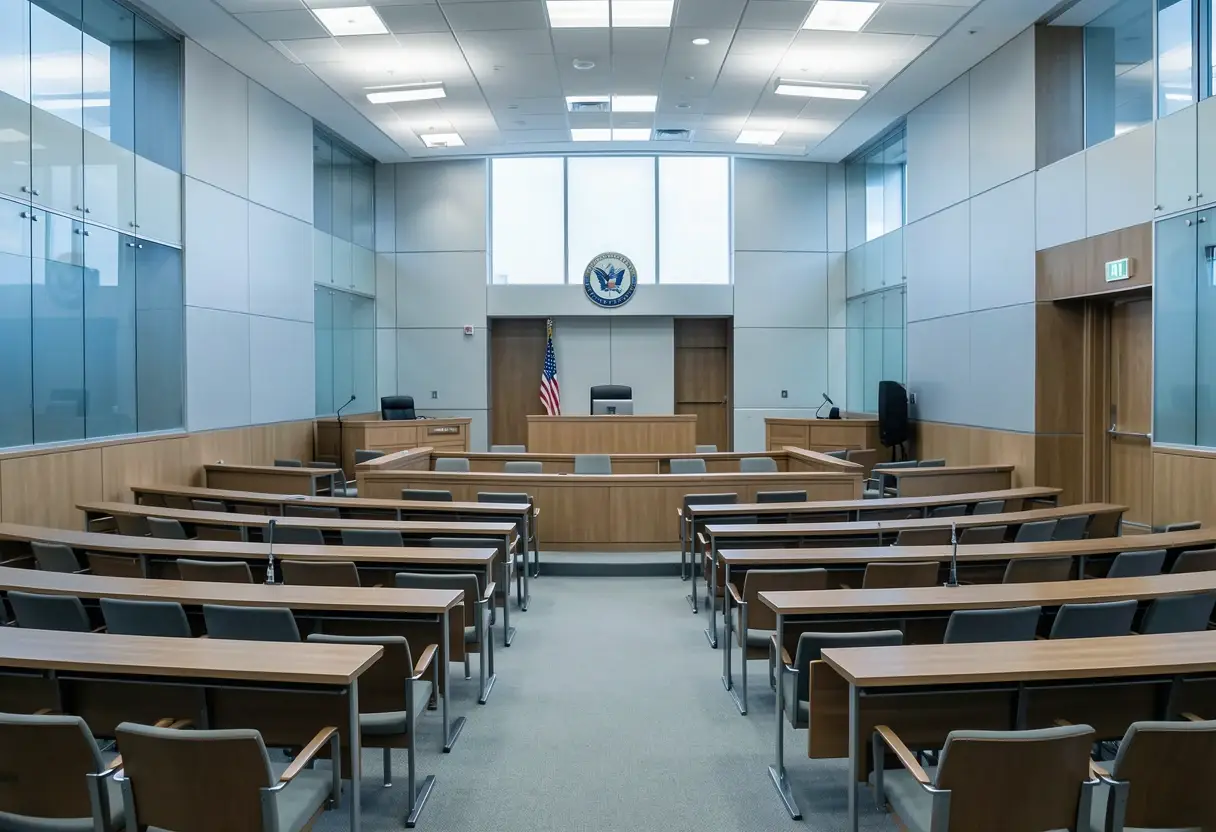
The U.S. Attorney's Office for the Western District of Washington announced on Monday that it no longer has the staffing to defend every habeas corpus case challenging federal immigration detentions, and will let federal judges rule on many petitions without any government opposition.
The disclosure came in a letter from Acting U.S. Attorney Charles Floyd to U.S. District Judge David Estudillo, the federal judge presiding over a docket swollen with petitions from people who allege federal immigration authorities are unlawfully detaining them. The decision, effective immediately, marks an unusual concession by a federal prosecutorial office: it will simply decline to appear.
What did the prosecutor actually say?
Floyd's letter framed the problem as one of arithmetic rather than policy. Habeas corpus cases, he wrote, initiate "protracted litigation" — proceedings that carry numerous hearings, briefings and motions, each consuming prosecutors' time and resources.
"Thus, going forward, in order to conserve resources, there will be many habeas cases in which the USAO will no longer assume responsibility for providing a defense on behalf of the respondents," Floyd wrote.
That is the operative language, quoted exactly. The office is not withdrawing from all cases. It is not identifying which cases it will still defend. It commits only to abandoning "many" of them — a word that carries no fixed number and no published criteria.
Why is the office stepping back?
The stated reason is volume. The backlog of immigration petitions, Floyd wrote, has "severely impacted the government's ability to respond" — and has prevented prosecutors from handling other, unrelated civil litigation on the office's docket.
The chain of consequences, as the letter presents it, runs in three steps:
- An influx of habeas petitions filed by detainees alleging unlawful immigration custody;
- Each petition triggering "protracted litigation" with multiple hearings, briefings and motions;
- Resulting staff exhaustion that now spills into unrelated civil matters.
What the letter does not say is equally notable. It offers no headcount for the office, no figure for the number of pending petitions, and no timeline for when — or whether — the office might resume full representation. The claim of resource exhaustion is asserted, not quantified.
What happens when the government does not appear?
The practical effect is straightforward, at least in form: judges in the Western District of Washington will adjudicate many habeas petitions as uncontested matters. The detainee's allegations — that immigration authorities hold them unlawfully — will go before the court without adversarial testing by the government.
For practitioners, several consequences follow. Petitioners' counsel gain a materially stronger procedural position when the respondent's side files nothing; uncontested petitions frequently resolve in the petitioner's favor on the papers. Immigration authorities, by contrast, lose the courtroom defense of their detention decisions in an unknown fraction of cases. And the judges themselves inherit a heavier burden: under uncontested conditions, courts must probe the record independently, because no party is arguing the government's side.
The scale of that shift is unknowable from the letter alone. "Many" habeas cases could mean a handful each month or a decisive majority of the docket. Floyd's office has not published the breakdown, and the letter sets no reporting mechanism to track how often the government declines to appear.
What remains unanswered?
Monday's letter answers one question — whether the office will defend every petition — and leaves several open. It does not state whether other federal districts face similar pressure or have taken comparable steps. It does not say whether the Department of Justice has sanctioned the approach or learned of it after the fact. It does not address what becomes of detainees whose petitions succeed unopposed — whether release follows automatically or further litigation ensues.
The letter is, in the end, a promise of absence. It promises that the government will be missing from many courtrooms, for reasons the reader is asked to accept on the office's own description of its workload. Every commitment in it is hedged: many cases, not all; going forward, not forever; conserving resources, not reforming them.
In plain words: a federal prosecutor's office has told a federal judge it cannot do part of its job, and neither the cases affected nor the duration of the shortfall has been defined.
via amren.com (Source)
More from Priya Raman
Show full bio
Staff writer covering companies, deals and strategy in International law and legal practice at Global Law Wire.
324 articles
Also before the court
- Supreme Court to Review Trump's Asylum Suspension at Border
- Habeas Petitions Free Migrant Children Held in US Custody
- Supreme Court to Review Trump's Border 'Invasion' Proclamation
- Judge Denies Pseudonyms in Tren de Aragua Habeas Case
- Supreme Court Lifts Big Bend Wall Injunction, Citing No 'Major Questions' Claim