Law report No. GLW-9009 · filed September 29, 2026
ArbitrationReported case
Guyana and Venezuela Take Essequibo Border Fight to World Court
The ICJ opened weeklong hearings in The Hague over the fate of the 1899 arbitration award dividing Guyana and Venezuela, with a final ruling on the Essequibo region months away.
By Amara Osei4 min read740 words
Holding
- The ICJ began weeklong hearings in The Hague on Monday in the Guyana-Venezuela border dispute over the Essequibo region.
- Guyana asks the court to uphold the 1899 arbitration award; Venezuela argues the award was invalid and the 1966 Geneva Agreement left the dispute unresolved.
- The court has already ordered Venezuela to hold the line while the case proceeds; a final, binding ruling is expected later this year or early next year.
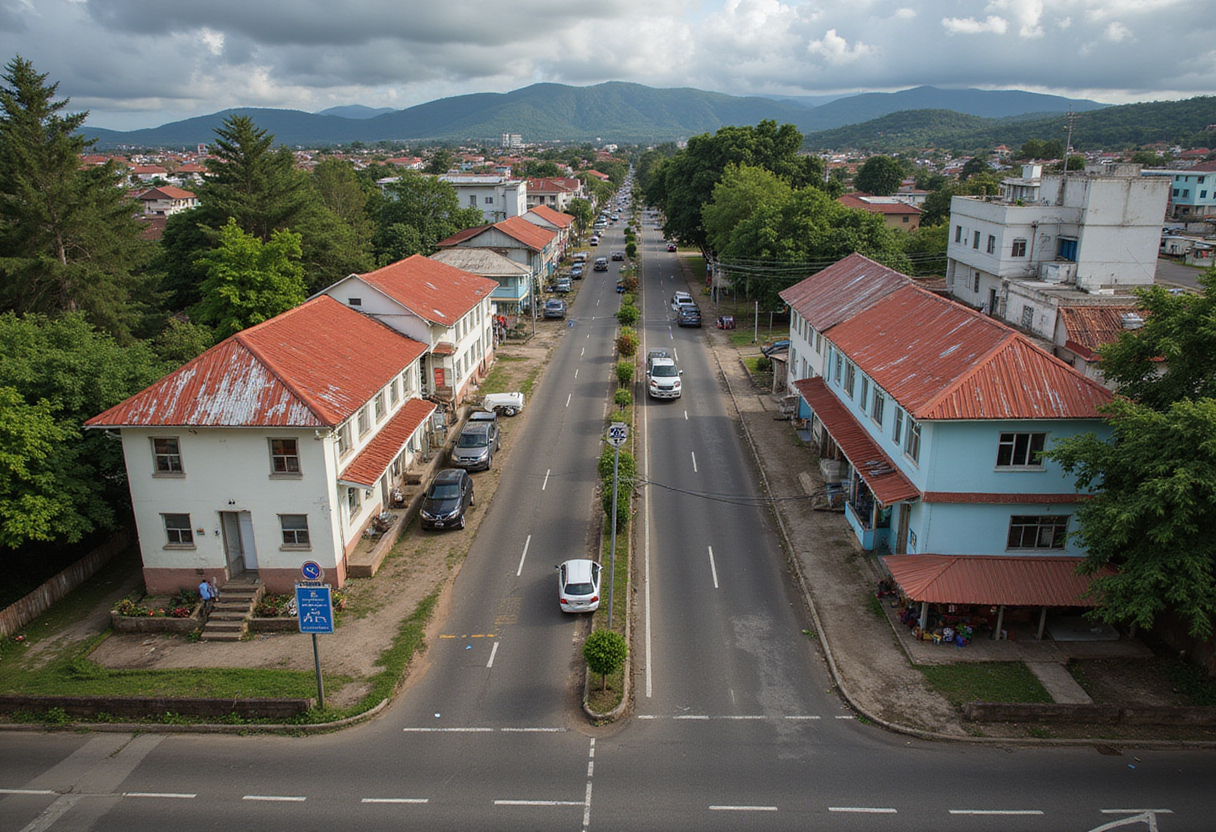
The International Court of Justice on Monday opened a weeklong round of hearings in The Hague in the long-running border dispute between Guyana and Venezuela, tasking judges with deciding whether an 1899 arbitration award still determines ownership of the Essequibo region — a resource-rich territory that makes up most of Guyana.
Guyana asked the court to confirm the colonial-era boundary as final. Venezuela asked the judges to scrap the award and reopen the question of sovereignty. Guyana presented its arguments first; Venezuela is set to argue later in the week.
The dispute traces back to an 1899 arbitration between Britain, then Guyana's colonial ruler, and Venezuela. The tribunal handed most of the contested territory to Britain, and Venezuela accepted the outcome at the time. The boundary was surveyed, marked and treated as settled for decades.
That changed in the 1960s. As Guyana moved toward independence, Caracas declared the award tainted. The shift produced the 1966 Geneva Agreement, signed by Venezuela, Britain and the soon-to-be independent Guyana. The agreement did not settle the border; it paused the old map and directed the parties to negotiate a practical solution. Decades of talks and U.N.-led mediation followed, but neither the line nor the dispute moved.
By 2018, the United Nations referred the matter to the ICJ, the U.N.'s top judicial body, to answer the question the parties could not resolve themselves. Since then the case has moved through procedural rounds, with judges confirming jurisdiction and clearing the way for a full hearing on the merits.
The arguments
Venezuela contends the 1899 arbitration was not a neutral legal process. Its position is that great power politics shaped the tribunal, with British and American influence sidelining Venezuela and delivering most of the territory to Britain. Venezuelan officials say the outcome reflected backroom bargaining rather than a fair process and should be treated as invalid from the outset. They also point to the 1966 Geneva Agreement as proof the dispute was never fully settled and required negotiation.
Guyana answered directly. "This case has an existential quality for Guyana," Foreign Minister Hugh Hilton Todd told judges, stressing that more than two-thirds of the country's territory is at stake.
Guyana's legal team accused Venezuela of recycling arguments the court has already rejected. "These arguments are not new in any way and have already been rejected by the Court," said Pierre d'Argent, urging judges not to reopen settled ground. He described Venezuela's strategy as an attempt to "postpone this moment of truth."
Counsel Alain Pellet invoked a broader principle on how the court should assess the case. "A juridical fact must be appreciated in the light of the law contemporary with it," Pellet said, arguing the arbitration should be judged by late nineteenth-century standards rather than modern expectations about reasoning or transparency.
Provisional measures and regional stakes
The fight has already spilled beyond written pleadings. Guyana pointed to Venezuela's recent referendum and new laws staking a claim to the region as evidence the dispute is no longer merely historical. Judges have intervened once already, ordering Caracas to hold the line while the case proceeds.
The stakes are concrete. The disputed waters host massive offshore oil projects, and recent naval incidents have raised fears the conflict could move beyond the courtroom.
Washington has weighed in. U.S. Secretary of State Marco Rubio warned that any move against Guyana or its oil operations would carry consequences, saying it would be "a very bad day" for the Venezuelan government.
What comes next
Once the hearings wrap, the judges will deliberate in private. A ruling is likely months away, possibly later this year or early next. The decision will be final, settling not just where the border runs but whether a century-old settlement still stands.
For practitioners, the case is a rare instance of the ICJ adjudicating the validity of a historical arbitral award rather than merely applying one. The judgment will test the weight of the principle of intertemporal law — the idea Pellet pressed that legal facts must be assessed under the law of their time — and will clarify the legal status of the 1966 Geneva Agreement as either a framework that preserved the award or one that reopened it. States with colonial-era boundaries fixed by arbitration will watch closely, as the ruling will signal how much protection such settlements enjoy against modern challenges.
via courthousenews.com (Original)
More from Amara Osei
Show full bio
Senior reporter covering industry trends and analytics at Global Law Wire.
186 articles
Also before the court
- Venezuela challenges ICJ jurisdiction in Guyana oil case
- Colombia Withdraws from South Africa's ICJ Case, Raising Question of Follow-On Exits
- Nigeria-Cameroon Border Demarcation Nears Completion, 24 Years After ICJ Ruling
- Gambia v. Myanmar at the ICJ: How a 2019 Filing Reshaped Genocide Litigation
- Guatemala Enforcement: Court Awards v Arbitral Awards