Law report No. GLW-7459 · filed November 5, 2026
Human RightsReported case
European Court Holds Ukraine Liable in Acid Killing of Activist
Strasbourg judges found Ukraine violated Kateryna Gandzyuk's right to life and free expression over the 2018 acid attack and a failed investigation.
By Grace Kim4 min read897 words
Holding
- The European Court of Human Rights ruled on Thursday that Ukraine violated Kateryna Gandzyuk's right to life and freedom of expression.
- The attack on July 31, 2018, involved about a liter of sulfuric acid burning up to 40% of her body; she died on Nov. 4.
- Organizers Manger and Levin received 10-year sentences in 2023; both convictions are under appeal.
- Ukraine must pay 80,000 euros in compensation and 4,000 euros in costs once the judgment is final.
- Nearly 35% of Ukrainian judicial posts were vacant in April, per the OECD's 2026 review.
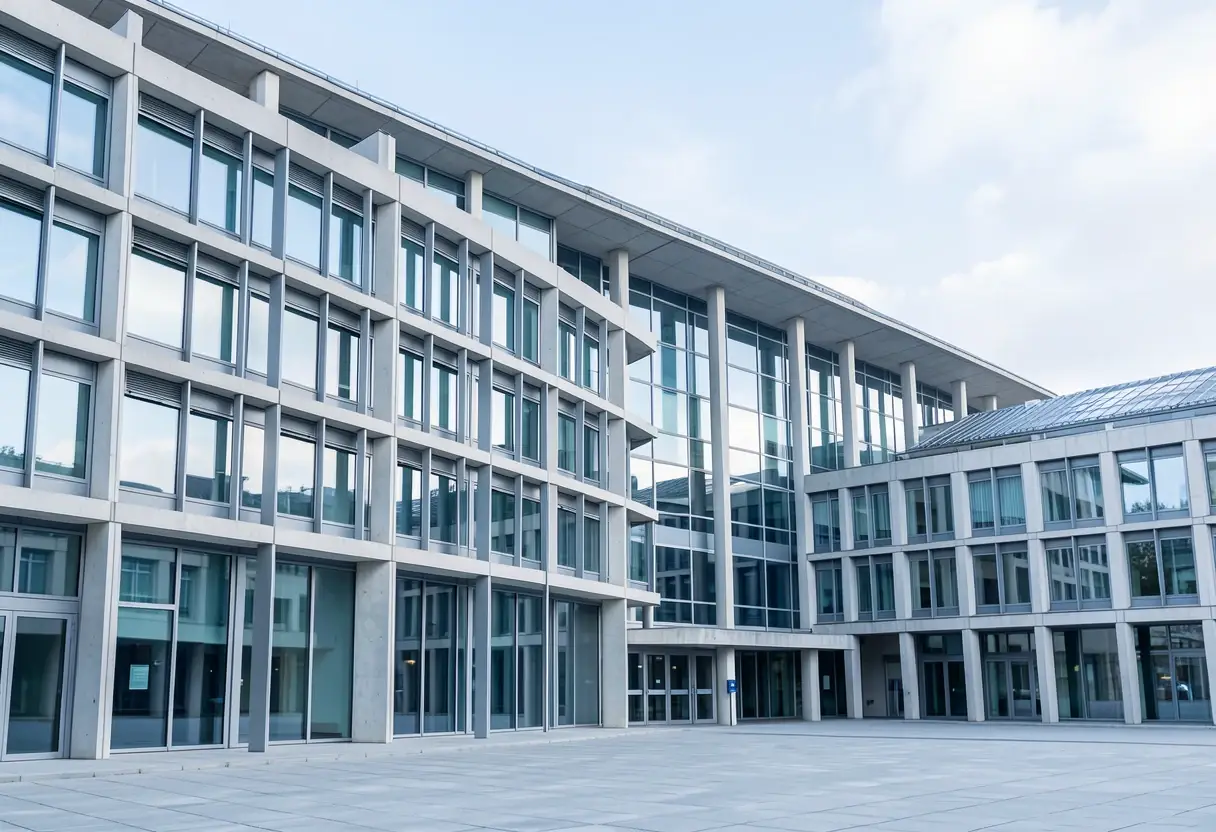
The European Court of Human Rights ruled Thursday that Ukraine violated Kateryna Gandzyuk's right to life and her freedom of expression, holding the state responsible both for the 2018 acid attack that killed the Kherson activist and for its failure to investigate the crime effectively.
Gandzyuk, a mayoral adviser in Kherson, had publicly accused three senior regional officials of shielding those behind illegal logging in the nearby Oleshky forest. She also helped run an investigative news outlet. Her parents and her partner took the case to Strasbourg, arguing Ukraine bore responsibility for the attack and for a defective investigation.
What did the judges decide?
The court found violations of Article 2, the right to life, on two counts. Private individuals carried out the attack. But the judges held that evidence pointed to an abuse of the power attached to senior regional office, and that investigators failed to pursue that lead thoroughly or promptly. Individual guilt, the court stressed, remained a matter for Ukrainian courts.
"The very object of the violence was to interfere with the performance of her public watchdog function," the court wrote. That finding produced a separate violation of freedom of expression under Article 10.
The judgment also carries financial consequences. Either side has three months to seek exceptional review by the Grand Chamber. Once the judgment becomes final, Ukraine must pay 80,000 euros (about $89,900) in compensation plus 4,000 euros in costs.
How did the attack unfold?
According to findings by the Ukrainian trial court, regional council chairman Vladyslav Manger enlisted Oleksiy Levin, who offered a recruit $5,000 to have Gandzyuk's arms and legs broken or $3,000 to douse her with acid. The men tracked her routine. On July 31, 2018, one of them poured about a liter of sulfuric acid over her as she got into a car. Levin paid $4,500 after the attack.
The acid burned up to 40% of her body. Doctors in a Kyiv hospital changed her dressings daily under general anesthesia. She told investigators whom she suspected of ordering the attack. Her heart stopped on Nov. 4 during morning rounds.
Gandzyuk had accused a police official of demanding kickbacks on city contracts. A documentary she helped make about Manger was projected onto the walls of the council building itself. The trial court cited the film and her accusations in explaining Manger's hostility toward her.
What happened to the prosecutions?
Police first treated the attack as hooliganism and arrested a man with an alibi. Ukraine's security service took over the main investigation the day after Gandzyuk died. Five men were convicted in 2019. In 2023, Manger and Levin each received 10-year sentences for organizing an attack that intentionally caused serious injuries and resulted in death. Both appealed.
Tetiana Pechonchyk, board chair of the Human Rights Centre ZMINA, questioned whether prosecutors adequately considered that the organizers intended to kill before dropping the murder charge. "The case also exposes broader systemic weaknesses, including the limited ability of victims and their families to challenge the legal classification of crimes and investigative delays that may result in the loss of crucial evidence," she said.
Investigators questioned the two other officials Gandzyuk had named. Parliamentary reviewers found phone records were only partly analyzed and that police and security officials failed to share all their material. A separate inquiry had turned up nothing new by August 2024.
What does the ruling change for practitioners?
The judgment sharpens Strasbourg's line on state responsibility for violence against public watchdogs. Ricki-Lee Gerbrandt, a law lecturer at the University of Bristol and digital speech researcher at University College London, said governments owe journalists protection and effective investigation of threats. "The court confirmed that intimidating abuse against journalists committed by state and private actors chills and silences others from engaging in similar journalistic functions and public participation," she said.
Jaka Kukavica, an assistant professor of constitutional law at the University of Ljubljana, read the judgment more narrowly. "It implicitly affirms that independence of the investigation is not an end in and of itself, but is only relevant insofar as it affects the overall effectiveness of the investigation into allegations of the use of deadly force," he said.
What happens next in Ukraine?
Ukraine is reforming its courts to join the European Union while fighting Russia's war. Nearly 35% of judicial posts stood vacant in April, according to the OECD's 2026 review.
Anna Kalynchuk, a senior attorney at Miller Law Firm representing Gandzyuk's father, Viktor, said the war and the judge shortage explained some of the delay. The court refused the family's repeated requests for a firm schedule. Three years into the appeal, the hearing was set to restart in December. If the legal deadline passes before a ruling, both men could walk free unsentenced.
To Kalynchuk's knowledge, this is the only case since Ukraine regained independence in which a court convicted the organizers of a fatal attack on a civic activist. Eight years on, the family still waits to learn who else might have been behind it.
"Kateryna paid with her life for society's right to know the truth," Kalynchuk said.
The applicants' lawyer before the European court and the Ukrainian government did not respond to requests for comment. Whether Manger and Levin's convictions stand rests with the Ukrainian appeals court.
via zmina.info (Original)
More from Grace Kim
Show full bio
Correspondent covering companies, deals and strategy in International law and legal practice at Global Law Wire.
263 articles
Also before the court
- European Court of Human Rights Rules for Religious Tolerance in Ukraine
- ODIHR, Ukraine Supreme Court Unveil War Crimes Benchbook
- Germany Opens Nord Stream Sabotage Trial as 'War Crime'
- Scandal Threatens Ukraine War Crimes Investigations, IWPR Reports
- CFR Examines Whether Russia Can Face Justice for Ukraine War Crimes