Law report · filed November 26, 2026
Courts & TribunalsReported case
EU Top Court: Wind Projects Outrank Scenery in Permit Fights
The CJEU ruled that renewable projects of overriding public interest take priority even over landscape and heritage concerns outside EU nature law, in a binding, unappealable judgment on Thursday.
By Amara Osei4 min read755 words
Holding
- CJEU ruled on Thursday that qualifying renewable projects outrank landscape and heritage interests under EU emergency permitting rules
- Eneco Wind Belgium filed its Andoy permit in April 2023; Wallonia refused it in October 2023
- The judgment binds national courts and cannot be appealed
- Belgium's Council of State must now decide whether Wallonia's refusal stands
- Advocate General Rantos had proposed stricter limits on departures from the priority rule
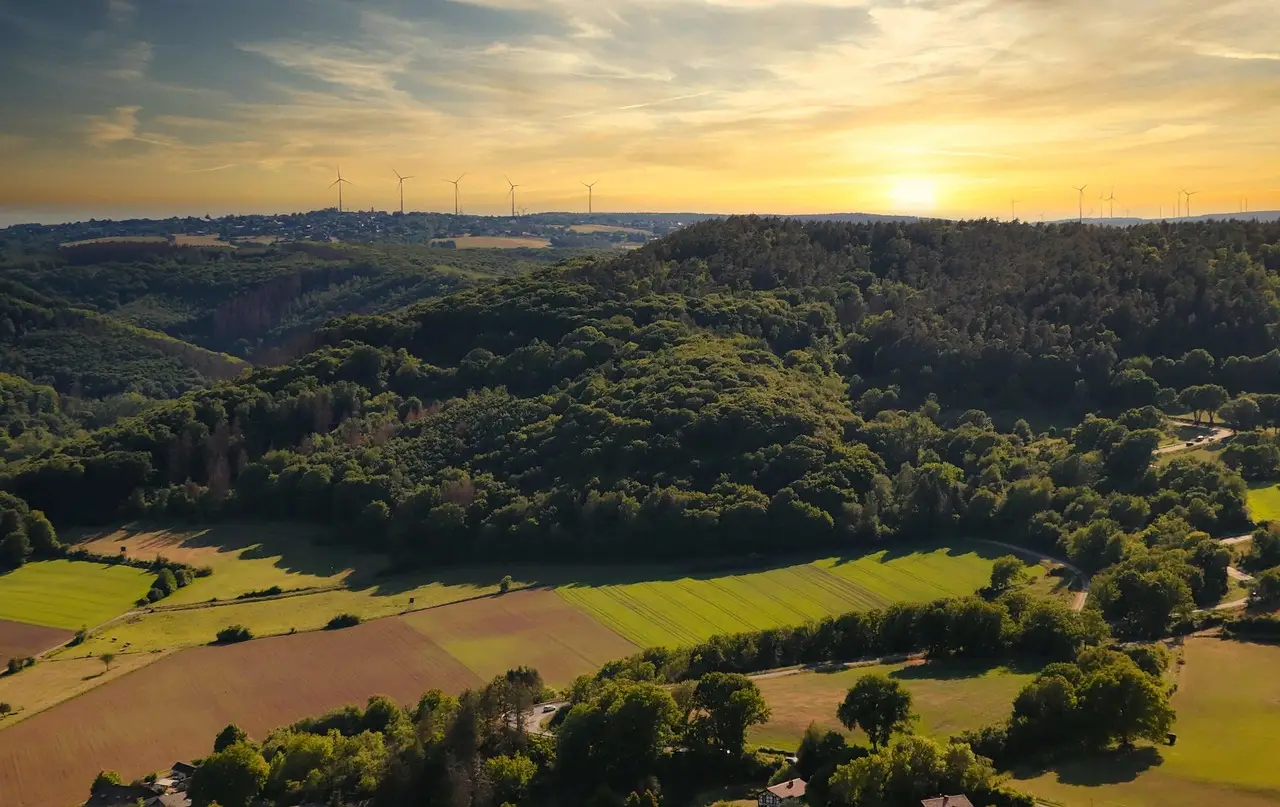
Scenery must yield to qualifying renewable energy projects under the EU's emergency permitting rules, the Court of Justice of the European Union held on Thursday. The judgment, in Case C-688/24-style proceedings brought by Eneco Wind Belgium SA against the Walloon Region, is binding across the bloc and cannot be appealed.
The Belgian region of Wallonia refused two wind turbines in Andoy, on the outskirts of Namur, to protect the local landscape. Eneco filed for its permit in April 2023, months after the EU adopted Regulation 2022/2577 to accelerate renewable construction. Russia's invasion of Ukraine and cuts in Russian gas had sent energy prices soaring; faster wind projects offered a partial replacement for that fuel. The Andoy plans included access roads, a substation and underground cables. After a public inquiry drew complaints, Walloon officials rejected the project in October 2023, citing landscape and heritage. Officials reviewing the appeal recommended a permit with conditions. The ministers handling the appeal then missed the deadline to notify Eneco, so the refusal stood.
Eneco asked Belgium's Council of State to overturn that refusal, arguing officials had overlooked the priority its project deserved. The Belgian judges referred the question to Luxembourg: how far does the emergency rule reach?
What did the court decide?
The CJEU held that projects recognized as serving an overriding public interest must receive priority even when the competing concern falls outside EU rules on birds, habitats and waterways. Limiting that advantage to those environmental laws, the judges reasoned, would blunt a measure designed to speed up permitting. The deciding body delivered its ruling on Thursday.
Hendrik Schoukens, professor of environmental law at Ghent University, said the judgment narrowed officials' discretion in an area where governments set their own standards. "This is important, since landscape protection is not a harmonized interest by EU law," he said.
Does landscape ever win?
Yes, but officials must work for it. Authorities can still put a competing interest first if they give reasons specific to the project, weighing the interests case by case. "That provision would be devoid of purpose if the priority of those projects were to arise automatically from the mere recognition of their being of overriding public interest," the court wrote.
Where a project needs an exception to EU bird or habitat protections, the question of alternatives remains. Harm Dotinga, senior legal adviser on nature protection at BirdLife Netherlands, said a well-supported refusal could still protect biodiversity. "Those may also justify rejection of the project if properly motivated," he said, pointing to the requirement to show no satisfactory alternative exists. Schoukens noted it was striking how little attention the Belgian proceedings had paid to alternatives, given that a more sustainable option could still sink a project.
When does the priority attach?
Qualification depends on what stands in the project's way. Officials can rely on an existing presumption that a project serves an overriding public interest, including where national law extends that presumption to landscape protection. Where the presumption does not apply or is called into question, the project needs formal recognition.
Conditional permits also remain on the table. The court said authorities can require developers to limit or offset environmental damage and, where the law allows, let some measures follow approval. Where species protection is at stake, the priority rule requires conservation measures backed by sufficient funding and land.
What does this mean for practitioners?
Elisa Cristea, a senior associate specializing in energy and environmental law at Romanian firm Țuca Zbârcea & Asociații, welcomed the ruling and identified conditional permits as its most practical point. "This reflects a shift in the approach to permitting: Authorities should consider how competing interests can be accommodated rather than treating them solely as grounds for refusing a project," she said.
Cristea observed that the judges left officials more leeway than Advocate General Athanasios Rantos, who had proposed that departures from the priority rule be exceptional and supported by a detailed assessment. She added that the ruling could outlast the expired emergency measure if EU lawmakers adopt a European Commission proposal to restore priority over a wider range of competing interests.
Eline Dhaen, a spokesperson for Eneco Belgium, said the company is reviewing the ruling. The Walloon Region did not respond to a request for comment. Belgium's Council of State must now apply the judgment to the question still open in Andoy: whether Wallonia's refusal stands.
The practical takeaway is plain: a landscape objection alone no longer suffices; a reasoned, project-specific justification does.
via eur-lex.europa.eu (Original)
More from Amara Osei
Show full bio
Senior reporter covering people, launches and day-to-day practice in International law and legal practice at Global Law Wire.
389 articles