Law report No. GLW-1342 · filed September 29, 2026
Criminal JusticeReported case
Eighty Years After Nuremberg, Scholars Ask If Such a Trial Could Happen Again
Marking 80 years since the 1945 tribunal, a new essay asks whether international criminal justice can function without the conditions that made Nuremberg possible.
By Priya Raman2 min read471 words
Holding
- The Nuremberg Trials reached their 80th anniversary in 2025, first convening in 1945.
- The tribunal convicted Nazi leadership and established individual criminal responsibility for crimes against peace, war crimes, and crimes against humanity.
- The essay argues Nuremberg's preconditions — total victory and custody of defendants — are unlikely to recur in modern conflicts.
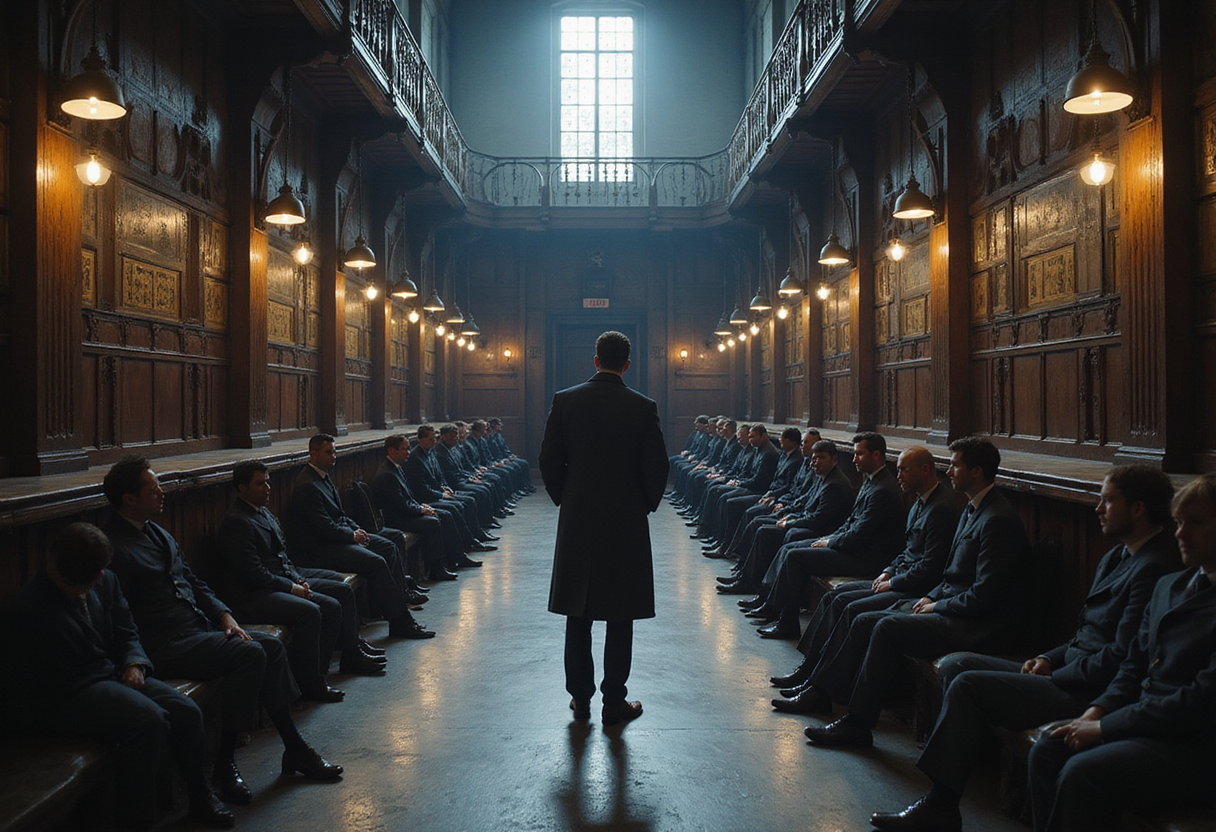
A new essay published by The Conversation marks the 80th anniversary of the Nuremberg Trials and poses a question that continues to divide international lawyers: could such a reckoning ever happen again?
The essay, released as part of the outlet's Friday essay series, examines the tribunal convened in 1945 to prosecute the surviving leadership of Nazi Germany. Eight decades on, the author asks whether the conditions that made Nuremberg possible — a total military victory, the physical custody of the defeated leadership, and the willingness of the victorious powers to construct an ad hoc judicial mechanism — could be replicated in any contemporary conflict.
The question is not academic. For practitioners of international criminal law, Nuremberg remains the foundational precedent. The tribunal established that individuals, not only states, bear criminal responsibility under international law. It introduced charges that had no clear antecedent in domestic codes: crimes against peace, war crimes, and crimes against humanity. Every subsequent international criminal tribunal — from the ad hoc courts for the former Yugoslavia and Rwanda to the permanent International Criminal Court — traces its doctrinal lineage to the courtroom at Nuremberg.
Yet the essay's central inquiry cuts against that legacy. The Nuremberg Trials proceeded because the Allied powers had won the war outright, occupied the defeated state, and held the defendants in custody. No negotiated exit, no shielding power, no veto-wielding patron stood between the prosecutors and the accused. That configuration of circumstances, the essay suggests, is vanishingly rare. Modern atrocities often end not in surrender but in stalemate, amnesty, or exile. Defendants frequently remain beyond the reach of any court, protected by governments that either refuse to surrender them or are themselves the alleged perpetrators.
For legal practitioners, the practical stakes are clear. Prosecutors and defence counsel working before international tribunals today operate in an environment Nuremberg's architects never anticipated: jurisdiction limited by treaty, complementarity regimes that defer to national courts, and enforcement dependent on state cooperation that frequently does not materialise. The essay's question — whether a Nuremberg-style reckoning could recur — is, in effect, a question about whether international criminal justice can function without total victory as its enforcement mechanism.
The 80th anniversary lands at a moment of strain for the international legal order. The essay invites readers to consider not only what Nuremberg achieved but what its preconditions reveal about the limits of accountability. The tribunal convicted, the precedent endured, and the doctrine of individual criminal responsibility became orthodoxy. Whether the machinery can deliver similar outcomes without a vanquished defendant population in the dock is the question the essay leaves open.
Readers of Global Law Wire will find the piece a concise prompt for an old debate with renewed urgency: the gap between Nuremberg's legal legacy and its political conditions. The essay does not resolve that gap. It documents it.
via GN War Crimes (Source)
More from Priya Raman
Show full bio
Staff writer covering consumer brands and retail at Global Law Wire.
187 articles
Also before the court
- States Parties Pledge to End ICC Aggression-Jurisdiction Limits by 2029
- JusticeInfo.net Examines How War Criminals View Tribunals
- Nicaragua v. Germany: Scholar Warns ICJ of Hollow Legal Promises
- ICC Finds Mahamat Said Abdel Kani Guilty of Crimes Against Humanity
- Legal Scholars Warn of Hurdles in Australia's War Crimes Prosecutions