Law report · filed November 25, 2026
ArbitrationReported case
Vanuatu Takes France to Court Over Two Tiny Pacific Islands
Vanuatu has launched ICJ and Unclos arbitration proceedings against France over the Matthew and Hunter islands, targeting a 350,000 sq km exclusive economic zone in the Pacific.
By Marcus Bennett4 min read831 words
Holding
- Vanuatu filed an ICJ application against France in August and opened Unclos arbitration last month.
- The disputed islands cover just 1.3 sq km but carry an exclusive economic zone of roughly 350,000 sq km.
- Vanuatu argues the islands are 'rocks' entitled to only 12 nautical miles of territorial sea.
- The ICJ case cannot proceed unless France agrees to participate.
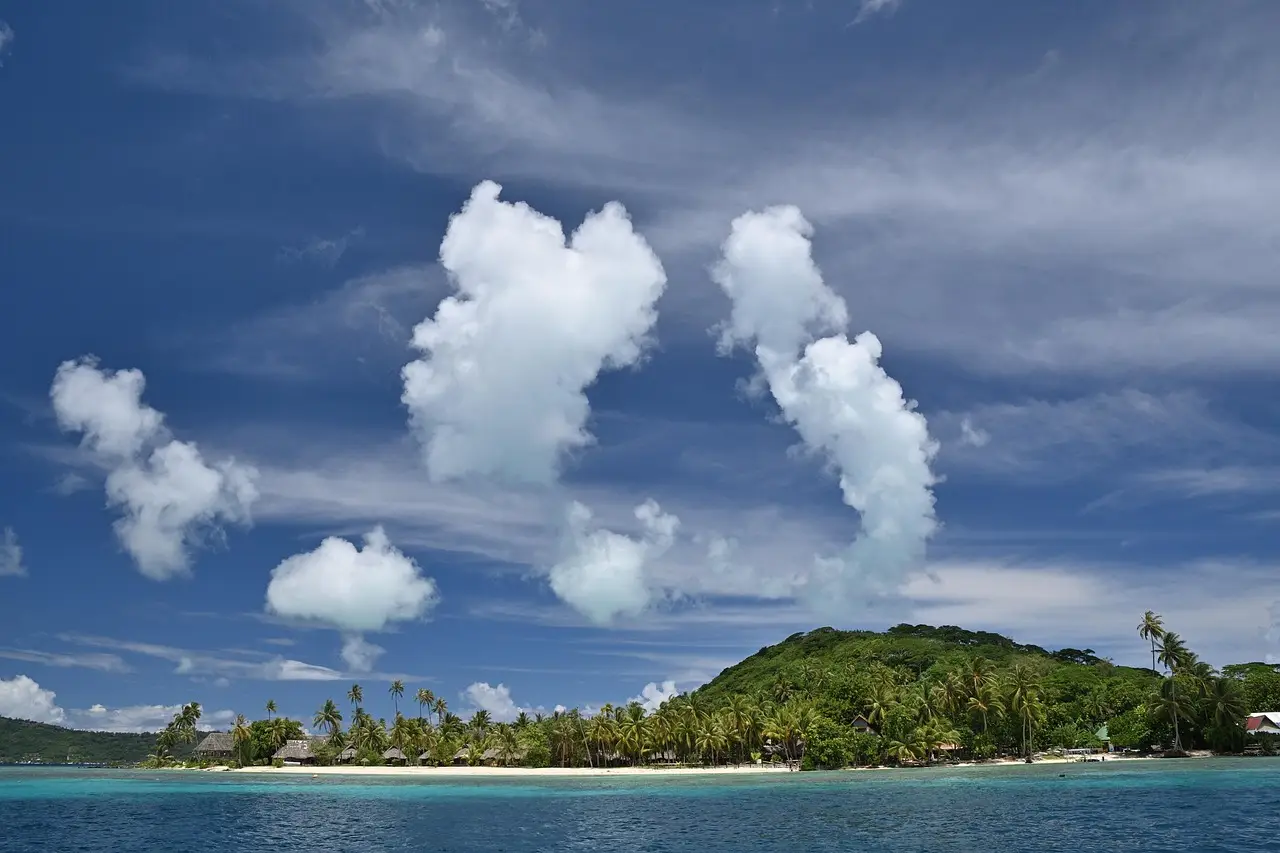
Vanuatu has opened two separate international legal proceedings against France over two uninhabited volcanic islands in the Pacific, threatening Paris's claim to an exclusive economic zone of roughly 350,000 sq km — almost the size of Germany. Arbitration proceedings began last month under the UN Convention on the Law of the Sea (Unclos), and an application was filed with the International Court of Justice in August.
What exactly is in dispute?
The Matthew and Hunter islands lie east of Australia, just south of Vanuatu. Together they cover just 1.3 sq km. Seabirds live there. Almost nothing else does. Vanuatu calls them Umaenupne and Umaeneg or Leka.
France claims the islands and their surrounding waters as part of New Caledonia, a French Pacific territory. Vanuatu argues they belong to its southernmost island communities, whose Indigenous people have maintained cultural and customary connections to the islands for centuries.
The land itself matters little. The value lies in what surrounds it. Donald Rothwell, distinguished professor of international law at the Australian National University, said: "The maritime entitlements and the resource sovereignty that goes with those islands would far outstrip the land value." Those entitlements include access to valuable fisheries and seabed resources across the 350,000 sq km zone.
What are the two legal cases?
Vanuatu's first move came in August, when it filed an application with the International Court of Justice (ICJ) asking the court to recognise its sovereignty over the islands. The case has a built-in obstacle: it cannot proceed unless France agrees to participate.
The second front opened last month, with separate arbitration proceedings against Paris under the UN Convention on the Law of the Sea. This is the track that could hurt France most. Vanuatu is arguing that Matthew and Hunter are not technically islands at all, but merely rocks incapable of sustaining human life. Under international law, such rocks are entitled to just 12 nautical miles of territorial sea — a fraction of the territory France currently claims for fishing and resources.
The strategic logic is blunt. If the tribunal accepts that the formations are rocks, France's vast economic zone claim around them collapses regardless of who holds sovereignty.
How do the two sides justify their claims?
Vanuatu's deputy prime minister, Johnny Koanapo, framed the ICJ application as a test of French principle. He said it was Paris's "opportunity to demonstrate that France's commitment to rules-based order is more than just rhetoric."
"The islands have always been part of our history from time immemorial, before even the arrival of the colonial powers in Vanuatu," Koanapo said. He added that securing sovereignty over the islands would mark "the completion of Vanuatu decolonisation". "We got our independence, but we have not gotten our entire territorial integrity back," he said.
France has consistently maintained that Matthew and Hunter are part of its territory, rejecting any suggestion that it should relinquish sovereignty. In February, the French foreign ministry said the long-running dispute had prevented the two countries from establishing a maritime boundary and had created legal uncertainties affecting fishing and scientific research. Neither the French government nor the government of New Caledonia responded to requests for comment before publication.
Why does history complicate the case?
France administers three territories in the Pacific: New Caledonia, French Polynesia, and Wallis and Futuna. Vanuatu was jointly administered by France and Britain until it gained independence in 1980. Even then, Paris and London argued over who owned Matthew and Hunter.
Since independence, Vanuatu has asserted its own claim, citing centuries of Indigenous cultural and economic ties. France, meanwhile, has regularly conducted military expeditions to the islands and even established a meteorological facility there. Diplomatic efforts intensified in recent years, including discussions between French president Emmanuel Macron and Vanuatu's prime minister Jotham Napat in Paris in 2025. Those talks produced no resolution.
How has the region reacted?
Rothwell sees the dispute as part of a broader pattern of Pacific island nations challenging powerful countries through the courts. "We're seeing a much more assertive position being taken by small island states, in the Pacific in particular," he said, pointing to Vanuatu's successful campaign for a landmark ICJ advisory opinion on climate change.
The claim has drawn criticism from pro-Paris politicians in New Caledonia. Nicolas Metzdorf, one of New Caledonia's two representatives in France's national assembly, dismissed the prospect of an international ruling on the islands' sovereignty. "I don't really care about what the international organisation would say," he said. "I defend my country's interests."
Vanuatu's position has long enjoyed support from New Caledonia's Indigenous Kanak independence movement, which has sought independence from France for decades. For practitioners of international law, the case turns on a classic pairing: sovereign title before the ICJ, and the island-versus-rock classification under Unclos Annex arbitration — two distinct legal questions that could decide who controls one of the Pacific's largest unallocated economic zones.
via theguardian.com (Source)
More from Marcus Bennett
Show full bio
Market editor covering regulation, policy and their impact on International law and legal practice at Global Law Wire.
374 articles