Law report No. GLW-2164 · filed October 15, 2026
Regulation & EnforcementReported case
US Imposes $1.2 Billion AML Penalty on Bank of America
The United States has imposed a $1.2 billion fine on Bank of America for anti-money laundering violations. The penalty ranks among the largest individual AML actions against a US lender.
By Grace Kim3 min read632 words
Holding
- The United States fined Bank of America $1.2 billion for anti-money laundering violations.
- The penalty ranks among the largest individual AML actions against a US bank.
- The specific US regulator bringing the action was not identified in the report carried by eNCA.
- The underlying conduct and time period under review were not disclosed in the eNCA report.
- Banks of this scale typically face consent orders, remediation plans, and independent monitors alongside the dollar penalty.
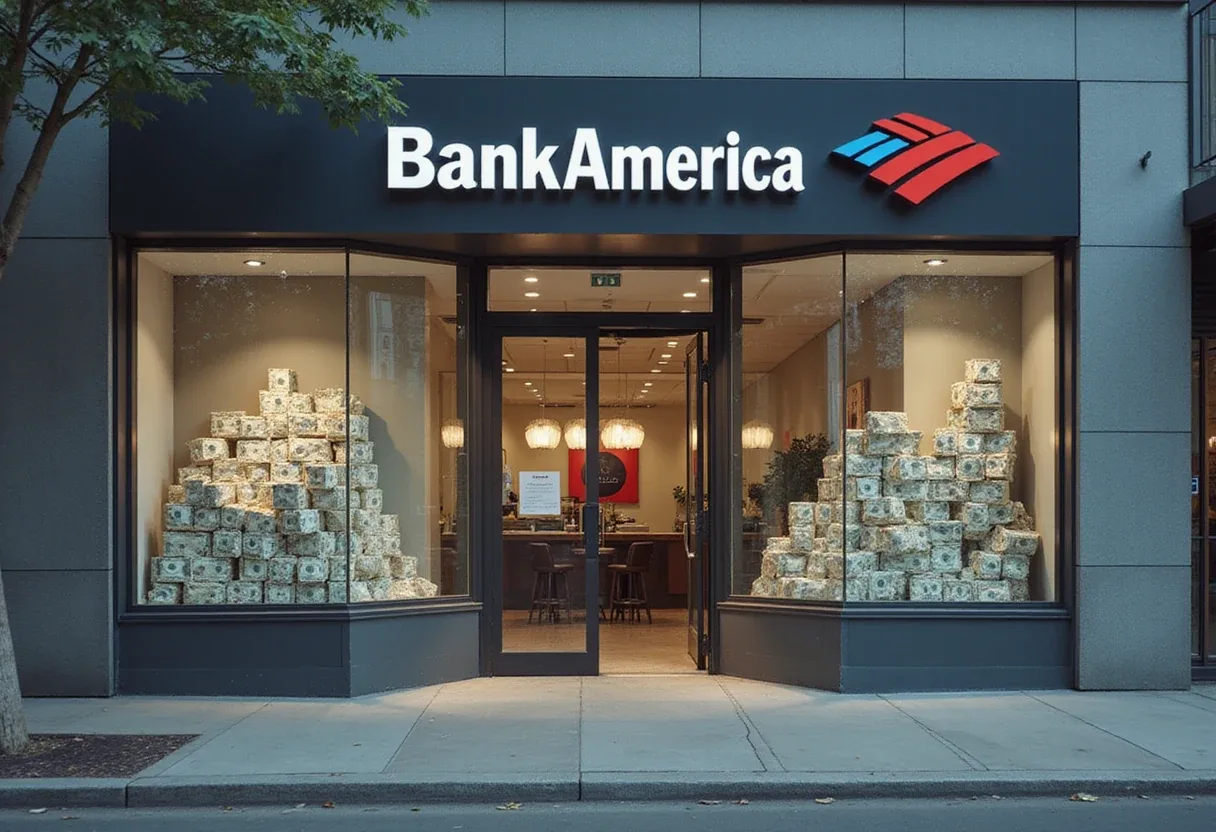
The United States has imposed a $1.2 billion fine on Bank of America for anti-money laundering violations, according to a report carried by eNCA.
That figure places the bank near the top of the list for individual AML penalties against US lenders. It signals how aggressively regulators will move when compliance programs fail.
What does the fine actually cover?
The eNCA report cites anti-money laundering violations. It does not name the specific regulator, the conduct, or the time period covered.
US AML rules require banks to detect, monitor, and report suspicious transactions across their customer base. Federal banking and Treasury agencies share enforcement authority across overlapping statutes.
Each agency can bring separate actions for the same underlying conduct. That often produces stacked penalties for major banks under multiple legal theories.
Takeaway in plain words: a $1.2 billion AML fine means regulators found problems serious enough to justify a top-tier dollar response.
Why the $1.2 billion matters
The figure places this case among the largest individual AML penalties in US banking history. It exceeds many past settlements by a wide margin.
For chief compliance officers, this number resets the boardroom conversation. AML risk now carries billion-dollar consequences for major lenders.
A fine this size typically comes with a consent order, a remediation plan, and an independent monitor. Banks cannot settle quietly at this scale, and the public document becomes the new reference text for every AML program in the country.
Regulators will move billion-dollar cases against major banks, and compliance programs need matching resources to keep pace.
What changes for compliance teams
Compliance officers should expect heightened regulatory attention across the sector. The Bank of America case will likely trigger inquiries at peer institutions.
Internal audit teams should revisit their transaction monitoring rules. They should test whether scenarios catch the typologies regulators now flag.
Suspicious activity report filings need fresh review. Quality, timeliness, and supporting documentation all come under closer regulatory scrutiny.
Customer due diligence files also need attention. Higher-risk relationships demand enhanced monitoring and documented risk ratings.
Takeaway: every AML control now faces the test of a $1.2 billion benchmark.
What does the consent order reveal?
The underlying consent order will spell out exactly what failed. Practitioners should look for that document as soon as it goes public.
Remediation milestones usually follow a multi-year timeline. Banks typically must report progress at fixed intervals to regulators.
Independent monitors often sit inside major banks during this period. Their reports shape compliance programs for years.
The consent order becomes the playbook for every AML program that wants to avoid the same fate.
What banks must do next
Bank of America must absorb the $1.2 billion penalty. The bank will also need to execute whatever remediation plan the settlement requires.
The bank typically retains rights to negotiate specific compliance milestones. Those negotiations shape obligations long after the fine is paid.
Practitioners should track how the remediation plan unfolds. The bank's timeline will set expectations for peer institutions under similar scrutiny.
What this means for the sector
The penalty fits a broader pattern. US regulators have grown more willing to pursue billion-dollar AML cases against the largest banks.
Smaller institutions should pay attention too. AML failures at any scale now draw serious regulatory attention, even when no single violation reaches headline size.
For compliance lawyers, the message is clear. AML programs need board-level ownership and continuous investment in transaction monitoring.
Looking ahead
Bank of America's case will likely produce a public consent order within weeks. That document becomes the new reference for AML practitioners across the market.
Takeaway in plain words: billion-dollar AML fines are now part of US enforcement reality, and every compliance officer should plan for that world.
via GN Enforcement (Source)
More from Grace Kim
Show full bio
Correspondent covering companies, deals and strategy in International law and legal practice at Global Law Wire.
257 articles
Also before the court
- Bank of America Faces $1.2 Billion Fine Over AML Failures
- Bank of America Faces $1.2 Billion Penalty Over AML Failures
- Bank of America Hit With $1.2bn Fine Over Money-Laundering Failures
- US Fines Bank of America $1.2 Billion Over AML and Sanctions Failures
- Bank of America Hit With $1.21 Billion Penalty Over AML Deficiencies