Law report No. GLW-1484 · filed October 11, 2026
Regulation & EnforcementReported case
UK's First Solo Shadow-Fleet Interdiction Tests Limits of High Seas Law
The UK's first solo shadow-fleet interdiction saw Royal Marines seize the MV Smyrtos and charge its Indian captain, testing unsettled rules on stateless vessels.
By Priya Raman4 min read892 words
Holding
- On 14 June 2026, UK forces boarded the MV Smyrtos carrying over 100,000 tonnes of Russian crude oil in the English Channel.
- Since 2025, stateless and falsely flagged vessels transporting sanctioned Russian oil in the North and Baltic Seas have almost quadrupled.
- The captain was charged under Regulation 46Z9B of The Russian (Sanctions) (EU Exit) Regulations 2019.
- In June 2025 the Nordic-Baltic 8++ States announced coordinated action against unflagged vessels.
- Article 110 UNCLOS permits boarding suspected stateless vessels but does not expressly authorise seizure or arrest.
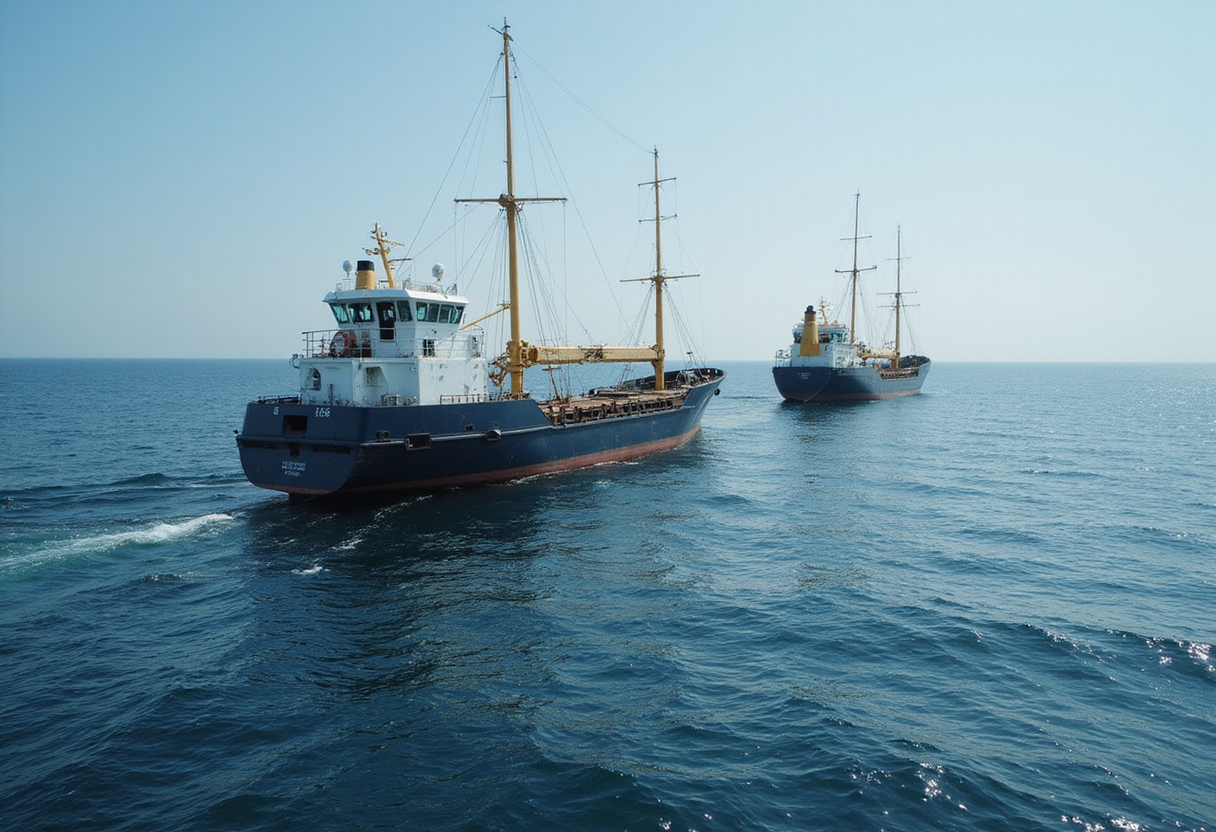
On 14 June 2026, the United Kingdom conducted its first solo interdiction of a sanctioned oil tanker, boarding the MV Smyrtos in the English Channel and arresting its Indian captain. Royal Marine Commandos and specialised law enforcement officers seized a vessel carrying more than 100,000 tonnes of Russian crude oil, suspected of falsely flying the Cameroon flag months after Cameroon expelled it from its registry in May 2026. The case, analysed by Leiden University PhD candidate Thea Coventry, exposes a jurisdictional gap at the heart of the law of the sea.
The UK justified the operation by reference to Article 110 of the UN Convention on the Law of the Sea (UNCLOS) and domestic law. According to the Ministry of Defence, "where a vessel is determined stateless, the UK can exercise powers available under its domestic legislation". The prosecutor said the vessel was seized after it had "entered UK territorial waters without a legitimate flag" — yet initial government press releases stated it was boarded on the high seas. That factual discrepancy may determine whether the prosecution stands or falls.
Why did the UK board the Smyrtos?
The operation responds to a sharp escalation in sanctions evasion. Since 2025, the number of stateless and falsely flagged vessels transporting sanctioned Russian oil through the North and Baltic Seas has almost quadrupled. In June 2025, the Nordic-Baltic 8++ States announced coordinated action, asserting in a joint statement that vessels without a flag "are not entitled to rights under UNCLOS, including freedom of navigation", and warning they would "take appropriate action within international law" against unflagged vessels transiting those waters. Several European states have detained stateless tankers and imposed penalties before releasing them. The UK broke new ground by prosecuting a crew member.
What does Article 110 actually permit?
Article 110 permits a state to stop, board and, where necessary, search a vessel suspected of being without nationality or of sailing under two or more flags interchangeably. False-flag activity can justify exercising this right of visit. But UNCLOS does not expressly authorise any further enforcement action — seizure, detention or arrest — against stateless vessels, their cargo or crew.
The Convention compounds the uncertainty. It uses but never defines "ship without nationality" in Article 92(2). Article 91 leaves the conditions for granting nationality to each state's domestic law. A vessel without registration is not automatically stateless: a state may recognise a vessel as its own without registration, and under Article 91(2), disputed nationality must be supported by documentary evidence that the flag state recognised the vessel before the incident.
The legal consequences of statelessness remain unsettled. Three positions compete:
- Stateless vessels forfeit UNCLOS rights, including freedom of navigation, and may be escorted to port for investigation — the view reflected in the Nordic-Baltic 8++ statement.
- Non-registration alone strips no rights. The Arbitral Tribunal in Enrica Lexie clarified that states may "exceptionally, exercise their freedoms under Article 87 of the Convention also through small non-registered vessels".
- Stateless vessels, unprotected by any flag state, are open to the application of domestic law by other states, including seizure and criminal jurisdiction — a view echoing the historical treatment of stateless ships as outlaws assimilated to pirates. That assimilation is contested: sailing without nationality is not itself an international crime.
Can the captain lawfully be prosecuted?
Authorities charged the captain under Regulation 46Z9B of The Russian (Sanctions) (EU Exit) Regulations 2019, alleging he controlled a ship delivering prohibited oil from Russia to a third country. That regulation applies only to conduct within UK territory and the territorial sea, and to UK persons abroad.
This creates two problems. First, domestic: if the Smyrtos was boarded on the high seas, as initial press releases suggested, the Regulations do not cover a foreign national's conduct aboard a stateless vessel there. Second, international: under the prevailing view, prescriptive jurisdiction requires a recognised basis — territoriality, flag state jurisdiction, active or passive nationality, the protective principle or universal jurisdiction. Prosecuting an Indian national for conduct aboard a stateless vessel on the high seas would require universal jurisdiction, and delivering Russian oil falls outside its generally accepted scope, presumptively rendering the prosecution unlawful under international law.
An alternative account offers the UK a lifeline. On this view, the accepted list of universal-jurisdiction offences illustrates state practice rather than an exhaustive rule, and states may assert universal jurisdiction over serious extraterritorial offences provided domestic criminalisation does not interfere with other states' public order. Conduct aboard a stateless vessel arguably falls outside any other state's public order, because no flag state holds exclusive regulatory jurisdiction over the ship.
What does the case change for practitioners?
For sanctions and maritime practitioners, the practical stakes are concrete. The lawfulness of the captain's prosecution turns on both the factual location of the vessel at boarding and the domestic and international bases for applying UK sanctions law. The case also signals how the law may evolve: repeated interdictions, accompanied by legal statements asserting their validity, may contribute to a customary rule permitting broader criminal jurisdiction over stateless vessels, analogous to piracy. Silence by other states may support an inference of acquiescence; repeated diplomatic protest would indicate opposition. Until clearer international rules emerge defining when stateless vessels may be subjected to enforcement — and safeguards for prosecuting seafarers — every interdiction carries litigation risk on both fronts.
via lloydslist.com (Original)
More from Priya Raman
Show full bio
Staff writer covering consumer brands and retail at Global Law Wire.
187 articles
Also before the court
- UK Supreme Court Rejects Bahrain Immunity Bid in FinSpy Spyware Case
- EU and 14 Nations Reaffirm 2016 South China Sea Arbitral Ruling
- ICJ and ICC Rulings Largely Unenforced in Ukraine and Gaza
- 14 Nations and EU Reaffirm 2016 South China Sea Arbitration
- South China Sea Arbitral Award at Ten: A Cornerstone of International Law