Law report No. GLW-1054 · filed November 6, 2026
ArbitrationReported case
Supreme Court to Decide When Bankruptcy Courts Can Refuse Arbitration
The Supreme Court granted Goldman Sachs' petition in Brown, agreeing to decide when bankruptcy courts can override the Federal Arbitration Act and refuse arbitration under the Bankruptcy Code.
By Marcus Bennett3 min read530 words
Holding
- The Supreme Court granted review in Goldman Sachs Bank USA v. Brown on Friday, November 6, 2026.
- A divided 4th Circuit panel ruled arbitration would conflict with the Bankruptcy Code's policies.
- Goldman Sachs filed its cert petition in June 2026; the justices considered it at four consecutive conferences.
- The 4th Circuit's ruling conflicts with a 2nd Circuit decision, creating a circuit split.
- Argument is expected next year, with a decision by late June or early July 2027.
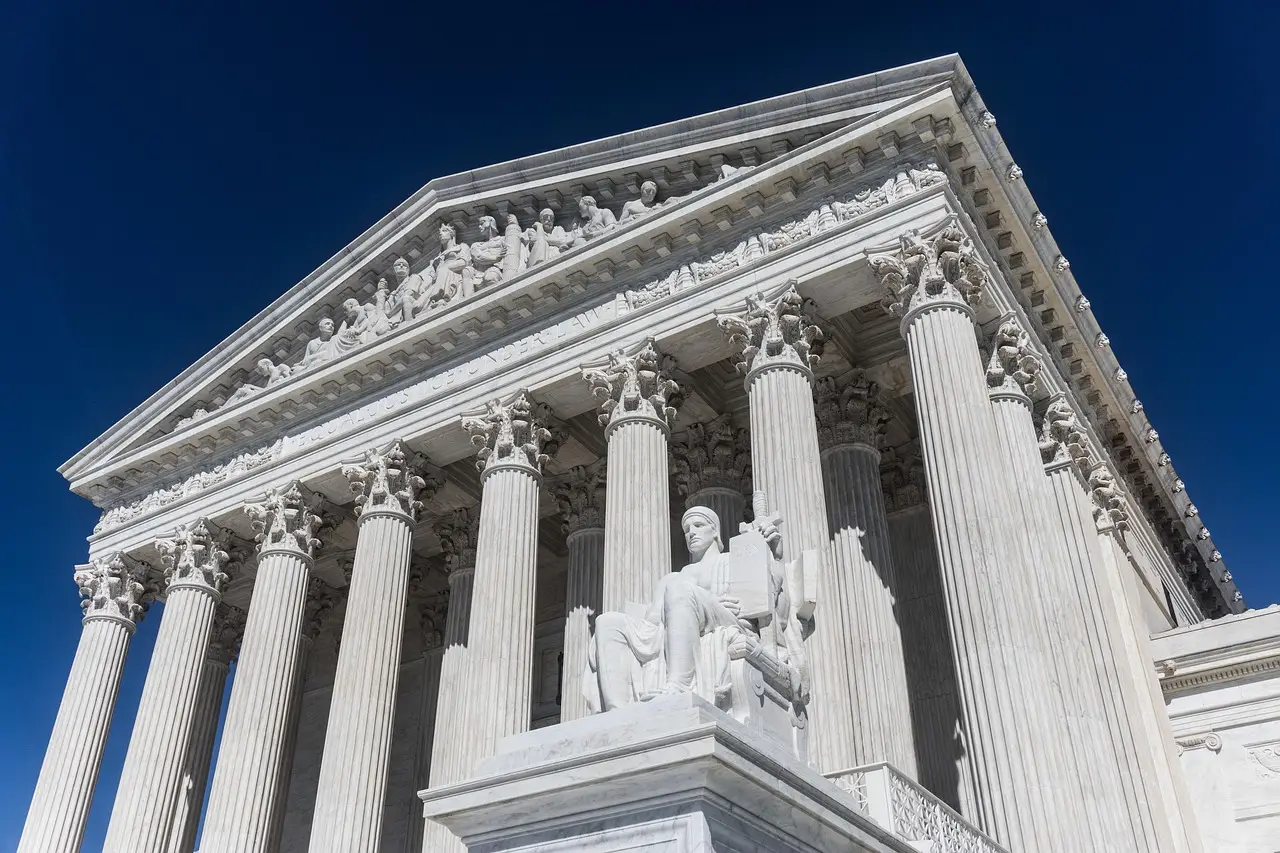
The Supreme Court on Friday, November 6, 2026, agreed to decide when a bankruptcy court can override the Federal Arbitration Act and refuse to enforce an arbitration agreement. The grant came in Goldman Sachs Bank USA v. Brown, a consumer-debt dispute that now joins the justices' oral argument docket for the 2026-27 term.
How did the dispute begin?
Rhea Brown and Gregory Maze filed for bankruptcy three years ago. Both listed credit card debts owed to Goldman Sachs Bank among their liabilities.
The Bankruptcy Code imposes an automatic stay under 11 U.S.C. § 362. That provision bars creditors from attempting to collect debts from anyone who has filed for bankruptcy. Brown and Maze said Goldman Sachs repeatedly kept seeking payment of their credit card debts anyway.
The debtors responded with an adversary proceeding — a separate lawsuit inside the broader bankruptcy case. They accused the bank of willfully violating the automatic stay.
What did the lower courts decide?
Goldman Sachs pointed to the arbitration clause in the credit card agreements. It asked the bankruptcy court to pause the adversary proceeding and send Brown and Maze to arbitration.
The bankruptcy court refused. The federal district court agreed with that refusal. So did the U.S. Court of Appeals for the 4th Circuit.
A divided three-judge 4th Circuit panel concluded that requiring the debtors to arbitrate "would interfere and conflict with the strong and established policies and purposes of the Bankruptcy Code." That quoted language is the heart of the ruling the Supreme Court will now review.
Why did the justices take the case?
Goldman Sachs filed its petition in June 2026. The bank told the Court the 4th Circuit's ruling squarely conflicts with a decision by the U.S. Court of Appeals for the 2nd Circuit. A circuit split is the classic trigger for Supreme Court review.
The bank also stressed the scale of the question. "The practical stakes of these issues are enormous," it wrote, citing the ubiquity of arbitration clauses in consumer credit agreements. The 4th Circuit's decision, it argued, "imperils the enforceability of arbitration agreements in many of them."
The justices considered the petition at four consecutive conferences before granting it Friday afternoon.
What does the case change for practitioners?
The outcome will shape how creditors and consumer debtors litigate stay-violation claims whenever an arbitration clause sits in the underlying credit agreement. If the Court sides with Goldman Sachs, bankruptcy courts will face far less room to keep such disputes on their own dockets, and adversary proceedings covered by arbitration clauses will move to arbitrators. If the Court affirms the 4th Circuit, bankruptcy judges gain a durable ground — the Bankruptcy Code's core policies — for refusing enforcement, and debtors' counsel will raise it routinely. Either way, the ruling will resolve the current 2nd–4th Circuit split and give national uniformity to a question that consumer-credit lawyers now argue case by case.
What happens next?
The case will likely be argued sometime next year. A decision should follow by late June or early July 2027.
More orders from the justices' private conference are expected at 9:30 a.m. EST on Monday.
via supremecourt.gov (Original)
More from Marcus Bennett
Show full bio
Market editor covering regulation, policy and their impact on International law and legal practice at Global Law Wire.
265 articles
Also before the court
- Supreme Court Reopens Federal Courts After Stayed Arbitration
- Supreme Court Unanimous on Federal Post-Award Arbitration Jurisdiction
- Supreme Court Clarifies Federal Jurisdiction Over Post-Arbitration Actions
- Supreme Court: Federal Courts Keep Power Over Arbitration Awards
- Supreme Court Upholds Federal Power to Confirm Arbitration Awards