Law report No. GLW-5796 · filed October 22, 2026
Courts & TribunalsReported case
Supreme Court Poised to Weigh Habeas Rights in Khalil and Suri Deportation Cases
The Supreme Court may soon decide whether district courts can hear habeas challenges from detainees Khalil and Suri, in a jurisdictional fight affecting tens of thousands of cases.
By Sophie Lindqvist4 min read793 words
Holding
- The government petitioned the Supreme Court in Trump v. Suri on Sept. 21; Khalil filed his petition Monday.
- The 4th Circuit upheld Suri's win on July 23, 2026; the 3rd Circuit ruled against Khalil in January.
- Sauer says the jurisdiction question affects tens of thousands of cases.
- Both men were arrested in March 2025 and later released on bail.
- The justices will likely consider the petitions at a private conference early next year.
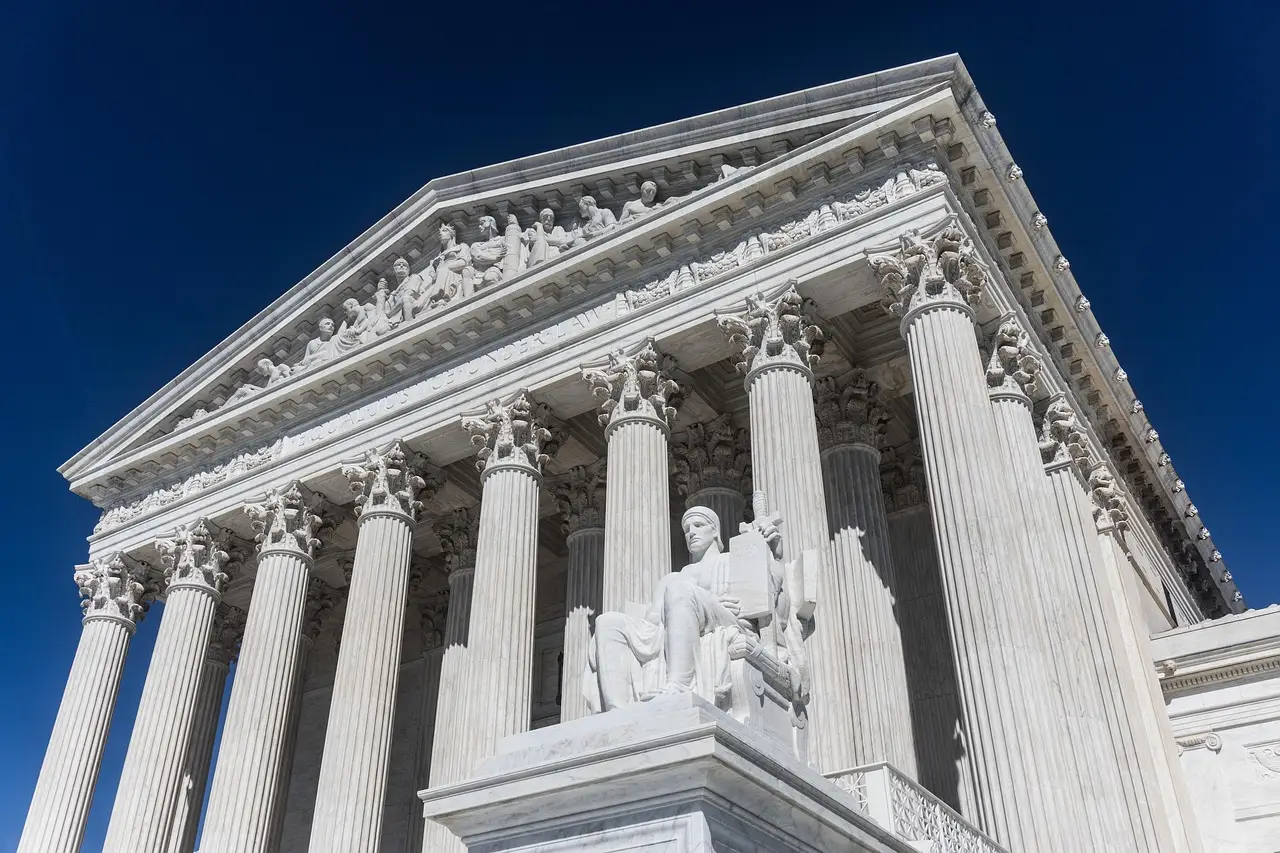
The Supreme Court could decide within months whether federal trial courts can hear detention challenges from Mahmoud Khalil and Badar Khan Suri, two pro-Palestinian academics the Trump administration detained and sought to deport. Both men are now free. The jurisdictional fight over their cases remains very much alive.
The cases arrived at the court on separate tracks. Solicitor General D. John Sauer filed the government's petition in Trump v. Suri on Sept. 21. Khalil filed his own cross-petition on Monday, after the 3rd Circuit ruled against him in January. The justices will likely consider both petitions at a private conference early next year. Suri's response is due Nov. 20; the government's response to Khalil is due in late November.
What is the legal question?
It comes down to forum. Federal immigration law generally channels challenges "arising from" deportation proceedings to the federal courts of appeals, not district courts. The administration says that rule covers detention claims when the arguments against detention mirror the arguments against removal. Sauer wrote that such claims naturally include assertions that "it is illegal to detain him for all of the same reasons that it is ultimately illegal to remove him."
The detainees see it differently. Habeas corpus (the centuries-old remedy letting a federal district judge test the legality of executive detention) must remain available, they argue, for constitutional claims. Khalil's petition states that federal law channels most challenges through administrative review and petitions for review of final removal orders. "But it does not, and could not, consistent with the U.S. Constitution, strip habeas courts of" the power to hear constitutional challenges to detention that is retaliatory under the First Amendment and punitive under the Fifth Amendment.
The stakes extend well beyond two men. Sauer told the justices the conflict among federal appeals courts affects "a question of immigration jurisdiction that affects tens of thousands of cases." He warned that "left unchecked, such suits risk producing an overwhelming litigation burden on both the government and the courts."
Who are the detainees?
Suri is an Indian national with a Ph.D. in Peace and Conflict Studies who arrived in 2022 for a postdoctoral fellowship at Georgetown University. His wife is a U.S. citizen of Palestinian descent; her father once advised a leader in Hamas. In March 2025, masked officers arrested Suri outside his Virginia apartment, citing his "social media," and told him the government planned to deport him that day. Suri contended he had "never even been to a protest." The Hoya, Georgetown's student newspaper, found his posts support Palestine but that Suri "has never openly advocated breaking U.S. law."
Secretary of State Marco Rubio determined that Suri's "Hamas associations and advocacy compromised the United States' foreign-policy interests, thereby rendering him deportable."
Khalil, an Algerian citizen born in a Palestinian refugee camp in Syria, became a lawful permanent resident in 2024. He earned a master's degree from Columbia University and joined the pro-Palestinian protests there after the Oct. 7, 2023, Hamas attack. Rubio determined his role in "antisemitic protests and disruptive activities" would "compromise a compelling U.S. foreign policy interest." Khalil describes himself as a "lifelong advocate for Palestinian human rights" who has "condemned anti-Semitism."
How did the lower courts rule?
The two circuits split — that split is why the Supreme Court matter now.
- Suri (4th Circuit): A Virginia district court blocked his deportation on March 20, 2025, and ordered his release on bail in May. The 4th Circuit refused to pause that ruling and, on July 23, 2026, upheld the district court's decision.
- Khalil (3rd Circuit): A New Jersey district court barred deportation on March 19, 2025, and ordered his release roughly three months later. In January, a divided three-judge panel reversed, holding the district court lacked authority. "The scheme Congress enacted governing immigration proceedings provides Khalil a meaningful forum in which to raise his claims later on — in a petition for review of a final order of removal," the majority wrote. The full 3rd Circuit declined rehearing.
What happens next?
Sauer has urged the justices to grant both petitions together. Doing so, he wrote, "would guard against the possibility that either case might become moot" — no longer a live controversy — if either man leaves the United States.
For practitioners, a grant would set up a defining ruling on the reach of habeas in immigration detention. A win for the administration would push constitutional challenges into appellate review of final removal orders, often years later. A win for the detainees would preserve district courts as a first stop for claims of retaliatory detention. Either way, the decision will shape habeas practice across every deportation case raising speech-based retaliation claims.
via supremecourt.gov (Original)
More from Sophie Lindqvist
Show full bio
News editor covering people, launches and day-to-day practice in International law and legal practice at Global Law Wire.
282 articles
Also before the court
- Supreme Court Again Clears Third-Country Deportations Pending December Arguments
- Trump Administration Revives Immigration Detention Fight at Supreme Court
- Cities Ask Supreme Court to Block Texas-DOJ Deal Killing Closure Rule
- Supreme Court Stay Clears Third-Country Deportations Without Hearings
- Supreme Court Allows Third-Country Deportations to Proceed