Law report No. GLW-6182 · filed September 29, 2026
ArbitrationReported case
Supreme Court Confirms Federal Courts' Arbitration Review Powers
The Supreme Court has confirmed that federal courts retain the power to affirm or vacate arbitration decisions, clarifying post-award strategy for practitioners across the United States.
By Grace Kim3 min read693 words
Holding
- The Supreme Court of the United States confirmed that federal courts retain the power to affirm or vacate an arbitration decision.
- The ruling was publicized in a client alert by Hinshaw & Culbertson LLP titled "SCOTUS Confirms: Federal Courts Retain Power to Affirm or Vacate an Arbitration Decision."
- The decision clarifies that both confirmation and vacatur of arbitration awards remain available in federal court.
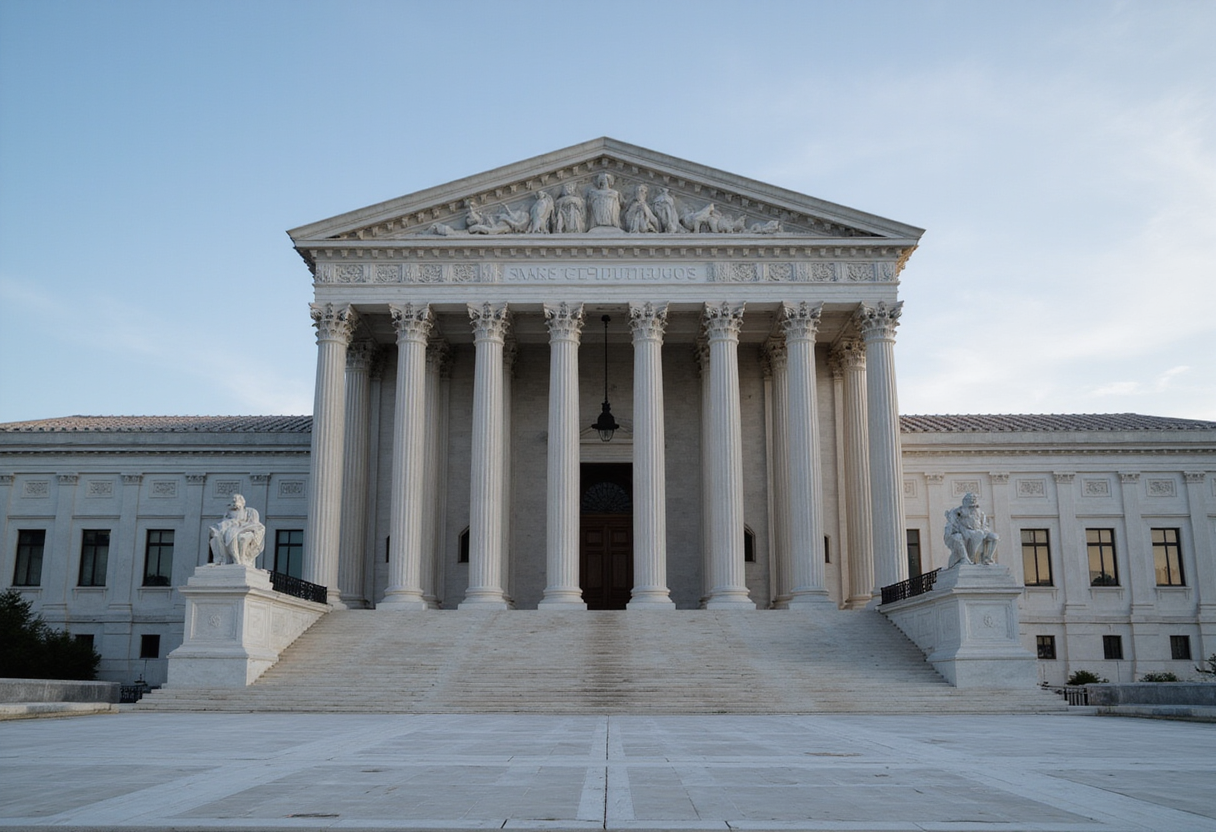
The Supreme Court of the United States has confirmed that federal courts retain the power to affirm or vacate an arbitration decision, settling a question of direct consequence for litigators who routinely enforce — or challenge — arbitral awards in the federal system.
The ruling, publicized in a client alert by Hinshaw & Culbertson LLP under the headline "SCOTUS Confirms: Federal Courts Retain Power to Affirm or Vacate an Arbitration Decision," addresses the division of authority between state and federal forums when a party seeks judicial review of an arbitrator's outcome. The Court's answer favors the federal judiciary: the power to confirm an award — that is, to affirm it and convert it into an enforceable judgment — and the power to vacate it remain available in federal court.
What the Court decided
The Supreme Court, the nation's highest judicial body, held that federal courts' review authority over arbitration decisions survives intact. An arbitration award is not a self-executing instrument. A prevailing party must obtain judicial confirmation before the award carries the force of a court judgment, and a losing party may ask a court to vacate the award on limited statutory grounds. The decision confirms that both of those functions — affirmation and vacatur — sit within the jurisdiction of the federal courts.
The alert's title states the holding plainly: federal courts retain the power. That single sentence carries significant weight for practitioners, because it resolves uncertainty about where parties must take their post-arbitration motions and what remedies remain open to them once an arbitrator has ruled.
Why the forum question matters
Arbitration accounts for a substantial share of commercial and employment dispute resolution in the United States, and the fight over judicial enforcement often begins only after the arbitrator has spoken. A party holding a favorable award wants confirmation in a forum that can enforce it efficiently. A party seeking to undo the award needs a court with the power to vacate. When the availability of those remedies in federal court is uncertain, parties face strategic risks: choosing the wrong forum can cost time, invite dismissal, and forfeit procedural advantages.
The Supreme Court's confirmation that federal courts keep both powers removes a layer of that uncertainty. Parties drafting arbitration clauses, and counsel planning post-award motions, now have a clear answer from the highest court on the question of where confirmation and vacatur can proceed.
Practical consequences for practitioners
For law firms advising commercial clients, the decision sharpens post-arbitration strategy in three ways. First, prevailing parties can pursue confirmation in federal court without litigating a threshold jurisdictional objection premised on the argument that only state courts may review the award. Second, aggrieved parties retain access to federal vacatur remedies, preserving the uniform federal framework for challenging awards on the grounds Congress authorized. Third, settlement negotiations conducted in the shadow of confirmation take on more predictable contours, because both sides know the federal courthouse door remains open for either remedy.
The decision also carries drafting implications. Arbitration clauses that contemplate judicial enforcement should be reviewed in light of the ruling, and practitioners may wish to confirm that any forum-selection language accompanying an arbitration provision aligns with the now-clarified allocation of review authority between federal and state courts.
The broader picture
The Supreme Court has long treated arbitration as a matter of federal policy under the Federal Arbitration Act, and questions about the respective roles of state and federal courts in arbitration enforcement have repeatedly reached the justices. This latest confirmation reinforces the centrality of the federal judiciary in the final stage of the arbitral process: the point at which a private award becomes, or fails to become, a judicially enforceable judgment.
Hinshaw & Culbertson LLP, which issued the alert, is a national law firm with a substantial litigation practice, and its decision to headline the ruling reflects the breadth of interest in the arbitration community.
Practitioners handling arbitration-related motions should review the Court's opinion in full, as the precise scope of federal review and the procedural requirements for invoking it turn on the specifics of each case, including the governing arbitration agreement and the basis asserted for vacatur.
via GN Arbitration (Source)
More from Grace Kim
Show full bio
Correspondent covering consumer brands and retail at Global Law Wire.
206 articles
Also before the court
- Supreme Court: Federal Courts Keep Power Over Arbitration Awards
- Supreme Court Upholds Federal Power to Confirm Arbitration Awards
- Supreme Court Unanimous on Federal Post-Award Arbitration Jurisdiction
- SCOTUS: Court Kept Jurisdiction to Decide Arbitral Award
- Supreme Court Clarifies Federal Jurisdiction Over Post-Arbitration Actions