Law report No. GLW-2670 · filed October 3, 2026
Criminal JusticeReported case
Kosovo Tribunal Sentences Former President Thaci to 25 Years
The Kosovo war crimes tribunal in The Hague sentenced former president Hashim Thaci to 25 years for murder, torture and illegal detention as KLA commander.
By Amara Osei3 min read580 words
Holding
- On 16 September 2026, the Kosovo war crimes tribunal in The Hague sentenced former Kosovo President Hashim Thaci to 25 years in prison for war crimes.
- Thaci was convicted of the murder of 96 political opponents, arbitrary illegal detention of 385 people, torture of 303 people and cruel treatment of about 50.
- The three-judge panel dismissed six charges of crimes against humanity but found Thaci and co-accused formed a joint criminal enterprise targeting political opponents.
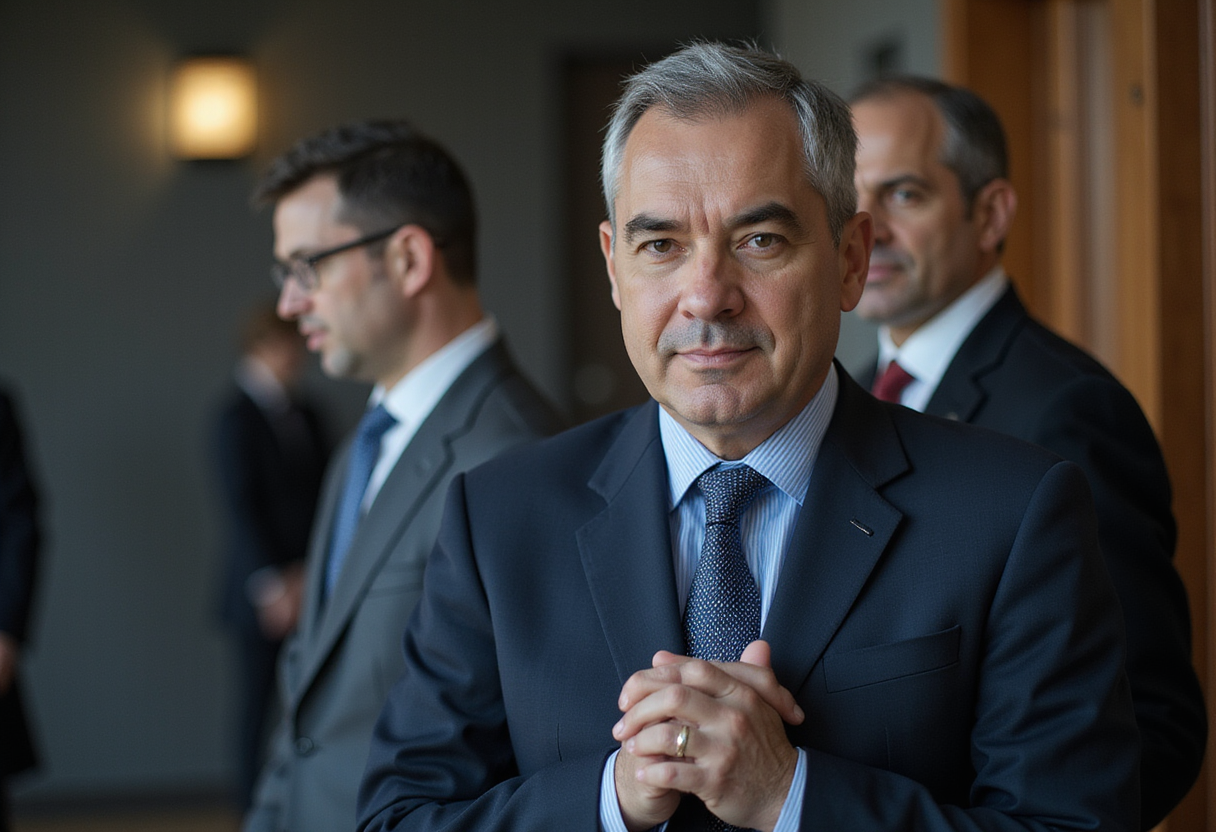
The Kosovo war crimes tribunal in The Hague has sentenced former Kosovo President Hashim Thaci to 25 years in prison for war crimes, including murder, torture and illegal detention. The three-judge panel delivered the verdict on 16 September 2026.
Thaci, 58, stood trial for crimes committed while he served as top commander of the ethnic Albanian Kosovo Liberation Army (KLA) during the territory's violent break from Serbia in the 1990s. He denied all charges.
The tribunal found Thaci guilty of the murder of 96 political opponents and perceived collaborators with Serbian security forces by KLA forces during the conflict. The convictions also covered the arbitrary illegal detention of 385 people, the torture of 303 people and the cruel treatment of approximately 50.
The court's reasoning
The court found that Thaci had "actively participated in and encouraged crimes".
"The scale and nature of the crimes committed were very serious," presiding judge Charles Smith said.
"The so-called intelligence on which many of these victims were arrested, detained and killed was little more than unverified rumours. Based on that information, victims were called and described as spies and collaborators and violently treated."
The panel dismissed six charges of crimes against humanity. However, it ruled that Thaci and his co-accused formed part of a joint criminal enterprise with a common plan to take control of Kosovo politics following independence by targeting political opponents.
Prosecutors had sought a 45-year sentence against Thaci and three other former top KLA commanders. The former president and his three co-accused had led a pro-Kosovo guerrilla faction during the break-up of Yugoslavia.
The defence case
Thaci's lawyers argued the accusations were unfounded, amounted to an attempt to rewrite history, and lacked any evidence directly linking Thaci to the alleged crimes. Thaci had pleaded not guilty at the outset of proceedings in April 2023.
Reaction in Kosovo and the region
The ruling drew intense scrutiny in Kosovo and Serbia, where the legacy of the 1998-99 conflict and Kosovo's 2008 declaration of independence still fuel tensions between ethnic Kosovo Albanians and Serbs.
Thaci remains a revered figure among many Kosovo Albanians, and the tribunal itself is deeply unpopular in Kosovo. In Pristina, thousands of people watching the verdict on a big screen booed the decision and chanted "Thaci, Thaci" as some burst into tears. One billboard displayed the faces of the defendants with the message: "In the name of the people you are declared innocent".
Albania's Prime Minister criticised the verdict on social media, posting a picture of a circle of barbed wire across a map of Europe with a single word: "Unbelievable".
Practical consequences
For practitioners, the judgment closes one of the most significant war crimes prosecutions of a former head of state in Europe in recent years. The mixed outcome — war crimes convictions alongside the dismissal of six crimes against humanity charges, and a sentence 20 years below the prosecution's request — will shape appellate strategy for both sides and offers a notable data point on how joint criminal enterprise liability is applied to political leadership figures. Defence teams will likely focus their appeals on the dismissed charges and the mode-of-liability findings; prosecution counsel may contest the sentence's adequacy relative to the 45-year request. The verdict also has wider implications for transitional justice efforts in the Western Balkans, where several governments and regional courts continue to pursue cases arising from the Yugoslav conflicts.
via abc.net.au (Original)
More from Amara Osei
Show full bio
Senior reporter covering industry trends and analytics at Global Law Wire.
186 articles