Law report No. GLW-6691 · filed October 10, 2026
ArbitrationReported case
JAMS Neutral Warns AI in Arbitration Threatens Award Enforceability
Dr. Anton G. Maurer of JAMS wrote in Legaltech News on October 5, 2026 that arbitrators who delegate substantive decisions to generative AI risk having their awards refused recognition.
By Priya Raman3 min read542 words
Holding
- Dr. Anton G. Maurer, a JAMS neutral, published the column on October 5, 2026 in Law.com's Legaltech News.
- The column flags ad valorem compensation as a primary driver of arbitrator temptation to overuse AI.
- Maurer's central rule: AI functions as 'arbitrators' intelligence,' not a substitute for human judgment.
- Two stated objectives govern AI use: procedural integrity and award enforceability.
- The article carries an estimated 10-minute read and is filed under Expert Opinion.
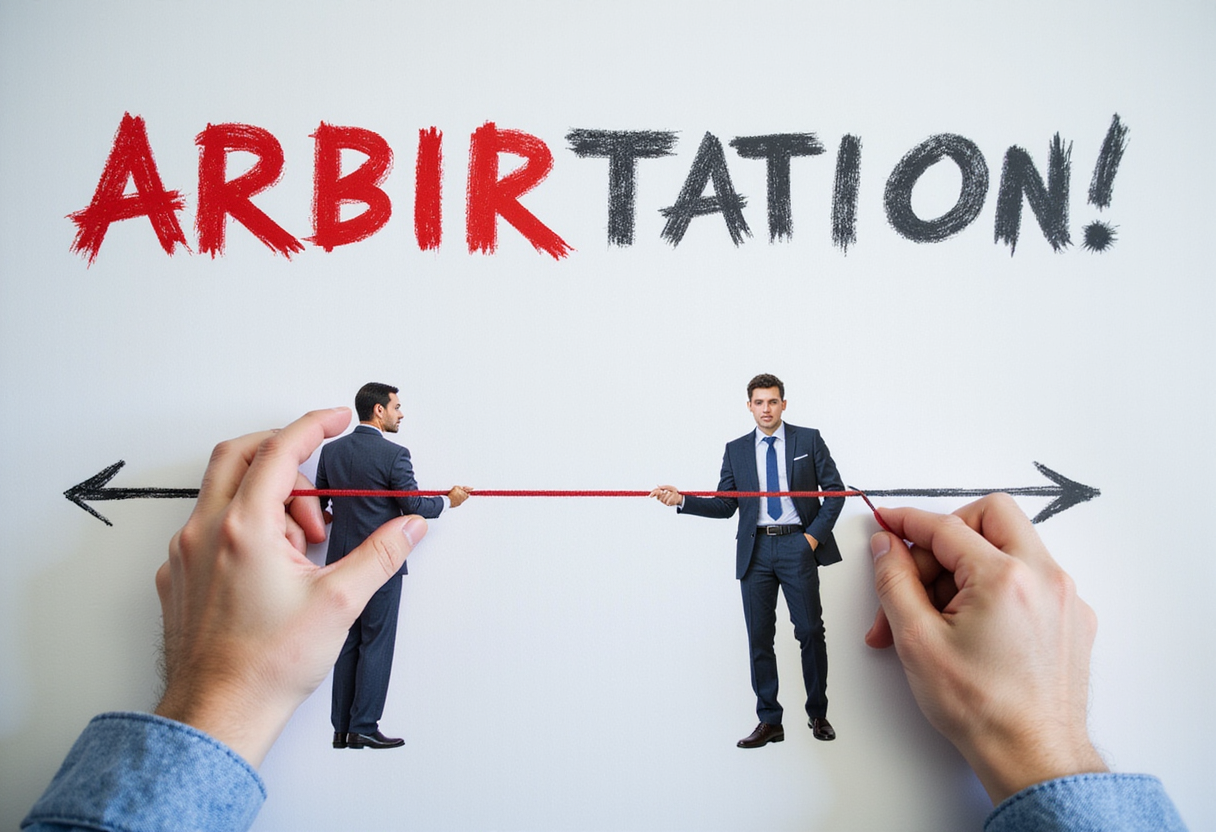
JAMS neutral Dr. Anton G. Maurer warned in a Legaltech News column published October 5, 2026 that arbitrators risk voiding their awards if they let generative AI slide from research and drafting into substantive decision-making.
Writing from a practitioner's standpoint, Maurer framed the question as a trade between efficiency and enforceability. "Arbitrators should think of AI as 'arbitrators' intelligence,'" he wrote. The phrase inverts the usual acronym: the tool belongs to the arbitrator, the arbitrator does not belong to the tool.
What two goals govern the inquiry?
Maurer stated the controlling objectives plainly:
- Preserve the integrity of the arbitration procedure
- Protect the enforceability of any resulting award
Both objectives point to one operational rule. The arbitrator decides. AI may assist. It may not replace.
Why does the pressure exist?
Fee economics create the gravitational pull. "The temptation for arbitrators to use AI is strong, especially if the compensation is based on ad valorem," Maurer wrote, the percentage-of-amount-in-controversy model that dominates commercial arbitration. The more value a tribunal resolves, the more it earns. AI shortens the path. The temptation rises with the stakes.
Maurer posed the operative questions directly: "Will AI also reshape arbitration? And how much AI can be used by arbitrators without endangering the recognition and enforcement of arbitral awards?" His answer confines AI to non-delegable support work.
Where does the line fall?
The visible portion of the column separates permitted assistance, including research, citation checking, drafting, and document summarization, from forbidden delegation: weighing evidence, evaluating credibility, and issuing the award. The dividing principle is simple. If a task requires the arbitrator's independent judgment under the parties' agreement and the applicable arbitration rules, AI cannot perform it.
Each non-delegable act carries enforceability risk. A tribunal that allows a model to choose between competing interpretations of a contract has stepped outside its mandate. A tribunal that lets a model decide whose witness to believe risks an award a court will set aside.
What should practitioners do now?
Counsel handling arbitrations should:
- Ask prospective arbitrators before appointment whether they plan to use AI and on what terms
- Obtain confidentiality commitments covering any data submitted to AI tools
- Insist on disclosure if AI output forms any part of the tribunal's reasoning
- Preserve grounds to challenge awards grounded in undisclosed machine reasoning
Parties should also weigh arbitration rules and institutional protocols when selecting a forum. Some providers have begun publishing AI guidance; counsel should compare those rules before constituting the tribunal.
How does this fit the wider debate?
Maurer observed that most arbitration conferences now devote at least one session to AI, a marker of how rapidly the technology has reached the field. His column enters a broader industry conversation, with institutions, counsel, and software vendors all pressing for guardrails before disputes test them in court. JAMS, one of the largest alternative dispute resolution providers in the United States, has been an early institutional voice on technology adoption. Maurer's contribution adds a neutral's-eye view.
What is the bottom line?
Treat AI as a paralegal, not a partner. Tribunals that blur the distinction may spend months on proceedings whose awards cannot travel across borders, the practical consequence Maurer's column aims to forestall.
via law.com (Original)
More from Priya Raman
Show full bio
Staff writer covering consumer brands and retail at Global Law Wire.
186 articles
Also before the court
- Opinio Juris Examines AI, Bias and Arbitral Decision-Making
- Robot Arbitrators Spark Conflicts Over AI in Dispute Resolution
- Québec Court Set Aside Arbitral Award Built on Hallucinating AI
- Court Upholds $11 Million Arbitration Award in D&O Coverage Dispute
- Are AI-Drafted Arbitration Awards Enforceable Under the New York Convention?