Law report No. GLW-3964 · filed September 29, 2026
ArbitrationReported case
Indus Waters Treaty Arbitration: Can India Put the Treaty in Abeyance?
Aceris Law examines whether India can lawfully place the Indus Waters Treaty in abeyance, and what the treaty's arbitration machinery says about unilateral suspension.
By Sophie Lindqvist4 min read779 words
Holding
- Aceris Law analyzes whether India can place the Indus Waters Treaty in abeyance
- "Abeyance" is not a recognized category under the Vienna Convention on the Law of Treaties
- The treaty's own dispute-resolution machinery — neutral expert and Court of Arbitration — frames the arbitration question
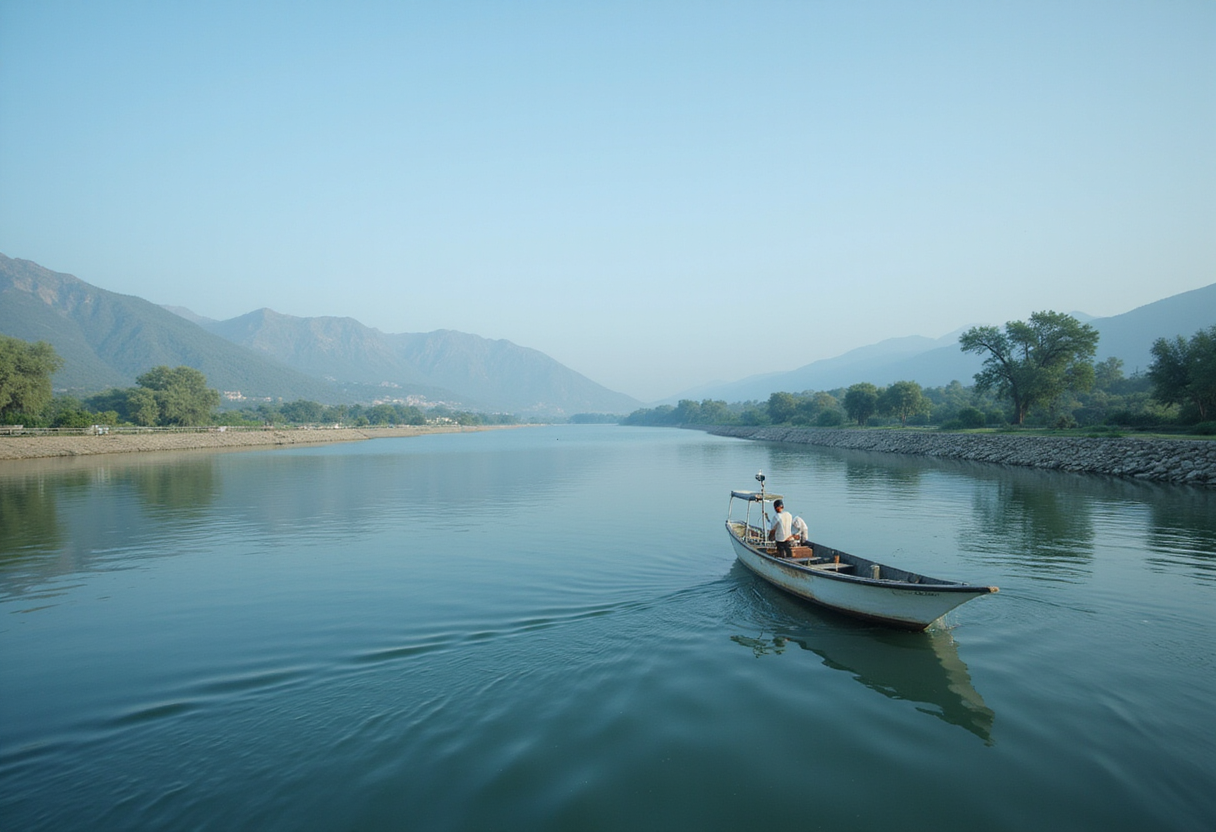
The legal question now dominating water law practice comes down to a single word: abeyance. Aceris Law, in a recent commentary titled "Indus Waters Treaty Arbitration: Can India Put the Treaty in Abeyance?", examines whether India can lawfully place the Indus Waters Treaty on hold — and what the treaty's own dispute-resolution machinery may say about it.
The question is not academic. The Indus Waters Treaty, signed in 1960, is one of the most enduring water-sharing instruments in international law, and any unilateral move to suspend it raises issues at the intersection of treaty law, state responsibility, and the specialized arbitration and neutral-expert procedures the treaty itself creates. The Aceris Law analysis asks whether "abeyance" — a term with no settled definition in the Vienna Convention on the Law of Treaties — is available to a party at all.
The starting point is the treaty text. The Indus Waters Treaty contains its own dispute-settlement ladder: questions go to the Permanent Indus Commission, differences go to a neutral expert or to a Court of Arbitration, and disputes follow a prescribed procedural route. The analysis explores whether this internal machinery forecloses unilateral suspension, or whether general international law on treaty suspension fills any gap.
Under the Vienna Convention on the Law of Treaties, a party may suspend or terminate a treaty only on limited grounds: material breach by the other party, supervening impossibility of performance, or a fundamental change in circumstances under Article 62 — a doctrine the International Court of Justice has applied narrowly. A party cannot invoke its own breach to justify suspension, and Article 62 famously excludes boundary regimes and, in most readings, offers little comfort to states seeking exit from resource-sharing arrangements. "Abeyance" itself is not a Vienna Convention category. It is a political label, and the legal analysis turns on whether the conduct it describes amounts to suspension, breach, or something the treaty regime tolerates.
That distinction carries real consequences. If a state withholds treaty-mandated cooperation — data sharing, commission participation, notification of works — without establishing a lawful ground for suspension, the conduct constitutes a breach, engaging state responsibility and exposing the state to countermeasures, counterclaims, or adverse findings from the Court of Arbitration. If, by contrast, a treaty ground applies, most notably material breach under Article 60, suspension may be lawful, but proportionality and reciprocity constrain its scope.
For practitioners, the Aceris Law analysis frames several issues that will shape any arbitration. First, jurisdiction: the treaty's dispute clauses define what the Court of Arbitration and the neutral expert may decide, and the parties are likely to litigate whether a suspension claim falls within those clauses or outside them. Second, interim measures: an arbitration over the treaty's operation raises the possibility of requests to preserve the status quo while proceedings run. Third, evidentiary burden: a state asserting a right to suspend must prove the factual predicate — typically a material breach by the other riparian — to the standard the tribunal applies. Fourth, the relationship between the two tracks: the treaty allows parallel engagement with the neutral expert and the Court of Arbitration on different categories of issues, and procedural conflict between those tracks has already generated contested jurisprudence about compliance with interim measures.
The commentary also highlights the conceptual puzzle at the center of the dispute. A treaty in "abeyance" is, in the state's own characterization, not terminated and not operating. International law knows suspension and it knows termination; it does not recognize a third, indeterminate status that a party can declare unilaterally. The analysis therefore presses the point that the label matters less than the conduct: what matters legally is whether treaty obligations are being performed, breached, or lawfully suspended.
The stakes extend beyond the two parties. Water treaties are among the most successful instruments in international environmental law precisely because they contain robust, self-contained dispute mechanisms designed to survive political crises. A finding that a party may unilaterally park such a treaty would send a signal to every riparian arrangement built on the same model, from the Nile to the Mekong to the Jordan. Conversely, a finding that no suspension is available reinforces the durability of treaty regimes against political pressure.
For counsel advising states and investors in the region, the practical guidance from the analysis is straightforward: preserve the record on both sides of the ledger. Document any conduct said to constitute breach, ensure compliance with every procedural obligation the treaty still imposes, and treat the dispute-resolution clauses as live and binding until a competent body says otherwise.
The full analysis, "Indus Waters Treaty Arbitration: Can India Put the Treaty in Abeyance?", is available from Aceris Law.
via GN International Courts (Source)
More from Sophie Lindqvist
Show full bio
News editor covering industry trends and analytics at Global Law Wire.
200 articles