Law report No. GLW-8474 · filed November 3, 2026
Human RightsReported case
Greenland IUD Scandal: Compensation Law Pays, But Is It Enough?
Two inquiries and UN experts agree thousands of Inuit women received IUDs without consent. Denmark pays DKK 300,000 each — but collective reparations remain unresolved.
By Priya Raman5 min read937 words
Holding
- At least 4,070 Greenlandic women and girls had IUDs inserted by end-1970, some as young as 12
- Denmark's compensation law pays DKK 300,000 (about €40,000) per woman; 908 applications by mid-October 2026
- Naalakkersuisut published two split expert reports on 28 August 2026, endorsing only the Cullen–Sambo Dorough report
- UN Special Procedures experts issued a joint statement on 7 October 2026 urging focus on remedies
- Birthrate fell from 7 children per woman to 2.4 following the family planning measures
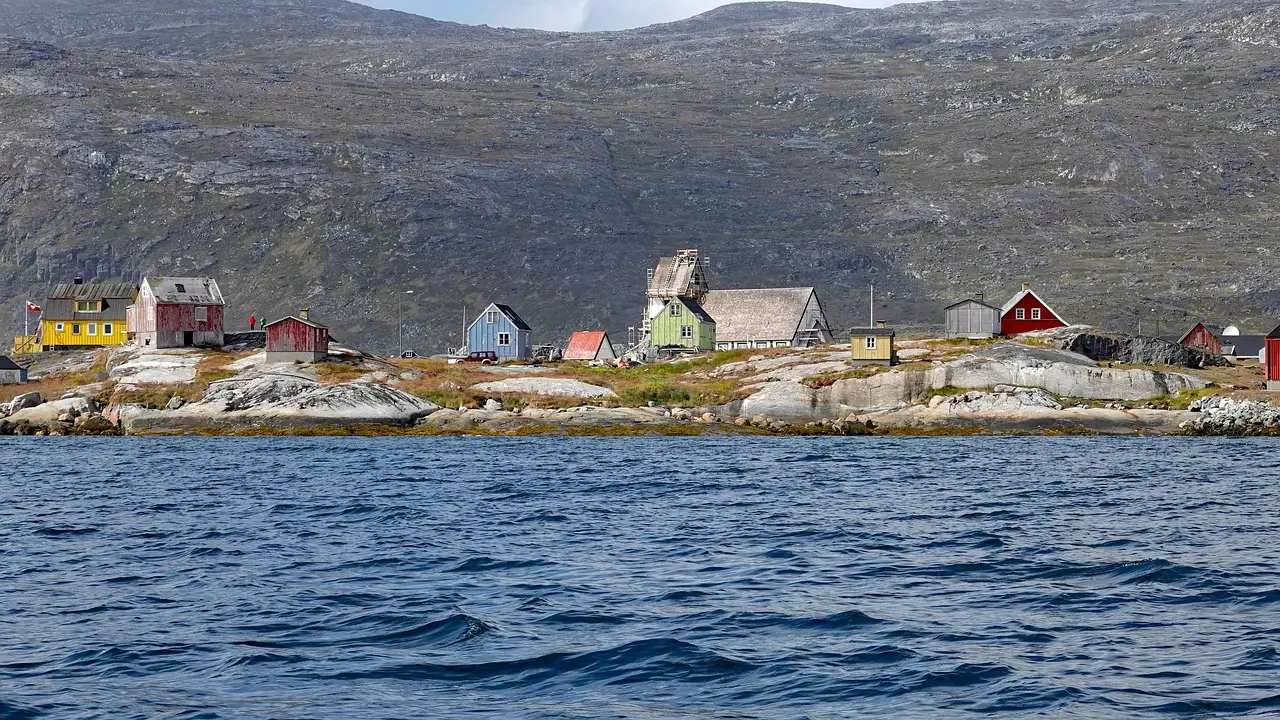
By the end of 1970, at least 4,070 Greenlandic women and girls — roughly half of all women of childbearing age at the time — had intrauterine devices inserted, some as young as 12, and most without their consent. That finding, documented by a Danish-Greenlandic historical investigation in September 2025, now anchors an intensifying debate over what redress Denmark owes the women and the Inuit community as a whole.
Two official inquiries and a group of UN human rights experts agree on the core facts: thousands of Inuit women and girls received contraceptive devices in violation of their human rights. What remains open is the remedy. Veronika Fikfak, who provided a legal opinion to the Greenlandic Inquiry, argues that remedies must both repair the harm and re-pair the strained relationship between Greenland and Denmark through collective remedies agreed with the community.
Who found what, and when?
Three sets of experts have examined the cases. A joint historical investigation commissioned by Copenhagen and Nuuk reported in September 2025 that at least 4,070 women and girls had IUDs inserted by end-1970; of the 354 women who testified, most said they had not consented.
A second group, appointed by Naalakkersuisut, the Government of Greenland, in August 2024, split into two reports. Jonas Christoffersen, former director of the Danish Institute for Human Rights, and psychologist Jensine Nedergaard rejected the genocide characterisation. Members Miriam Cullen and Dalee Sambo Dorough noted their limited brief and suggested only a judicial forum with full evidence could decide the question — while noting it could be argued Denmark failed in its duty to prevent genocide. Naalakkersuisut published both reports on 28 August 2026 and endorsed only the latter.
On 7 October 2026, eight UN Human Rights Council Special Procedures experts, including Special Rapporteur on the rights of Indigenous Peoples Albert K. Barume, issued a joint statement urging a re-centring of the debate on the women's rights and remedies.
Why does the genocide question matter less now?
Geopolitics once charged the debate. President Trump, in office since 2025, repeatedly pressed for US control of Greenland, at points threatening tariffs and military force. A formal genocide finding against Denmark could have been invoked to challenge Copenhagen's sovereignty. But on 22 September 2026, the US, Denmark and Greenland signed a new Arctic security agreement amending their 1951 defence pact, granting permanent US basing rights while, per Copenhagen, respecting Danish sovereignty and Greenlandic self-determination. Greenland signed as a party in its own right.
The treaty settles the future, not the past. Speculation about International Court of Justice genocide claims, Fiklak-style analysis suggests, treats Denmark and Greenland as enemies rather than dialogue partners — and strips agency from Nuuk at the very moment it negotiated its own security arrangement.
What does the law already establish?
Legally, much is settled. The European Convention on Human Rights has bound Denmark since 1953 and applies across the realm, including Greenland; responsibility under Article 1 did not end when Greenland took over healthcare in 1992. Even under the standards-of-the-time approach required in historical cases (O'Keeffe v Ireland), three provisions are engaged:
- Article 3: Under V.C. v Slovakia, non-consensual sterilisation amounts to inhuman and degrading treatment. IUDs inserted for a family planning policy, not medical need, into girls of 12 to 15, who could hardly give valid consent.
- Article 8: Insertions causing acute pain, infections and infertility interfered with private and family life and reproductive autonomy, as recognised in G.M. and Others v Moldova, a case on forced abortions and contraceptive insertions.
- Article 14: The policy exclusively targeted Inuit women and girls as a group.
Denmark, notably, acted pre-emptively. Prime Minister Mette Frederiksen apologised for the "systematic differential treatment" the women suffered, and Parliament passed a compensation law before the reports were published: DKK 300,000 (around €40,000) per woman for involuntary insertion. By mid-October 2026, the Danish Patient Compensation authority had received 908 applications.
What redress is still owed?
The lump sum may not suffice. The UN experts note that acknowledgement and financial redress alone are insufficient, and standard payments ignore differences between cases. Fikfak's submission, co-authored with Ula Aleksandra Kos and Edward Pérez, proposes awards starting at €50,000 to €60,000 per woman — roughly 25 to 50 percent above the statutory figure — rising where discrimination or long-term harm is established.
The community dimension is larger. The birthrate fell from 7 children per woman to 2.4; today's Inuit community is significantly smaller as a result. The Inter-American Court ordered collective reparations in Plan de Sánchez Massacre v Guatemala, and the UN Human Rights Committee and CEDAW Committee have recognised that violations against Indigenous women harm whole communities. The Special Rapporteur's latest report urges reparations that "recognize intergenerational and collective harms" and include "community-based healing initiatives."
The Cullen and Sambo Dorough report itself proposes an independent collective reparations fund, modelled on Inter-American Court practice, compensating the community separately from individual awards (para. 373). Possible measures include:
- Memorials, museums or audiovisual exhibitions;
- A truth and reconciliation commission;
- Community development financing or intergenerational equity funds, akin to the 1986 Marshall Islands Nuclear Claims Fund;
- Co-designed cultural programmes promoting Greenlandic culture and history.
Repairing and re-pairing
The community must be consulted and actively involved; the process, as the UN experts stress, must centre the women and avoid re-traumatising them. Violations were committed against the community; remedies should be agreed with it. With security settled, at least for now, that is the realistic ceiling of what diplomacy and law can deliver.
via sdu.dk (Original)
More from Priya Raman
Show full bio
Staff writer covering companies, deals and strategy in International law and legal practice at Global Law Wire.
287 articles
Also before the court
- UN Rapporteur's Letter on Mexico Feminicide Bill Splits International Lawyers
- ICJ climate ruling faces an enforcement gap one year on
- CJEU: EU States Must Recognize Gender Identity in ID Papers
- Mapuche Complaint Against Statkraft Tests Norway's Transparency Act
- Iceland and Netherlands File Interventions in ICJ Genocide Case