Law report No. GLW-5290 · filed September 29, 2026
Courts & TribunalsReported case
Court of Appeal: Judge Should Not Have Heard Case From Bed
Court of Appeal rules a judge recovering from Achilles surgery should not have heard an optometrist's disciplinary appeal from bed, but finds no injustice and refuses permission to appeal.
By Marcus Bennett4 min read738 words
Holding
- The Court of Appeal ruled that Richard Clayton KC, sitting as a deputy High Court judge, should not have heard an optometrist's disciplinary appeal from his bed in November 2024 while recovering from Achilles tendon surgery, but the appeal failed because no injustice resulted.
- Phillips LJ said a judge should only hear a case while in bed 'as a last resort, where the matter cannot sensibly be listed before a judge sitting in the conventional way'.
- The final written judgment arrived 16 months after the hearing, in March 2026; Phillips LJ called the unanswered chasing emails 'unacceptable' and discouraged reading out draft judgments orally.
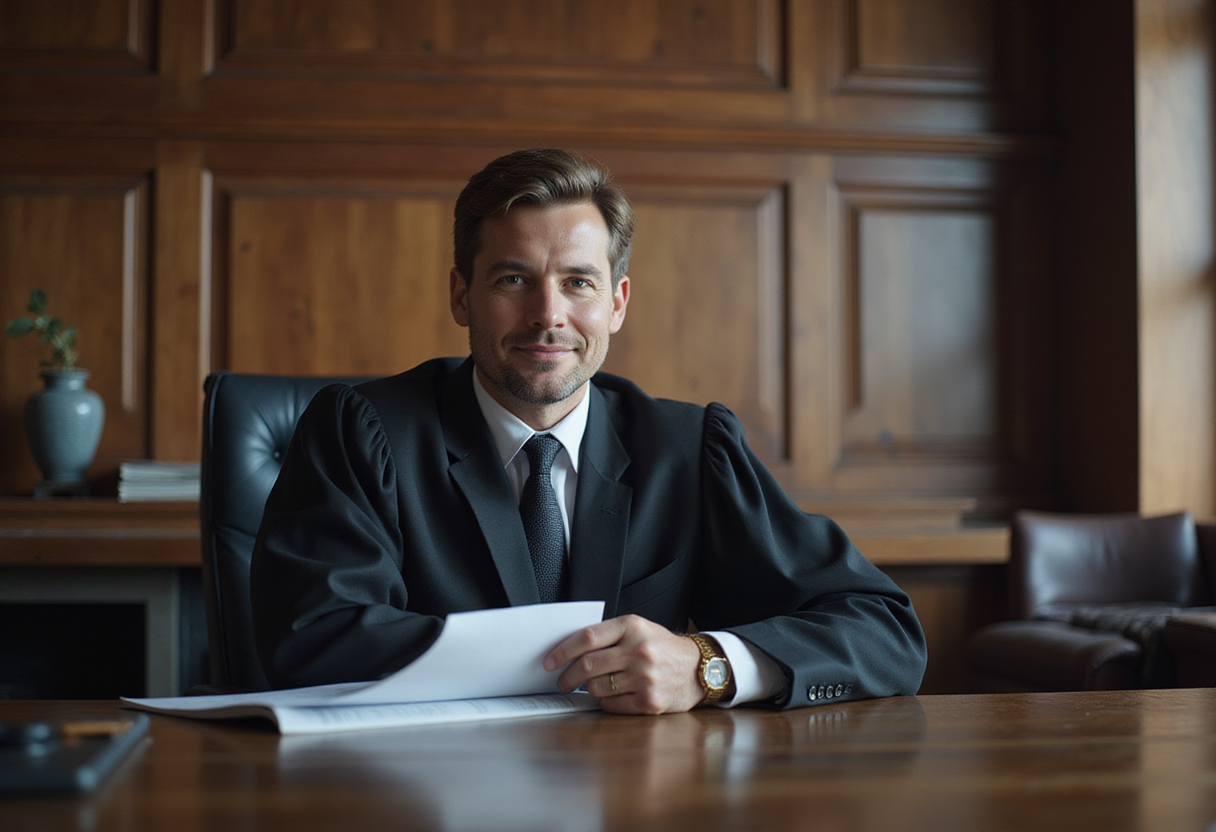
The Court of Appeal has ruled that a deputy High Court judge should not have heard an optometrist's disciplinary appeal from his bed while recovering from surgery, but the appeal itself has failed because the unusual arrangement caused the appellant no injustice.
Richard Clayton KC, sitting as a deputy High Court judge, conducted the remote hearing in November 2024 just one day after returning from hospital, where he had undergone surgery on a ruptured Achilles tendon. He had been told he could not stand for eight days. Having cleared the arrangement with senior court staff, he decided to press ahead with the hearing.
The case concerned an optometrist suspended for nine months by the General Optical Council after findings of serious misconduct involving dishonesty. Judge Clayton dismissed his appeal. The optometrist then challenged that decision in the Court of Appeal, arguing that procedural irregularities had made the outcome unjust.
In a judgment handed down this week in the case, Lord Justice Phillips commended the judge for his willingness to hear the case while recovering from injury and his "fortitude in doing so in bed, in trying circumstances". But the Lord Justice held that Judge Clayton should not have taken on the hearing, given that there was no great urgency and alternative arrangements could have been made.
The judgment sets out the practical difficulties the judge encountered during the remote hearing. He told the parties he was "sitting prone in bed", which made it difficult to navigate the PDF bundles. He later admitted that holding his computer made it impossible to take notes.
The ruling records that Judge Clayton had conceded the hearing was "testing my stamina significantly". Towards the end of proceedings, he requested a five-minute break after telling the parties he was getting tired. He later apologised for the difficulties, explaining that it had been "quite tricky but not impossible" to conduct proceedings largely from a non-sitting position.
Despite the unusual setup, the Court of Appeal found that the judge remained fully engaged with the material and the arguments throughout the hearing. Phillips LJ noted that judges frequently encounter cases that prove more demanding than expected, and held that the optometrist suffered no injustice as a result of the arrangement.
Guidance for future listings
The most significant guidance for practitioners comes in Phillips LJ's statement of principle on when a judge may conduct a hearing other than at a desk or table. He said: "I do not say that a judge should never undertake a hearing whilst in bed or otherwise than at a desk or table, but it should be a last resort, where the matter cannot sensibly be listed before a judge sitting in the conventional way."
The practical consequence for those appearing before the courts is twofold. First, parties who learn that a judge is conducting a hearing in circumstances that impair their ability to manage bundles, take notes or sustain concentration now have clear appellate authority supporting an objection, at least where the matter is not urgent and could be listed conventionally. Second, procedural irregularities of this kind will not automatically vitiate a decision: the Court of Appeal applied an injustice test, examining whether the judge's engagement with the material was in fact compromised. Here it was not, and the dismissal of the optometrist's appeal stood.
Delay in delivering judgment
The judgment also addresses a second procedural failure. Judge Clayton read out a draft judgment 16 days after the hearing, but the final written version did not arrive until March 2026 — some 16 months later — despite repeated emails from the parties chasing it.
Phillips LJ described the unanswered emails as "unacceptable". He also said that the practice of reading out draft judgments orally should be discouraged, because it risked causing confusion.
Even so, the court concluded that the delay had not caused the optometrist an injustice sufficient to justify overturning the decision.
Outcome
The Court of Appeal refused permission to appeal. The optometrist's nine-month suspension, imposed by the General Optical Council following findings of serious misconduct involving dishonesty, therefore remains in place, along with Judge Clayton's original dismissal of his appeal.
The ruling leaves the profession with a clear line. Judges' dedication in adversity may earn commendation from the appellate bench, but hearings conducted from a hospital bed, without urgency and where alternatives exist, fall outside acceptable practice. A last resort is precisely that.
via bailii.org (Original)
More from Marcus Bennett
Show full bio
Market editor covering marketplaces and e-commerce at Global Law Wire.
192 articles
Also before the court
- Alito Recuses From Climate Case as Trump Returns to Emergency Docket
- High Court judge labels fake case authorities "appalling" and alerts regulators
- Nielsen Seeks Reconsideration of Cumulus Antitrust Ruling
- Supreme Court Sets December Argument on Third-Country Deportations
- Zapp Cannot Sue Manager to Recover German Antitrust Fine, EU Court Opinion Says